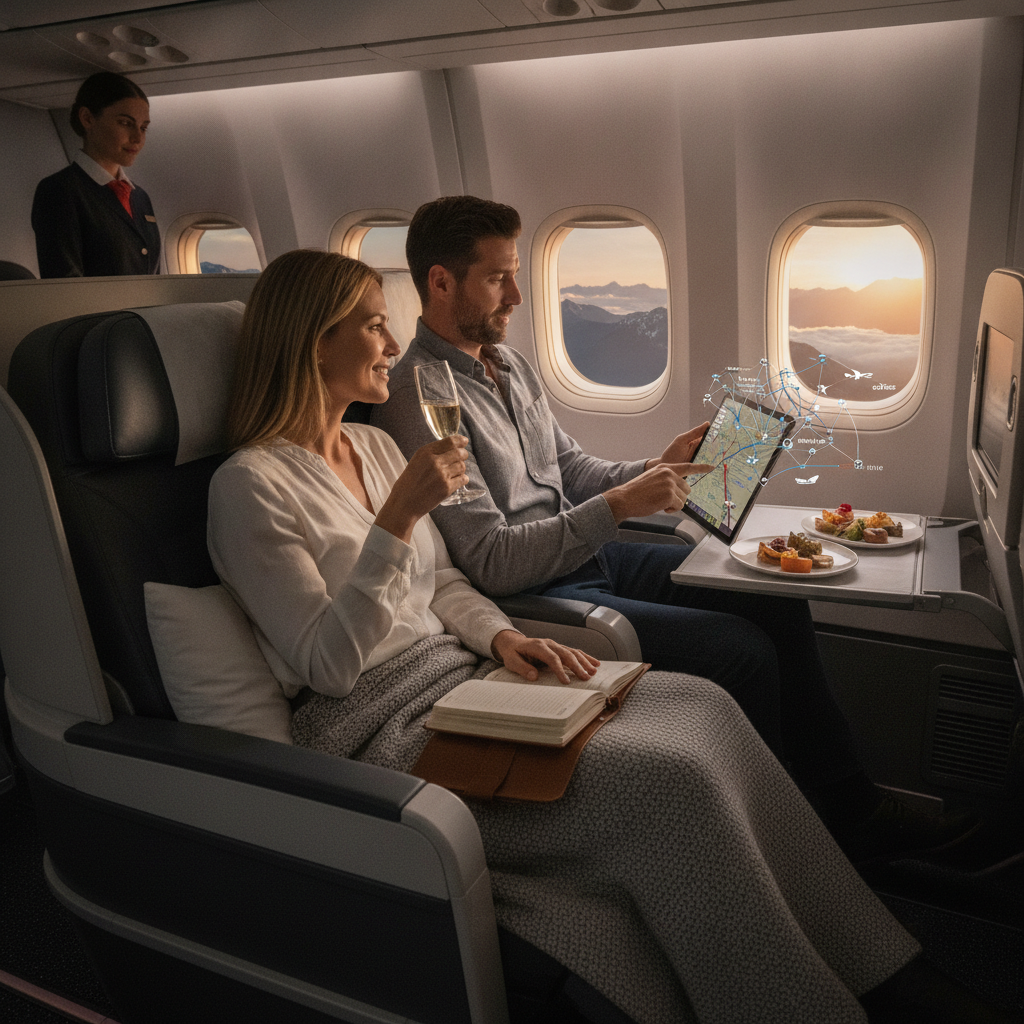
Airline alliances have quietly created one of the most underused opportunities in travel — the ability to book or upgrade into business class on a partner carrier's aircraft while paying rates tied to economy-class fare buckets. It's a structural quirk built into how codeshare agreements work, and travelers who understand the mechanics can fly lie-flat on long-haul routes without paying the premium that comes with booking business class directly.
This isn't about loopholes or exploiting errors. It's about reading the rules the way frequent flyers have for years and applying them strategically to your own bookings.
Understand How Codeshare Agreements Actually Work
When two airlines share a codeshare arrangement, one carrier sells seats on the other's physical aircraft under its own flight number. The booking and pricing logic — fare classes, upgrade eligibility, mileage accrual — can differ from what the operating carrier offers directly. This gap is where opportunity lives. A seat sold by United on a Lufthansa-operated flight, for instance, may be priced or upgradeable differently than the same seat sold directly by Lufthansa. Knowing which carrier is marketing versus operating a given flight is the first distinction you need to make.
Learn the Fare Class Alphabet Before You Book
Fare classes aren't just economy or business — they're a hierarchy of single-letter codes that determine upgrade eligibility, mileage earning, and change fees. An economy ticket booked in a Y or B fare bucket is often fully upgradeable, while a deeply discounted W or Q fare may be locked out entirely. When you're targeting a partner upgrade, you need to match your fare class to what the marketing carrier honors. Tools like ExpertFlyer let you check available fare classes on a given route before you commit, so you're not guessing after purchase.
Target Alliance Partners With the Most Generous Upgrade Policies
Not all alliances treat partner upgrades the same way. Star Alliance has historically been the most permissive, with carriers like Singapore Airlines and Austrian Airlines sometimes allowing elite members of partner programs to confirm upgrades at booking on partner-operated flights. Oneworld and SkyTeam have their own rules, which vary significantly by route and status tier. Researching the specific pairing — the marketing carrier, the operating carrier, and your elite status with either — takes time but consistently reveals which combinations offer the most favorable terms.
Stack Elite Status With the Right Marketing Carrier
Your upgrade eligibility on a codeshare flight usually depends on the status you hold with the marketing carrier, not the operating one. If you hold top-tier status with American Airlines and book a codeshare flight operated by British Airways, American's upgrade policies apply to that ticket. This means your status with one carrier can unlock benefits on dozens of partner flights you'd otherwise have no leverage over. Positioning your loyalty with a single carrier whose alliance partners serve your most-traveled routes is a strategy that pays off compoundingly over time.
Use Miles From One Program to Upgrade on Another's Metal
Several alliance programs let you redeem miles for upgrades on partner-operated flights, which creates a separate but related path to business class at a fraction of the cash cost. Aeroplan, the Air Canada loyalty program, is widely regarded as having some of the most flexible partner redemption options within Star Alliance. Similarly, Alaska Airlines Mileage Plan punches well above its size by maintaining separate transfer partnerships with carriers outside the big three alliances. Checking the upgrade award charts of programs you already hold miles in before assuming a flight is out of reach is always worth the extra step.
Book Directly Through the Marketing Carrier's Website
When you book through a third-party site or aggregator, you often lose access to the upgrade pathways that exist within the carrier's own booking system. The marketing carrier's website or app is where fare class visibility, upgrade waitlists, and partner redemption options are most reliably accessible. Booking directly also makes it easier to contact the airline's elite line if something needs to be adjusted — a step that matters when you're managing a complex itinerary across two or more carriers' aircraft.
Call the Elite Line When the Website Falls Short
The codeshare upgrade process doesn't always surface cleanly online. Upgrade inventory on partner flights is shared between carriers in ways that aren't always reflected in real time on either website. When you've identified a promising itinerary and the upgrade option isn't visible in the booking flow, calling the elite desk of your marketing carrier can reveal availability that wasn't showing digitally. Agents with access to shared inventory systems can sometimes confirm an upgrade on the spot, especially if you're within a few days of departure and seats are still open.
Watch for Partner Award Space Opening Close to Departure
Airlines release additional award and upgrade inventory on partner flights as the departure date approaches and unsold premium seats become a sunk cost. Tracking this release window — typically within 24 to 72 hours of departure — is a recognized practice among frequent flyers who've made peace with flexibility. Setting alerts through tools like Point.me or ExpertFlyer for specific routes lets you act quickly when space opens rather than checking manually. Positioning yourself on a waitlist early, then monitoring for last-minute confirmation, is a two-stage approach that works better than either strategy alone.
As airlines continue refining their alliance agreements and loyalty programs, the rules governing codeshare upgrades will keep evolving. Some carriers are tightening partner upgrade policies while others are opening new redemption paths to compete for loyalty. Staying current with program changes — through airline blogs like View from the Wing or The Points Guy — means you'll catch favorable shifts before they're widely known. The mechanics are learnable, the rules are consistent enough to work with, and the payoff — business class seating without business class pricing — makes the research genuinely worth your time.