There is a particular kind of restlessness that settles over experienced travelers — the feeling that yet another itinerary of museums and restaurants, however carefully curated, is beginning to blur at the edges. The destinations change, but the posture doesn't: arrive, observe, photograph, depart. Something is consumed, but nothing is truly absorbed. It's in that restlessness that the idea of a skill-anchored journey begins to take root, quietly and often unexpectedly.
The Shift From Spectator to Participant
When a trip is organized around learning a specific craft or trade tradition — natural dyeing in Oaxaca, sashiko embroidery in Kyoto, copper repoussé in Marrakech's medina — the entire rhythm of travel changes. Days are no longer structured around what can be seen but around what can be made, practiced, and slowly understood. The traveler moves from the role of spectator into something closer to apprentice, even if only for a week. This shift is not merely philosophical. It changes where a person stays, what they eat, how they spend their hours, and, critically, how much they spend doing it. A traveler focused on a craft workshop at a family atelier in Oaxaca's Jalatlaco neighborhood is not wandering through souvenir stalls in the same way. Their attention — and their money — flows differently.
The financial dimension of this kind of travel is worth examining closely. Skill-building trips tend to concentrate spending into a single meaningful category: instruction, materials, and direct engagement with makers. The diffuse, impulsive spending that characterizes many leisure trips — impulse purchases, redundant tours, overpriced convenience — recedes naturally. When a traveler has already paid for a three-day indigo-dyeing intensive at a studio outside Kyoto, the afternoon's purpose is set. The mental bandwidth that might otherwise produce a dozen small, forgettable purchases is already occupied by something more demanding and more satisfying.
Why Craft Traditions Carry Particular Cultural Weight
Craft and trade traditions are among the most condensed carriers of cultural knowledge that survive into the present. The Japanese concept of *monozukuri* — roughly translated as the art and spirit of making things — reflects a broader philosophy in which skill transmission across generations is considered a form of cultural continuity, not merely economic activity. Moroccan zellige tilework, passed from master craftsmen called *maalem* to their apprentices over years, encodes geometric and mathematical principles that predate formal educational institutions in the region. When a traveler engages with these traditions, even superficially, they begin to understand a place through its logic rather than its aesthetics alone. That understanding tends to be more durable, and more honest, than anything absorbed from a walking tour.
This kind of cultural engagement also tends to create more direct economic relationships between travelers and local communities. A weaving workshop in San Cristóbal de las Casas, run by a cooperative of Tzotzil artisans, channels money directly to the makers rather than through layers of tourism intermediaries. The traveler pays a fair price for genuine instruction, the community retains economic agency, and the exchange has a clarity that mass-market tourism rarely offers. Platforms like Airbnb Experiences and local operators such as Context Travel have begun facilitating these kinds of workshops in cities across Europe, Asia, and Latin America, though some of the most memorable opportunities still arrive through direct inquiry and local referral.
How One Annual Commitment Reorganizes the Rest of the Year
The more counterintuitive effect of this travel philosophy isn't what happens during the trip — it's what happens in the months surrounding it. When a traveler commits, early in the year, to a single meaningful skill-building journey, that commitment begins to quietly restructure how they think about discretionary spending more broadly. The trip becomes a financial anchor: a known, meaningful expense toward which smaller choices throughout the year are unconsciously oriented. Impulsive weekend getaways lose some of their appeal when they're measured against the alternative. The question shifts from "should I spend this?" to "does this serve something I actually care about?"
This is not austerity by another name. It is, rather, the natural result of having a clear spending priority. Research into consumer behavior consistently suggests that people derive more lasting satisfaction from experiences tied to personal growth or skill development than from passive leisure, and that the anticipation of such an experience generates its own psychological reward long before the trip itself begins. A traveler who books a five-day traditional boat-building course in the Faroe Islands in February is, in a real sense, already traveling — making material choices, reading, practicing related skills at home, corresponding with instructors. The journey expands backward in time.
What You Bring Home That Doesn't Fit in a Bag
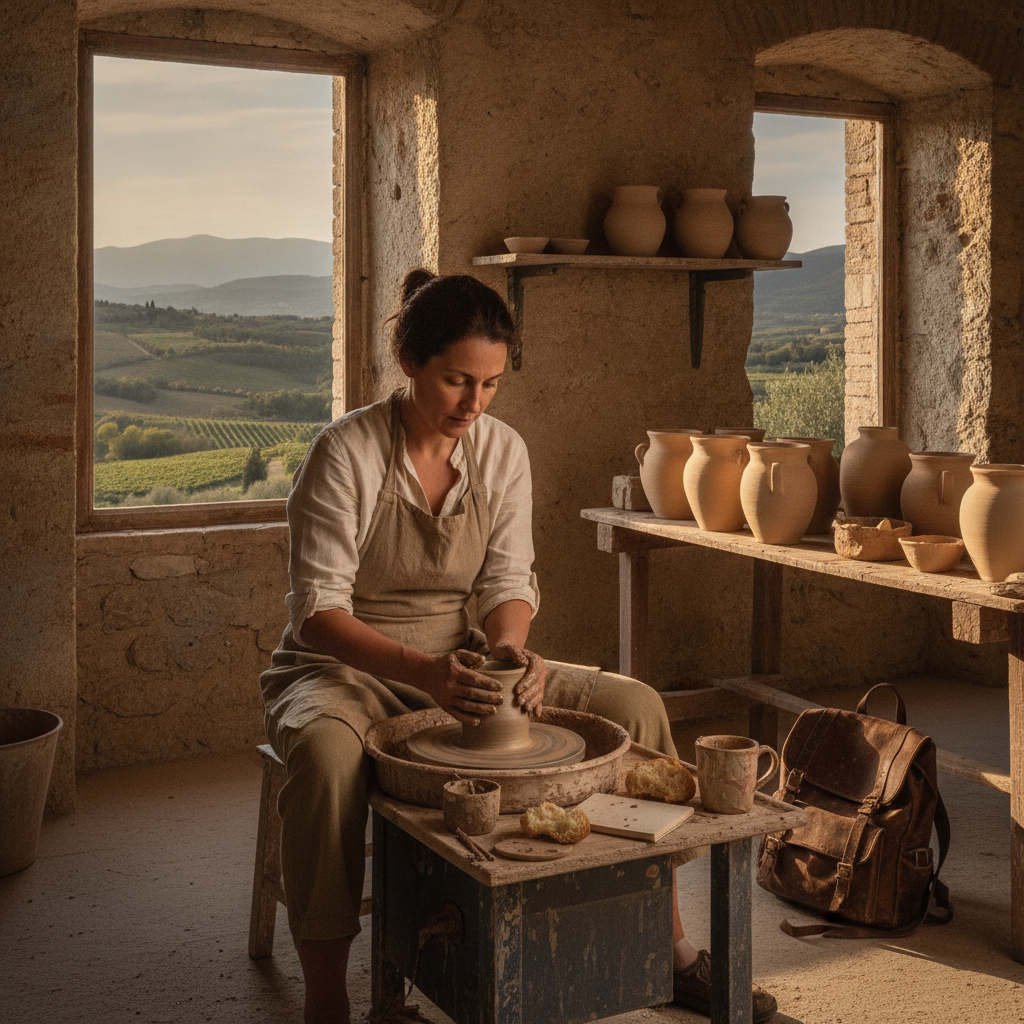
The souvenir economy has always operated on a particular kind of nostalgia — the object as proof of presence. But travelers who return from skill-anchored trips often find that the most significant things they've carried home are resistant to display. A deeper patience with process. A recalibrated respect for handmade goods and the labor embedded in them. A tendency to pause before purchasing something mass-produced when they now understand, even partially, what its handmade equivalent demands. These shifts are subtle, but they compound. A traveler who has spent a week learning the basics of hand-thrown pottery in a Tuscany hill town does not look at ceramics the same way afterward — and that changed perception gradually reshapes what they're willing to spend money on, and what they're not.
For those beginning to explore this approach, the practical starting point is simpler than it might appear. Identify a craft tradition you've long been curious about — not one that seems impressive, but one that genuinely calls to you. Search for reputable workshops in regions where that tradition has deep roots, prioritizing instructors with generational or community ties to the practice. Budget for quality instruction as the central expense, and let accommodations, meals, and secondary activities arrange themselves around it. Keep the itinerary loose enough to allow for the unexpected conversations and observations that tend to arrive when attention isn't fractured across a dozen competing obligations.
The restlessness that drives most experienced travelers isn't solved by more destinations. It's resolved by a different quality of presence — and that presence, it turns out, is something that can be learned.