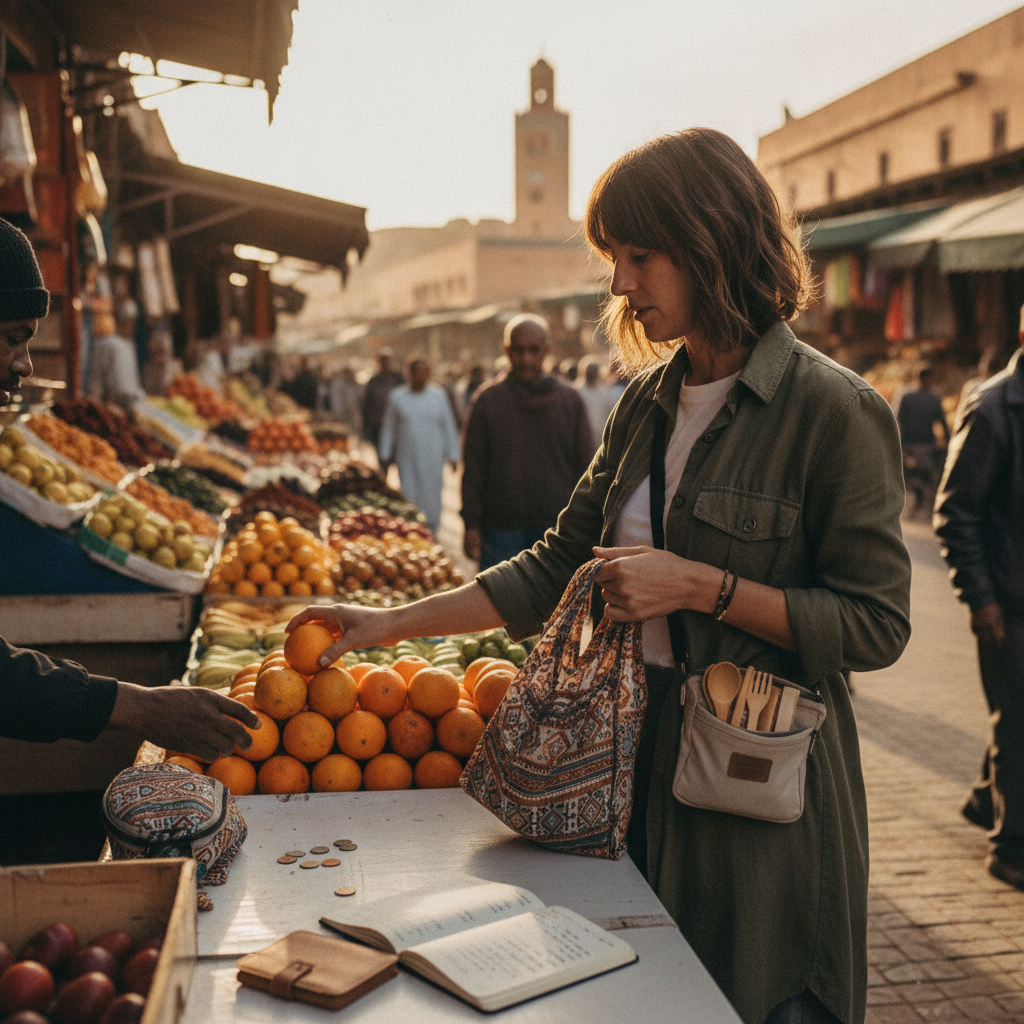
Extended travel has a way of quietly inflating your daily costs in ways that feel inevitable — until you start pushing back on them. One of the most persistent culprits is the casual, unplanned approach most travelers take to food: convenience stores in the morning, tourist-area cafés at noon, restaurants every single evening. It adds up faster than any flight or hotel booking does. What surprises many long-term travelers is how dramatically that rhythm shifts when they pack a compact reusable grocery kit before they ever leave home.
The Small Kit That Rewires Your Food Habits Abroad
A reusable grocery kit doesn't need to be elaborate. A foldable tote or mesh bag, a small silicone zip pouch or two, a lightweight reusable produce bag, and a compact utensil set cover most of what you need. The physical presence of these items in your bag changes behavior in subtle but meaningful ways. When you have a vessel designed for carrying fresh food, you actually stop at local markets more often. That shift — from buying meals to buying ingredients — is where the real financial change begins.
Why Physical Tools Shape Spending Decisions
Travel spending is largely habitual. When you're tired after a long transit day, you default to whatever requires the least friction. Without any tools for self-catering, a nearby restaurant is always the path of least resistance. Carrying even a minimal kit lowers the activation energy for market shopping, making it just as easy to grab a wedge of cheese, a handful of tomatoes, and a baguette as it is to sit down for a plated lunch. That shift in default behavior compounds significantly over weeks.
Building a Market-First Morning Ritual in New Cities
Mornings abroad are genuinely one of the best times to shop locally. Street markets and neighborhood grocers tend to be busiest and freshest early in the day, and many traditional markets in countries like Portugal, Thailand, and Morocco wrap up before noon. Building a loose morning ritual around market visits — using your reusable bag and produce pouches — anchors your day to a specific local rhythm rather than tourist-area pricing. Apps like Google Maps and Yelp are useful for locating neighborhood markets quickly in an unfamiliar city, particularly when you filter by local categories rather than restaurant chains.
Timing Your Shopping Around Weekly Market Days
Many towns and smaller cities outside major tourist corridors run weekly outdoor markets rather than daily ones. Researching local market days before you arrive — even just a quick search the night before — lets you plan transit or accommodation around those windows. Landing in a town on market day versus missing it by one day can represent a meaningful difference in what you eat and what you spend. Packing a compact kit means you're always ready when those windows open, rather than scrambling to find a bag or realizing you have no way to carry loose produce.
How Reusable Kits Interact With Accommodation Choices
The kit creates the most value when your accommodation includes even basic kitchen access — a mini fridge, a kettle, or a single-burner setup. Airbnb listings with partial kitchen amenities are common at mid-range price points, and having your kit already packed encourages you to filter specifically for those properties rather than defaulting to hotel rooms. The combination of self-catering capability and kitchen-equipped lodging can quietly restructure an entire month of food spending without requiring any particular discipline or deprivation.
Pairing the Kit With Local Supermarket Chains
Beyond open-air markets, local supermarket chains in most countries offer prices that tourist-facing shops simply don't match. In Southeast Asia, chains like Tops Market or Villa Market in Thailand stock affordable fresh produce and prepared staples that feel locally priced because they are. In Europe, regional chains like Mercadona in Spain or Lidl across multiple countries consistently offer fresh options at a fraction of what cafés and delis charge for the same ingredients. Knowing you have a bag and pouches with you makes stopping into these stores feel natural rather than effortful.
The Psychological Shift Toward Intentional Daily Spending
Carrying a reusable grocery kit does something that goes slightly beyond the practical. It signals — to yourself — that you're treating this trip as an extended period of real life rather than a constant series of tourist transactions. That mindset shift tends to ripple outward. Travelers who adopt market-shopping habits often find they're also more likely to take the local bus instead of a taxi, sit in a neighborhood café instead of a branded one, and seek out the less photographed version of a destination. The kit is a small object that carries a larger intention.
Using Packing Apps to Build Your Kit List Before You Leave
If you're someone who travels with a packing checklist — and for extended trips, you probably should be — apps like PackPoint or TripIt can help you build a template list that includes your reusable kit components alongside clothing and toiletries. Treating the kit as a packing category rather than an afterthought ensures it doesn't get left behind when you're rushing to finish a bag the night before departure. Once the habit is established across a few trips, the kit becomes as automatic to pack as your power adapter.
Starting Small Before a Long Trip
The best time to test a market-shopping habit isn't week three of a six-week trip — it's a weekend away closer to home, or even a deliberately different approach to a familiar neighborhood. Using a reusable kit on a short domestic trip lets you iron out what works, figure out which bag folds most efficiently, and build the muscle memory of stopping at a market before you're dealing with jet lag and language barriers simultaneously. Small rehearsals before extended international travel tend to produce much steadier results once you're actually far from home.
Traveling longer and spending less aren't opposing goals. With a compact reusable grocery kit and a loose commitment to shopping where locals actually shop, you can genuinely change the financial texture of an extended trip — one market visit at a time. The planning for your next long journey is a good moment to add a small kit to the packing list and see how much shifts from there.