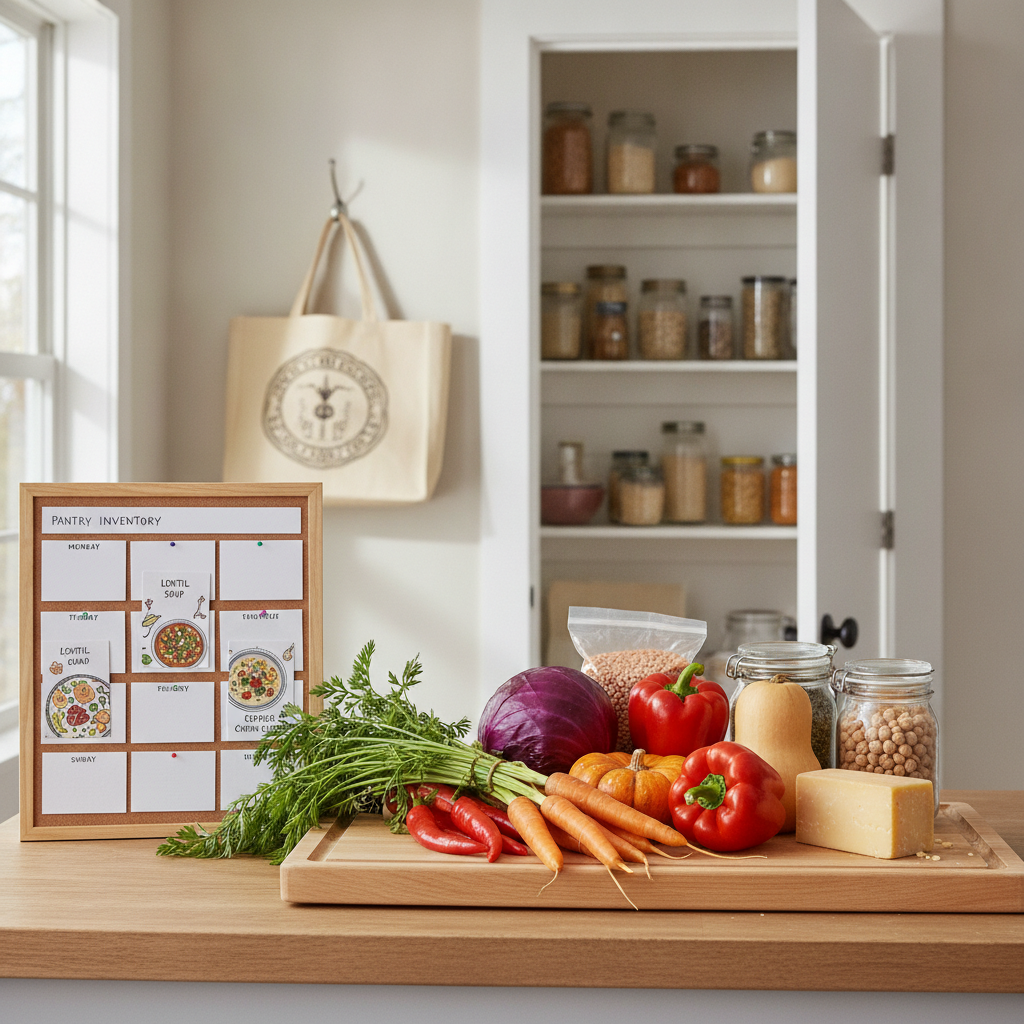
Most households run on a quiet, invisible grocery logic that feels efficient but rarely is. You finish something, you add it to the list. You wander a store aisle, something looks good, it goes in the cart. By Thursday, you're staring at a half-used can of coconut milk, a bunch of wilting cilantro, and the vague sense that dinner requires yet another trip to the store. The running grocery list isn't broken — it's just solving the wrong problem. A constraint-based pantry menu flips the model entirely, building meals around what already exists before deciding what to buy.
Start With a Full Pantry Inventory Before Planning Anything
The constraint-based approach begins not with a meal idea but with a clear-eyed look at what's already on hand. Before you write a single meal down, spend ten minutes pulling items forward in your fridge, checking shelf dates in the cabinet, and noting what proteins are in the freezer. Apps like Pantry Check or even a simple Notes document can hold this inventory without much friction. This step sounds obvious, but most households skip it entirely, defaulting instead to planning meals from scratch as if the pantry were empty. It rarely is.
Build Meals Around Perishables First, Then Fill With Shelf Staples
Once you know what's in the house, arrange your weekly meals in a specific order: lead with meals that use the most perishable items, and push pantry-stable ingredients toward the end of the week. That leftover rotisserie chicken becomes Monday's grain bowl, not Saturday's afterthought. The kale that's three days in goes into Tuesday's soup. This sequencing is where most of the food waste reduction actually happens — not through willpower, but through deliberate scheduling. Whole Foods and Trader Joe's both stock predictable weekly perishables, so you learn quickly what needs to move fast and what has more runway.
Set a Hard Limit on New Ingredients Per Week
The constraint in constraint-based planning is real. Give yourself a firm cap — say, three to five new ingredients per weekly shop — and build the rest of the menu around what's already stocked. This isn't deprivation; it's structure. When you know you can only introduce a handful of new items, you choose them carefully and make sure they pull double duty across multiple meals. A block of tofu purchased for a stir-fry on Wednesday also makes its way into Thursday's miso soup. That kind of ingredient overlap is what eliminates the single-use purchases that quietly drain grocery budgets and crowd out shelf space.
Plan One Flexible Wildcard Meal to Absorb Leftovers
Every week needs at least one intentionally open slot — a meal with no fixed recipe, designed to absorb whatever didn't get used. Friday night works well for this in most households. Call it a grain bowl night, a clean-out-the-fridge stir-fry, or a build-your-own wrap situation. The format is less important than the function: this meal is your safety net for the cilantro that didn't get used on Tuesday and the half-can of black beans sitting in the fridge. Keeping this slot unscripted also reduces mid-week decision fatigue, because you're not trying to plan around unknowns — you're absorbing them.
Use a Weekly Template Rather Than Reinventing the Plan Each Time
One of the underrated advantages of constraint-based planning is that it compounds over time. After three or four weeks, patterns emerge — which proteins your household reaches for most, which vegetables seem to always have leftover portions, which weeknight formats actually get made versus abandoned. Use those patterns to build a loose weekly template: maybe Monday is always grain-based, Wednesday involves a soup or stew, and Sunday is the more ambitious cook. Meal planning apps like Mealime or Paprika can hold these templates without requiring you to rebuild them from scratch each Sunday.
Do One Consolidated Weekly Shop, Then a Small Midweek Produce Check
The goal isn't to eliminate store trips entirely — fresh produce genuinely benefits from a midweek refresh. The goal is to reduce unplanned, reactive trips that happen because dinner wasn't thought through in advance. A constraint-based menu makes the main weekly shop more precise, because you're buying to a specific plan rather than buying in vague anticipation of meals you might want. Reserve the midweek stop for one or two fresh items at most, ideally from a farmers market or neighborhood produce stand where the selection is smaller and the temptation to over-buy is lower.
Track What Gets Wasted to Refine the System Over Time
The final layer of the constraint-based approach is a simple feedback loop. Each week, before you start planning again, note what you had to throw out. Not to feel bad about it — just to learn from it. If the fresh herbs keep going unused, switch to dried for a few weeks. If the salad greens always wilt by Thursday, push the salad meal to Tuesday. Over time, these small adjustments tighten the system considerably, and the midweek store trips that once felt necessary start feeling genuinely optional.
Shifting to a constraint-based pantry menu takes about one full month to feel natural. The first week might feel slightly rigid; the second week gets easier. By the fourth week, the process of inventorying, sequencing perishables, and capping new purchases starts to feel less like planning and more like a quiet household rhythm — one that quietly keeps both the trash bin lighter and the grocery receipts shorter.