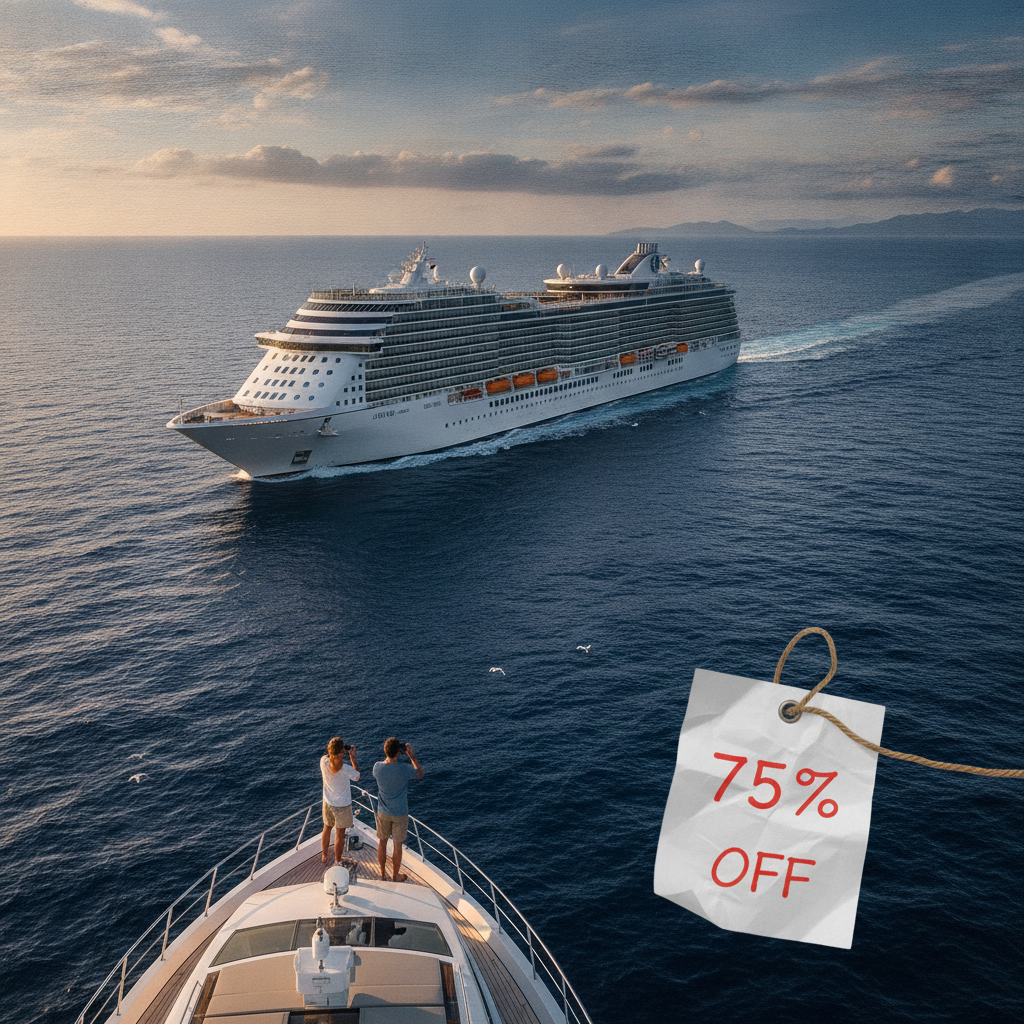
Ocean crossings by cruise ship were once considered a luxury reserved for the wealthy or the retired. Repositioning sailings have quietly changed that equation, offering some of the most dramatic per-night cruise values available anywhere in the market today.
Every spring and fall, cruise lines physically move their fleets between regions — pulling ships from the Caribbean to Europe, or from Alaska to Hawaii, or across the Pacific entirely. These sailings aren't packaged as premium products. They're logistical necessities, and cruise lines price them accordingly. If you're flexible with timing and comfortable with longer sea days, repositioning voyages offer a rare opportunity to cross an entire ocean for what a short resort weekend might cost.
Understand What a Repositioning Sailing Actually Is
A repositioning cruise is a one-way voyage where a ship moves from its home deployment region to a new one for the upcoming season. Holland America, Cunard, and Celebrity Cruises regularly offer these sailings between North America and Europe or between North America and the Asia-Pacific region. Because the ship is traveling somewhere it needs to go anyway, the cruise line discounts cabins significantly compared to round-trip itineraries. You're essentially helping fill a ship that would sail regardless of passenger count.
Time Your Search Around Seasonal Fleet Movements
The two primary windows for repositioning sailings are April through May, when ships migrate from warmer winter markets to summer destinations, and October through November, when the reverse happens. Transatlantic crossings from the U.S. East Coast to Europe are most common in spring, while fall brings ships back westward. Pacific repositioning sailings — from Alaska or California toward Hawaii or Asia — are less frequent but tend to carry even steeper discounts because the itineraries are less familiar to mainstream travelers. Searching during these windows, rather than year-round, narrows your focus and improves results.
Book Through the Cruise Line Directly or Compare on Aggregators
For repositioning sailings specifically, booking directly with the cruise line often surfaces the clearest pricing and the broadest cabin category selection. That said, comparison tools like Cruiseline.com or Cruise Critic's fare-tracking features can give you a useful baseline before you call or book online. Some travel agents who specialize in cruises also receive group block pricing on repositioning departures, which can undercut even the cruise line's own published fare. It's worth checking both channels before committing, particularly for sailings more than six months out.
Plan Around the Sea Day Reality
Repositioning sailings are not port-intensive itineraries. A transatlantic crossing might include only two or three port stops before spending five or more consecutive days at sea. This is a genuine feature for some travelers and a dealbreaker for others. If your version of a good vacation requires daily excursions and constant new scenery, a repositioning sailing may feel long. But if you enjoy ship amenities, reading, live entertainment, and the experience of ocean travel itself, the long sea stretches become the whole point. Set that expectation before booking.
Factor In One-Way Logistics Before Finalizing
Because repositioning cruises are one-way, you'll need to handle flights on both ends. Flying into the embarkation city and then home from the disembarkation city adds planning complexity and potentially extra cost. The smart approach is to price the full trip — cruise fare plus both flights — against the cost of a standard round-trip cruise itinerary in the same region. In most cases, even with asymmetric airfare, the total still comes out well ahead. Booking flights to and from secondary airports, or using transferable points through Chase Ultimate Rewards or similar programs, can close the gap further.
Choose Your Cabin Category With Cost in Mind
Interior cabins on repositioning sailings are where the deepest value lives. Because the ship is already discounted across the board, an interior fare on a repositioning voyage often undercuts an interior fare on a standard itinerary of the same line by a significant margin. Balcony cabins represent a reasonable middle ground on ocean crossings specifically — the extended sea days give you more time to actually use outdoor space, making the slight upgrade more justifiable than it might be on a short Caribbean loop. Suites on repositioning sailings are also discounted relative to peak-season pricing, making them worth examining if you've ever been curious about premium cabin experience.
Watch for Last-Minute Drops on Remaining Inventory
Cruise lines discount repositioning sailings further as departure approaches, particularly when occupancy runs lower than projected. If your schedule allows for a booking window of six to eight weeks out, monitoring fare drops on specific sailings can yield genuinely remarkable prices. Setting up email alerts through cruise aggregator tools or checking directly with the cruise line's website weekly during this window is a low-effort habit that occasionally produces significant savings. The tradeoff is reduced cabin selection — the best interior and oceanview options tend to disappear first.
Treat the Crossing as the Destination
The travelers who get the most from repositioning sailings are those who reframe the experience entirely. Rather than viewing the voyage as transportation with a few port stops attached, they treat the ship itself as the destination — the dining venues, onboard programming, library, and the singular experience of watching open ocean pass for days at a stretch. Cunard's Queen Mary 2 is particularly well-regarded for this philosophy, having maintained a dedicated transatlantic crossing schedule for decades. Approaching any repositioning sailing with that mindset tends to make the sea days feel generous rather than empty.
As cruise lines continue adjusting deployment patterns in response to demand shifts and fuel economics, the repositioning sailing market will keep evolving. New routes are emerging as lines expand into Southeast Asia and South America more aggressively. The fundamental value proposition isn't going anywhere — ships will always need to move, and savvy travelers who build flexibility into their schedules will continue finding ocean crossings at prices that still feel almost implausible once you're actually onboard.