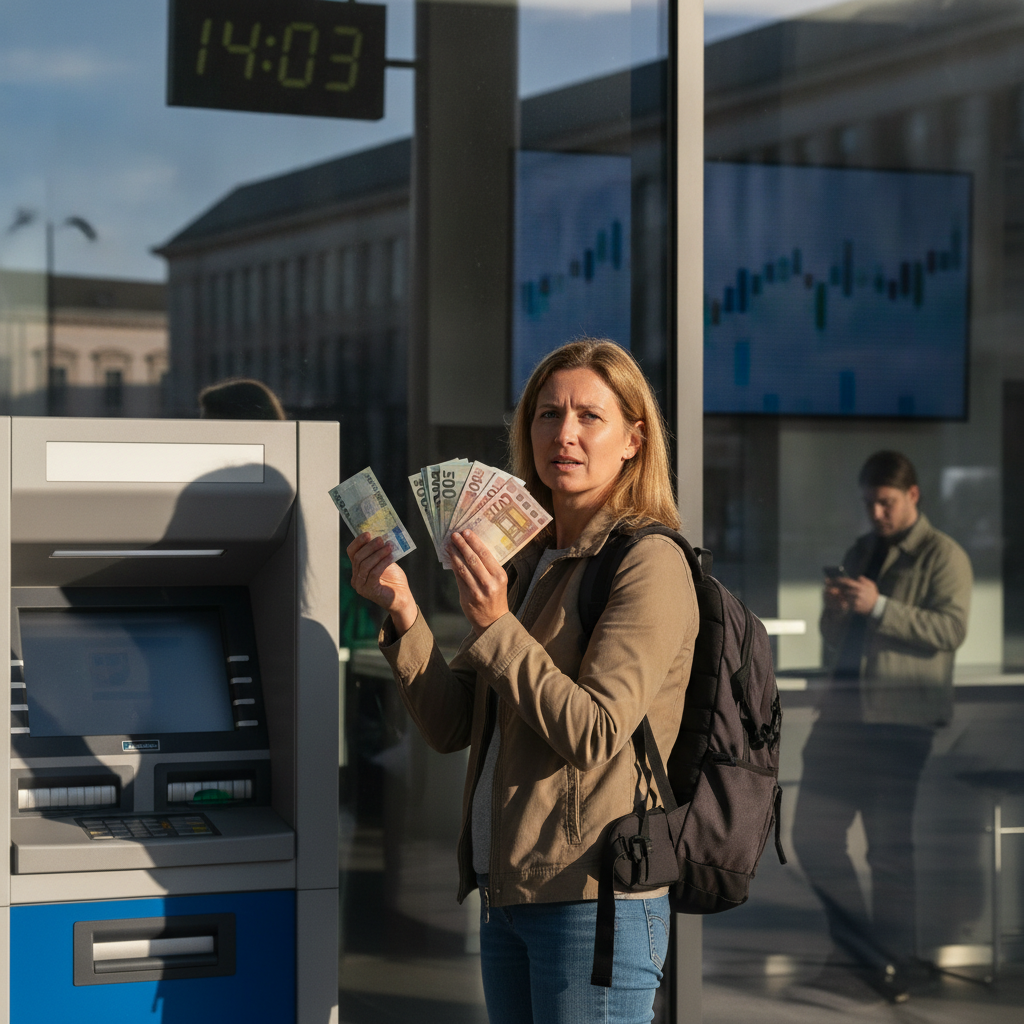
Few travel frustrations are as quietly disorienting as watching the exchange rate shift between the moment you book a trip and the moment you actually withdraw cash abroad. The rate shown on a finance app on Monday morning can look meaningfully different from what an ATM dispenses on Thursday afternoon — and the gap is rarely random. Central bank rate decisions, which occur on scheduled cycles throughout the year, are among the most reliable forces driving those swings. Understanding how they work doesn't require a finance degree, but it does reward travelers who pay attention to timing.
How Do Central Bank Announcements Actually Move Exchange Rates?
Central banks — the Federal Reserve in the United States, the European Central Bank, the Bank of England, and others — meet on scheduled dates to set benchmark interest rates. These decisions signal the cost of borrowing money within an economy, and currency markets respond almost immediately. When a central bank raises rates, its currency tends to strengthen because higher yields attract international investment. When it holds or cuts rates, the opposite often follows. The movements aren't always dramatic, but even a modest shift can affect what a traveler receives at an ATM or exchange desk in the days surrounding an announcement.
Why Does the Timing Window Around Announcements Matter?
The period immediately before and after a major central bank decision tends to be especially volatile. Currency traders position themselves ahead of expected announcements, which can push exchange rates in one direction before any official word arrives. After the announcement, markets often correct or amplify that move depending on whether the decision matched expectations. For travelers, this creates a real-world consequence: exchanging currency or making large ATM withdrawals in the 24 to 48 hours surrounding a rate announcement — from the Federal Reserve, the Bank of Japan, or the Reserve Bank of Australia, for example — can mean receiving noticeably less than the interbank mid-market rate suggests.
What Happens Between the Rate Decision and the Exchange Desk?
Most travelers don't exchange currency at the interbank rate. Banks, airport kiosks, and street-level bureaux de change — including prominent operators like Travelex — apply a spread on top of the base rate. That spread compensates them for currency risk and generates profit. When markets are volatile, providers tend to widen their spreads to protect against rapid shifts in the underlying rate. A traveler who visits a Travelex desk in a major international terminal during a period of post-announcement volatility may encounter a noticeably wider margin than they'd see during a calm stretch a week later. ATMs operated by foreign banks behave similarly, often adjusting their offered rates dynamically.
How Do ATMs Handle Rate Fluctuations Differently Than Exchange Desks?
Foreign ATMs add their own layer of complexity to this picture. When a traveler withdraws cash abroad, the conversion rate applied is typically set by the cardholder's home bank — not the local ATM operator — though some machines prompt a choice through a process called dynamic currency conversion. Choosing to be billed in your home currency at the ATM locks in the machine's rate, which is almost always less favorable than letting your home bank apply the conversion. During periods of post-announcement rate movement, home banks may also adjust their conversion rates with a lag, meaning the rate applied to a withdrawal on Wednesday might reflect Tuesday's post-announcement volatility rather than a stabilized rate from later in the week.
Which Destinations and Currency Pairs Are Most Sensitive to This?
Not all currency pairs respond equally to central bank announcements. Travelers heading to countries with smaller or emerging-market economies — Thailand, Turkey, or Mexico, for example — may encounter sharper volatility than those moving between major reserve currencies like the euro and the dollar. That said, even well-traded pairs like EUR/USD or GBP/USD can shift by meaningful margins around Federal Reserve or European Central Bank meetings, which occur roughly every six to eight weeks. Travelers planning to exchange significant amounts in cities like Istanbul, Mexico City, or Bangkok benefit from checking the central bank calendar for both their home country and destination country before making exchange decisions.
What Can You Actually Do to Time This Better?
The good news is that central bank meeting calendars are publicly available and easy to find. Before your trip, check when the Federal Reserve, European Central Bank, or the relevant destination-country bank is scheduled to meet. Tools like Google Finance, Wise, or the XE Currency app allow you to track rate trends in the days surrounding those dates. If you have flexibility, exchanging currency or making large ATM withdrawals a few days before an announcement — or waiting until rates have stabilized a few days after — often yields a better effective rate. Avoid airport exchange desks immediately after major announcements when spreads tend to widen. If your debit card doesn't charge foreign transaction fees and your bank reimburses ATM fees, you're already ahead of most travelers; just be deliberate about when, not just where, you withdraw.
Currency exchange is one of those quiet variables that most travelers don't think about until they're already standing at a foreign ATM. The connection between central bank decisions and what actually lands in your hand isn't complicated — but it is consistent. Paying modest attention to rate announcement timing, alongside the exchange tools you already use, is a low-effort habit that reliably protects the purchasing power of your travel budget.