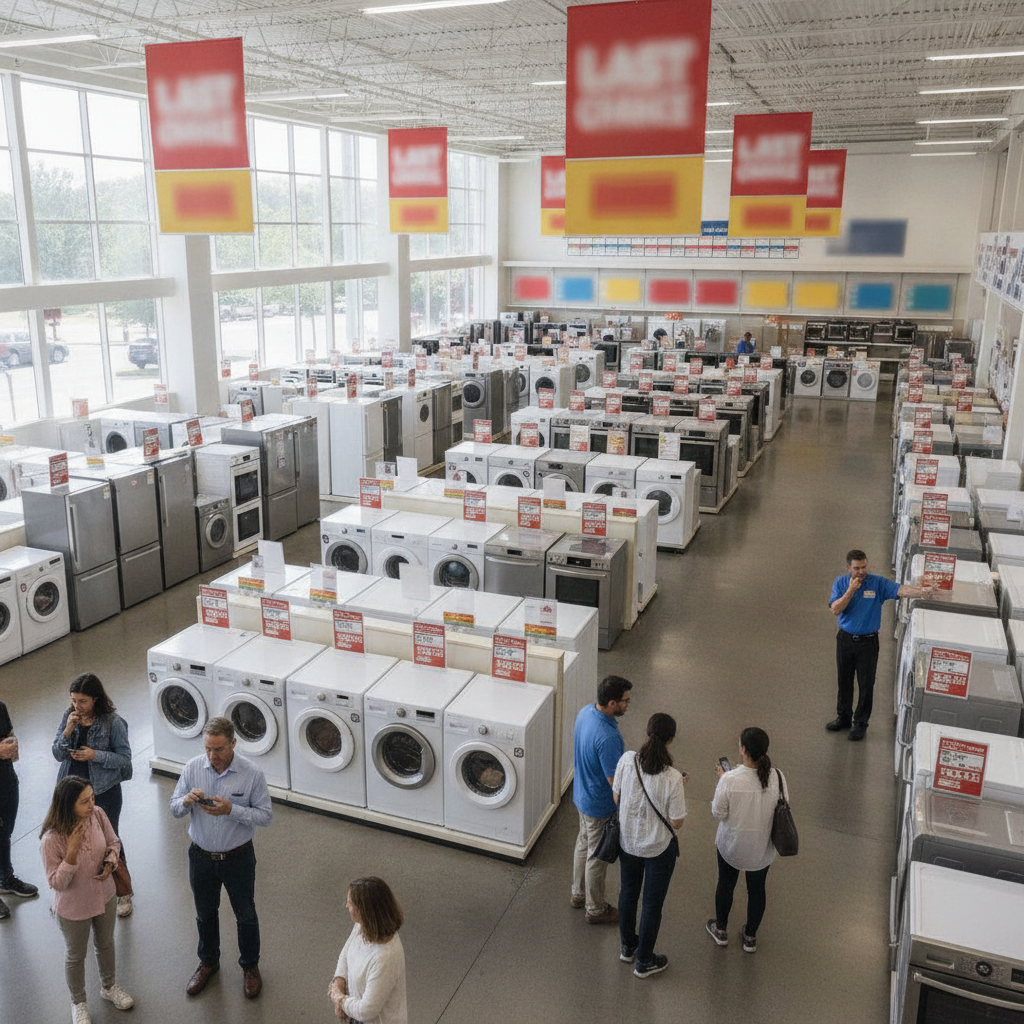
Retail markdowns on major appliances are not random. They follow a rhythm tied to manufacturer release schedules, retailer inventory targets, and the predictable pressure to clear floor space before new models arrive. Once you understand that rhythm, you stop buying appliances reactively and start buying them strategically — often saving a meaningful amount without compromising on quality or features.
The Annual Rollout Cycle That Drives Clearance Pricing
Most major appliance manufacturers — brands like Whirlpool, LG, and Samsung — release updated product lines in the late winter and early spring months. Retailers receive new inventory between February and April, which means current-model stock needs to move before floor and warehouse space gets reallocated. That transition creates genuine pricing pressure, not the manufactured urgency of a weekend sale. Clearance tags on outgoing models reflect real margin flexibility, and the deeper you get into the clearance window, the more aggressively retailers tend to discount.
Why Late Summer Produces the Most Consistent Discount Depth
The period running from mid-July through September consistently delivers some of the steepest appliance markdowns of the year. By this point, new model arrivals are already on or near the showroom floor, and retailers are carrying double inventory on certain categories. The carrying cost of unsold units motivates store managers to push clearance pricing further than they might earlier in the season. For shoppers who can plan a major purchase several weeks in advance, this window is particularly reliable across refrigerators, dishwashers, and laundry pairs.
Which Appliance Categories See the Deepest Cuts
Refrigerators tend to see among the most aggressive end-of-model-year discounts, largely because they occupy significant floor space and represent high per-unit cost — both of which create pressure to clear. Dishwashers follow a similar pattern, especially mid-range and premium-tier models where manufacturers update styling and internal components annually. Laundry pairs — washers and dryers sold together — also see strong clearance movement, since retailers often want to move both units at once to simplify inventory turnover. By contrast, small countertop appliances tend to hold price longer, as they're cheaper to warehouse and are frequently refreshed through different distribution channels.
How Holiday Weekend Sales Layer On Top of Clearance Timing
Major retail holidays — Labor Day in particular — have a compounding effect when they fall inside an existing clearance window. Retailers use the built-in traffic of a holiday sale event to accelerate movement on already-discounted models, which can push prices lower than either event would produce independently. Memorial Day and Black Friday also produce meaningful appliance discounts, but they don't always align as neatly with model-year turnover cycles. Labor Day, falling at the tail end of summer rollout season, tends to represent the most reliable convergence of holiday promotion energy and genuine clearance depth.
Using Price Tracking Tools to Confirm Actual Discount Depth
Not every clearance tag reflects a true markdown from a stable baseline price. Some retailers inflate original pricing before applying a percentage discount, a pattern that tools like Google Shopping and CamelCamelCamel — which tracks Amazon pricing history — can help you identify. For appliances sold through major home improvement and electronics retailers, checking recent price history over a 90-day window gives you a clearer sense of whether a current clearance price represents genuine savings or a repositioned baseline. The app Honey also surfaces historical pricing data at checkout, giving you a quick gut-check before committing.
Floor Model and Display Unit Pricing as a Secondary Layer
Floor models occupy a separate discount tier from standard clearance stock, and they can represent exceptional value when timed correctly. As new display units arrive to replace outgoing models, store managers often have discretion to reduce floor model pricing significantly — sometimes further than standard clearance items. The tradeoff is cosmetic wear from showroom use, but for buyers comfortable with minor surface imperfections, this category often delivers the deepest per-unit savings in the store. Asking specifically about floor model availability during a clearance window, rather than waiting for it to appear on a sale tag, is a straightforward way to surface deals that don't always get prominent floor placement.
Building a Purchase Timeline Around the Retail Calendar
The most useful thing you can do before a major appliance purchase is to map your need against the retail calendar rather than reacting when something breaks. If you know a refrigerator is aging, flagging a replacement for late summer rather than waiting for a failure gives you the flexibility to shop the clearance window deliberately. Apps like Flipp aggregate weekly retailer circulars and can help you monitor pricing trends across multiple stores at once, making it easier to recognize when a model you've been watching hits clearance territory. Patience, in appliance shopping, is consistently rewarded.
The retail calendar for appliances is more predictable than most shoppers realize, and that predictability is genuinely useful. Understanding which categories turn over fastest, when manufacturer rollouts create inventory pressure, and how holiday weekends amplify existing clearance depth puts you in a position to make a considered purchase rather than an urgent one. Start mapping your next appliance need against these timing windows now, and you'll likely find the right moment without any scrambling.