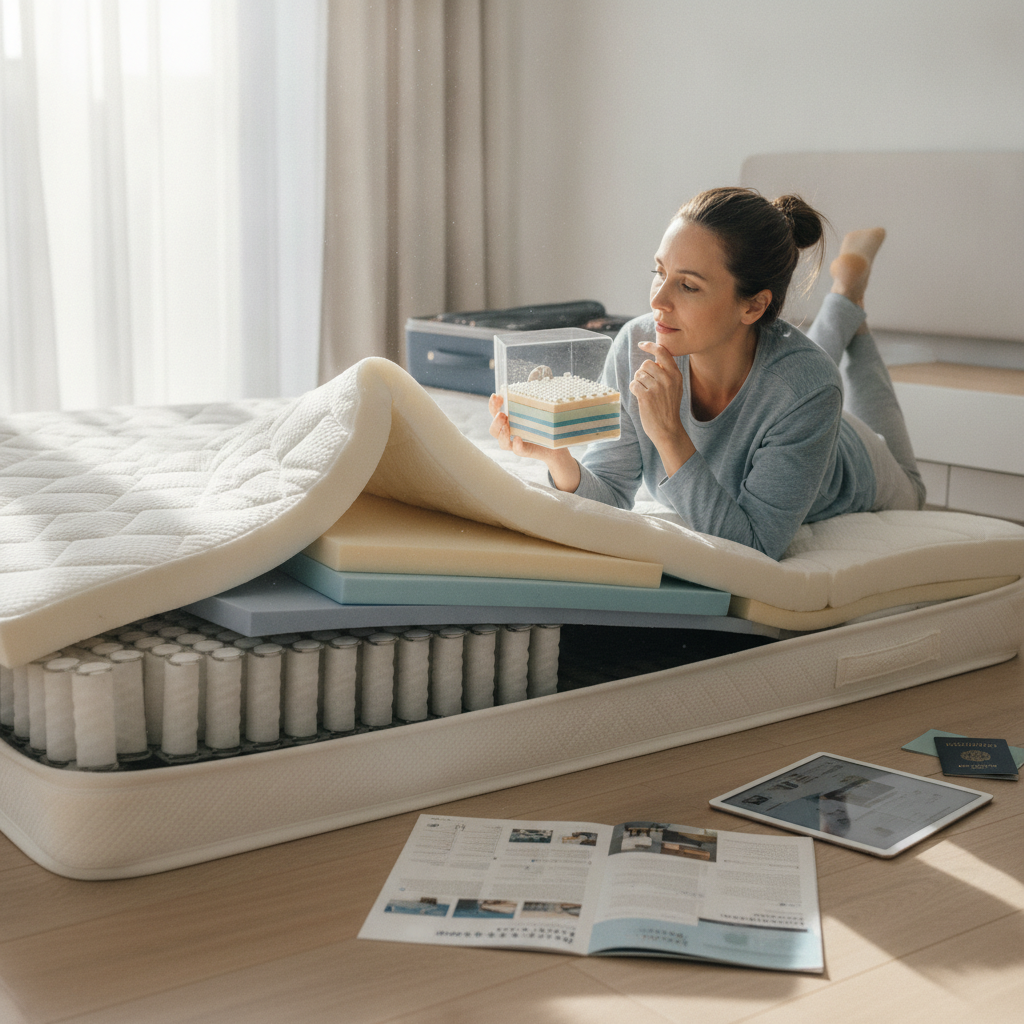
Mattress shopping has a way of turning a practical purchase into an overwhelming experience. Showroom floors are packed with industry jargon, foam density ratings, and comfort layer depths that sound impressive but mean very little without context. The result is that many shoppers end up paying a premium for features engineered for a completely different type of sleeper than themselves. Understanding how these specifications actually work — and which ones genuinely matter for your sleep position — can save you hundreds of dollars and years of poor sleep.
What Does Comfort Layer Depth Actually Tell You?
The comfort layer is the top section of a mattress, sitting above the support core, and its depth is measured in inches. Many brands market thicker comfort layers as a sign of quality, but depth alone doesn't determine how a mattress will feel. A side sleeper typically benefits from a deeper comfort layer — somewhere in the three-to-five-inch range — because that extra material cushions shoulders and hips. Back and stomach sleepers, by contrast, often do better with shallower comfort layers that keep the spine properly aligned without excessive sinkage. Chasing depth without considering your position is one of the easiest ways to overspend.
How Does Foam Density Affect Long-Term Value?
Foam density, measured in pounds per cubic foot, tells you how much material is packed into each unit of foam. This number directly predicts durability. Low-density foams — typically below 3 lb/ft³ — break down faster and lose their shape within a few years, making them a poor value even at a lower sticker price. Medium-density foams in the 3–4 lb/ft³ range offer a solid balance of comfort and longevity for most sleepers. High-density foams above 4 lb/ft³ are often marketed to heavier individuals who need more structural support. Paying for high-density foam when you don't need it isn't a bonus — it's simply unnecessary spending.
What Does ILD Rating Mean for Your Sleeping Style?
ILD, or Indentation Load Deflection, measures foam firmness by calculating how many pounds of pressure it takes to compress the foam by a fixed amount. Lower ILD numbers feel softer, higher numbers feel firmer. Side sleepers generally feel most comfortable in the 10–20 ILD range for their comfort layer, since softer foam reduces pressure on joints. Back sleepers often prefer the 20–30 range, and stomach sleepers typically need something closer to 30 or above to prevent the midsection from sinking out of alignment. Brands like Casper and Purple list these figures on product pages, and cross-referencing them with your sleep position before buying can help you avoid an expensive mistake.
How Do Zoned Support Systems Change the Equation?
Zoned support systems divide the mattress into sections with different firmness or responsiveness levels, targeting areas like shoulders, hips, and lumbar. These systems add cost to any mattress, and they're worth it under specific conditions. Side sleepers, particularly those who deal with shoulder or hip pressure, often find zoned designs genuinely helpful. Back sleepers with lower back concerns can also benefit from enhanced lumbar zones. If you sleep in multiple positions throughout the night, zoned systems may offer less payoff than the marketing suggests, since your body won't stay in any single zone consistently. Brands like Saatva and Tempur-Pedic incorporate zoning into several of their models, and it's worth reading which zones address which sleep positions before assuming the feature applies to you.
What Role Does the Transition Layer Play?
Beneath the comfort layer and above the support core sits the transition layer — a middle section designed to gradually shift pressure as the body sinks in. This layer often goes unmentioned in marketing materials, but it significantly influences how a mattress performs for different body weights. Lighter sleepers rarely sink deep enough to engage the transition layer meaningfully, which means paying extra for a thick, specialized transition layer often yields no real benefit. Heavier sleepers engage this layer more fully, making it a more relevant purchase consideration. Checking whether the brand breaks out transition layer specs separately — rather than bundling them with overall comfort layer depth — gives you a clearer picture of what you're actually buying.
How Do Hybrid Mattresses Price Out Differently Than All-Foam?
Hybrid mattresses combine foam or latex comfort layers with an innerspring coil support system, and they typically carry a higher price tag than all-foam options. The added cost is justified for sleepers who run warm, since the coil system improves airflow, or for those who need more edge support. However, if your primary concern is pressure relief, an all-foam mattress with the right ILD and density specs can outperform a hybrid at a lower price point. Side sleepers with pressure-point sensitivity, for example, often find well-spec'd all-foam models from brands like Leesa or Nectar more comfortable than entry-level hybrids that prioritize bounce over contouring.
Why Does Latex Foam Carry a Premium and Is It Worth It?
Latex comfort layers — whether natural or synthetic — are marketed heavily on durability and responsiveness. Natural latex holds up exceptionally well over time and offers a buoyant, pressure-relieving feel that differs noticeably from memory foam. The premium price is often justified for back sleepers and combination sleepers who want a surface that pushes back slightly rather than conforming deeply. Side sleepers who prefer a slower, sinking sensation may actually find latex less satisfying than a comparable memory foam option at a lower price. The key is to ask whether the latex is natural or synthetic, since synthetic latex often performs similarly to dense polyfoam at a much lower actual production cost.
How Do Trial Period Lengths Signal Brand Confidence in Specifications?
A brand's trial period is an underrated signal when evaluating whether their comfort layer specs are transparently marketed. Companies that offer 100-night or longer home trials tend to design mattresses they're confident will perform as described across a range of sleep positions. A 30-night trial window barely gives your body enough time to adjust to a new surface. If a brand is reluctant to offer a generous return window, that's worth factoring into your confidence level when reading their specifications. Cross-referencing trial period lengths with specification transparency — checking whether ILD, density, and layer depth are all disclosed on the product page — gives you a clearer sense of how trustworthy the brand's claims actually are.
Reading mattress specifications takes a little practice, but it pays off in a way that showroom conversations rarely do. When you know what your sleep position actually demands in terms of ILD, foam density, and layer depth, the marketing language loses its power to push you toward features you don't need. Take one step this week: pull up the spec sheet for any mattress you're considering and check whether the comfort layer numbers align with how you sleep. That single habit can be the difference between a purchase you feel good about for years and one that leaves you second-guessing every night.