Few frustrations in travel planning are as quietly defeating as watching your accommodation budget collapse under the weight of getting somewhere. You price out flights, they seem reasonable, and then you add two nights of hotels on either end of the journey — one near the departure airport, one to recover on arrival — and suddenly the trip costs far more than you expected before you've even started exploring.
There's a structural fix for this, and it's older than aviation itself.
What Makes Overnight Train Travel Fundamentally Different From Flying?
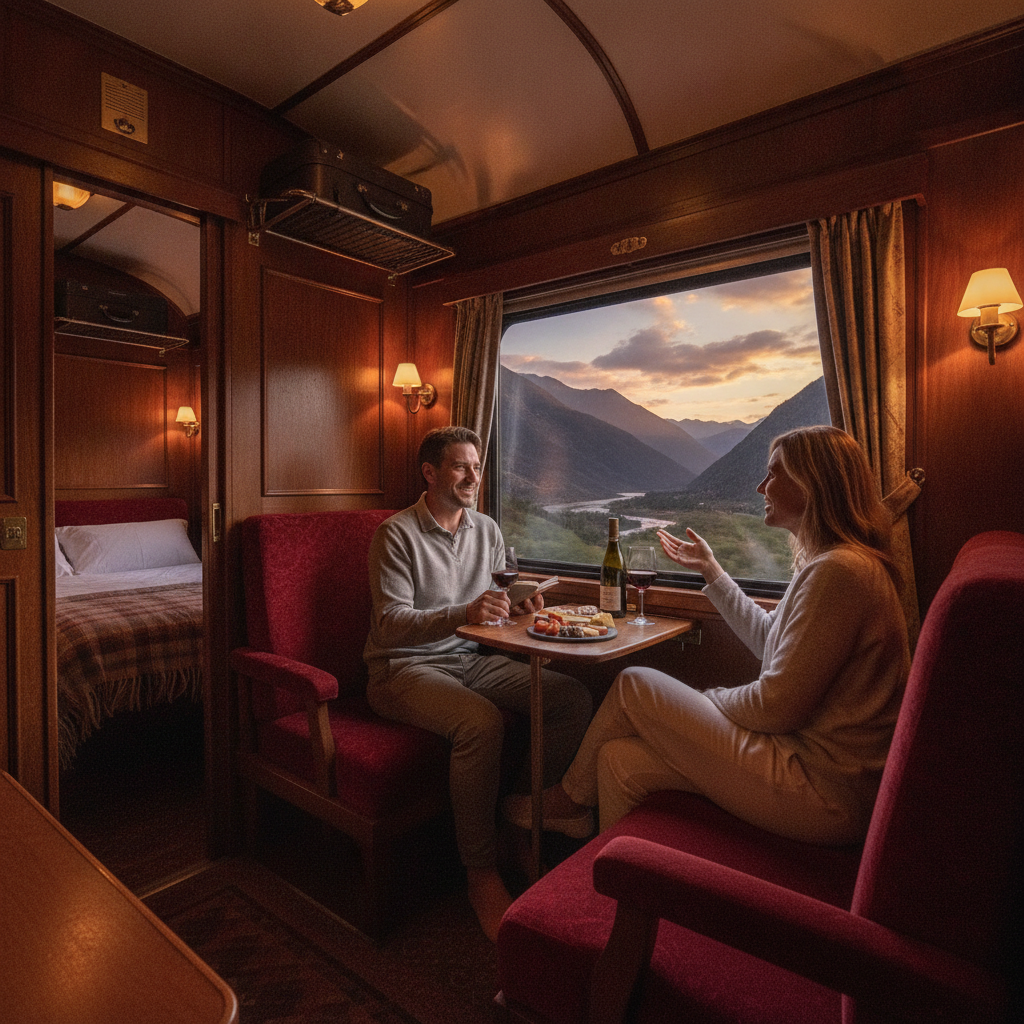
When you board an overnight sleeper train, you're doing something that no flight can replicate: converting travel time into rest time and, in many cases, into a destination experience of its own. The hours you spend crossing a continent or a mountain range aren't lost to cramped seats and recycled air — they become part of the trip. You wake up somewhere new, having already slept, without the expense of a hotel room for that night. The arithmetic is straightforward, but the experiential shift is more profound than most travelers anticipate before they try it.
How the Accommodation Math Actually Works
Consider a journey between two major European cities — say, Vienna and Venice. A flight takes roughly an hour, but you add airport transit time, check-in windows, and baggage retrieval on both ends. That same journey by overnight train takes closer to nine or ten hours and departs in the evening, arriving at breakfast. The hotel night you would have spent in your origin city or a transit hub simply disappears from the budget. One night's accommodation cost, often equivalent to a meaningful percentage of the total rail ticket, evaporates. On a two-week trip with two or three such legs, the cumulative savings reshape what you can spend elsewhere.
Which Routes Offer the Most Compelling Overnight Options?
Europe's overnight rail network has expanded considerably, with new routes and operators entering the market after years of relative dormancy. The Nightjet network, operated by Austrian Federal Railways (ÖBB), connects cities across Austria, Germany, Switzerland, Italy, and the Czech Republic with a reliable schedule of sleeper services. Trenitalia's overnight trains serve longer Italian domestic routes and connect to neighboring countries. For Scandinavia, the Arctic Circle train between Stockholm and Narvik in Norway remains one of the most scenically dramatic overnight journeys available anywhere.
What About Longer Hauls and Intercontinental Options?
Beyond Europe, the overnight train logic applies just as cleanly. In Japan, while the Shinkansen dominates daytime travel, legacy sleeper services and the limited Twilight Express Mizukaze offer a different pace entirely. India's rail network — bookable through IRCTC — runs hundreds of overnight routes where a first-class berth costs a fraction of what a hotel room would. In the American West, Amtrak's California Zephyr between Chicago and San Francisco crosses the Rockies overnight, saving two nights of accommodation on what would otherwise require a multi-hotel itinerary. These are established routes with real booking infrastructure, not niche experiments.
How Do You Book and Compare Sleeper Class Options?
The cabin tier you choose determines both comfort and savings. Most overnight services offer at minimum a seated couchette — essentially a fold-flat seat in a shared compartment — a standard berth in a multi-bunk compartment, and a private sleeper cabin. The private cabin costs more but often still lands below the price of a mid-range hotel in a major city. For solo travelers, the shared berth represents exceptional value: you pay for a bunk, the train moves, and you arrive rested.
Which Apps and Platforms Make Booking Easiest?
Booking overnight trains used to require navigating individual national rail websites, but the experience has improved significantly. Trainline consolidates schedules and tickets across dozens of European operators in one interface, making it straightforward to compare departure times, cabin classes, and fares. Rail Europe serves a similar function with a slightly stronger focus on pass-based travel for visitors from outside the region. For deeper European planning — particularly when chaining multiple overnight legs into a longer itinerary — Eurail's pass calculator on their platform helps identify which routes justify a pass versus point-to-point tickets. IRCTC remains the essential portal for Indian rail, and while the interface takes some patience to learn, it unlocks one of the world's most extensive overnight rail systems at genuinely low fares.
When Is the Right Season to Plan an Overnight Rail Journey?
Summer is peak season for European overnight trains, and berths on popular routes — particularly Nightjet departures toward Italy and the coast — sell out weeks or months in advance. Spring and autumn are considerably easier to book and often more pleasant for the destination experience at each end. If you're planning a journey for the warmer months, locking in sleeper reservations as early as the booking window opens is worth the discipline. Winter overnight trains, particularly those crossing alpine terrain, carry their own appeal — frosted landscapes visible through the corridor windows, dining car warmth, the sense of moving through a world that's gone quiet.
What Does the Experience Actually Add to a Trip?
There's a quality of arrival by overnight train that flying doesn't reproduce. You step onto a platform in a city you've never seen, at seven in the morning, with your bearings already partly calibrated from watching the landscape shift through the glass. The journey isn't a gap in the trip — it's a transition with texture. Travelers who've made the switch often describe it as the moment the trip stopped feeling like a series of destinations and started feeling like a continuous experience. That shift in perception tends to correlate with spending more intentionally: less reactive purchasing at airports, more deliberate choices at the destination.
If you haven't tried an overnight rail leg before, choosing a single route as a test case is a low-risk way to see how the economics and the experience compare to what you're used to. Start with a route that already interests you, price the berth against a hotel night in the same city, and let the numbers make the case. The case usually makes itself.