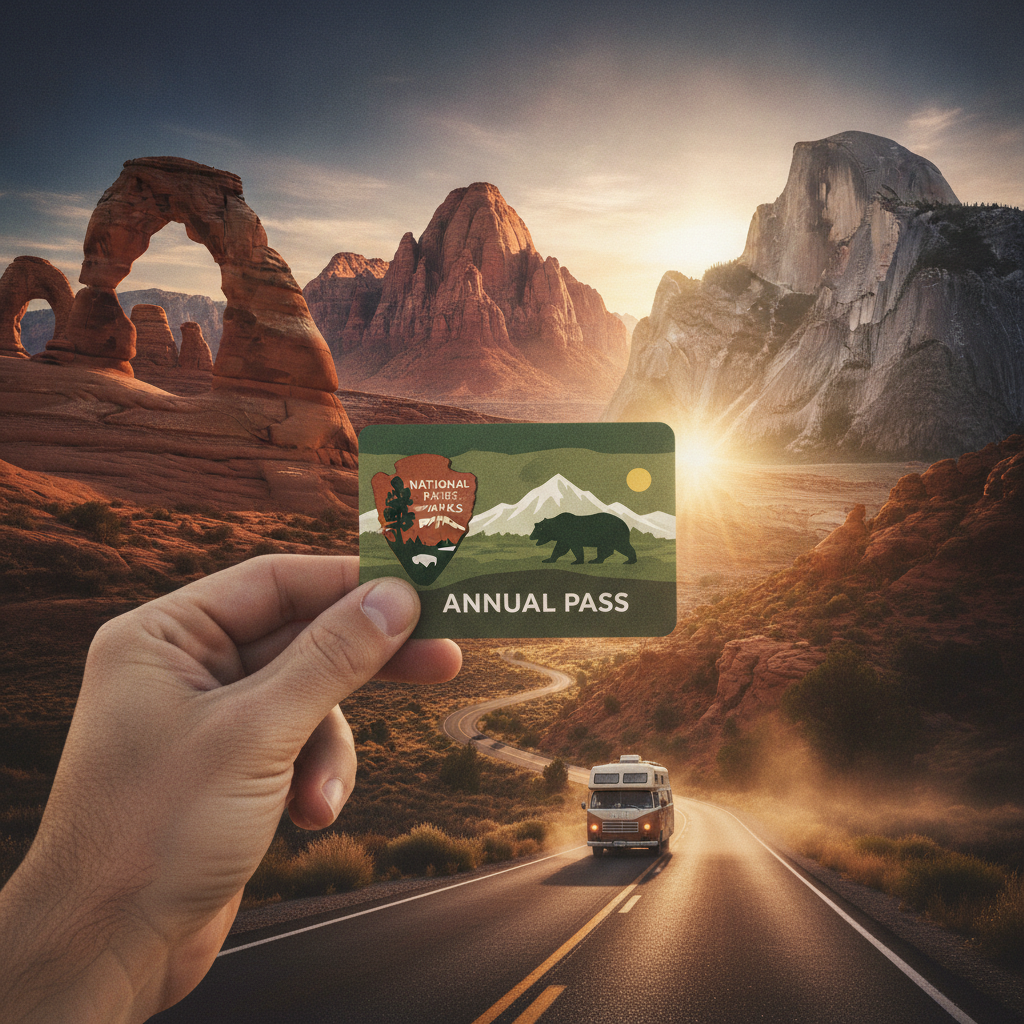
A well-timed road trip through America's national parks can stretch a single annual pass into one of the best-value travel purchases of the year. The America the Beautiful pass — sold by the National Park Service — covers entry fees at hundreds of federal lands, from Zion and the Grand Canyon to the Olympic Peninsula and Great Smoky Mountains. For road trippers hitting multiple parks in one run, the math often works out decisively in the pass holder's favor. The real question isn't whether to buy one, but when and how to structure your trip around it.
Planning around pass timing isn't complicated once you understand the mechanics. The pass activates on the date of first use and remains valid for twelve months, which means the purchase date matters less than the activation date. Road trippers who understand this detail unlock a quiet strategic advantage.
Buy the Pass at Your First Fee-Charging Stop
The activation clock starts the moment you use the pass, not when you buy it. That distinction gives you genuine flexibility. If your road trip begins with a free park or a site that doesn't charge entry — like many national forests or monuments — hold off on activating. Purchase the pass at the first fee-charging park on your route and you'll get a full twelve months from that point. A trip through the Southwest, for example, might start in New Mexico before hitting Grand Canyon, Bryce Canyon, and Zion in sequence. Buying at the Grand Canyon entrance keeps your window aligned with your actual spending.
Build Your Route Around Fee-Heavy Parks First
Not all parks charge the same entry fees, and some charge nothing at all. Structuring your itinerary so that the highest-fee parks fall early in the trip maximizes immediate savings. Yellowstone, Glacier, and Grand Teton all carry entry fees that add up quickly per vehicle. Hitting those first means the pass pays for itself within days, and everything else becomes pure bonus value. Lighter-fee or fee-free sites — including many Bureau of Land Management areas and smaller national monuments — fit naturally toward the end of the route without affecting the overall math.
Account for Entrance Fee Blackout Periods
Certain high-demand parks, including Arches National Park in Utah, now use timed-entry reservation systems during peak season. The America the Beautiful pass covers the entry fee but doesn't bypass the reservation requirement. Factoring reservation windows into your planning before you finalize dates prevents the frustrating scenario of arriving at a park you've technically paid for and being turned away. Check each park's reservation calendar in advance — Arches and Rocky Mountain National Park in particular fill timed slots weeks out during summer months.
Use Fee-Free Weekends Strategically for Lower-Priority Parks
The National Park Service designates several fee-free weekends each year, typically tied to national holidays and events like National Public Lands Day. If one of those weekends falls during your trip window, that's an ideal time to visit parks where you'd otherwise pay out of pocket — and to save your pass activation for a week where fees would otherwise apply across multiple stops. Layering fee-free days into a longer itinerary reduces overall cost without requiring any additional planning gymnastics. It simply takes knowing the schedule before you book.
Pair the Pass With a Return Visit to Extend the Value Window
The twelve-month activation window makes a follow-up trip genuinely worthwhile, especially for travelers who live within reasonable driving distance of multiple parks. A fall road trip that activates the pass in September leaves the door open for a spring visit to a different region the following year — all under the same pass. Pairing the Southwest with a later Pacific Northwest circuit through North Cascades or Crater Lake, for instance, pulls significantly more value from a single purchase. The pass covers a vehicle and all passengers, which makes the per-person math even more favorable for families or groups.
Don't Overlook BLM and Forest Service Sites on Your Route
The America the Beautiful pass isn't limited to national parks. It also covers entry at Bureau of Land Management sites, Army Corps of Engineers day-use areas, and U.S. Forest Service recreation sites that charge fees. Road trips through the Intermountain West especially benefit from this, since BLM land often sits adjacent to or between major park units. Canyonlands and Escalante-area BLM corridors, for example, involve fee sites that the pass covers in full. Mapping these sites into your itinerary before departure adds stops without adding cost.
Time Renewal to a Trip Rather Than a Calendar Date
If you already hold a pass that's approaching expiration, renewing it just before a major road trip — rather than on autopilot near the anniversary date — resets the twelve-month clock at the most useful moment. Renewing in March for an April-through-June trip gives you a full year starting from peak use. Letting the pass lapse and then restarting it at a trip's first stop accomplishes the same thing. The point is to treat renewal as a trip-planning decision rather than a routine subscription, since the timing directly affects how much of the coverage window sees active use.
National park access continues to evolve, with more parks adopting timed-entry systems and reservation-based access in response to record visitation levels. Fee structures and the list of participating sites can shift year to year, so checking the America the Beautiful pass site before finalizing any itinerary is a practical step. Road trippers who build their planning around the pass's mechanics rather than treating it as a simple purchase will consistently get more from both the trip and the investment.