Open-box electronics have quietly become one of the smartest corners of the consumer market, offering near-new products at meaningfully reduced prices — if you know how to read the labels. The challenge is that not every retailer uses the same grading system, and the words "open-box" or "certified" can mean very different things depending on where you're shopping. Understanding those differences is what separates a genuinely great deal from a frustrating gamble.
How Retailers Grade Open-Box Products Differently
Major retailers like Best Buy, Amazon, and Costco each maintain their own open-box certification frameworks, and the terminology rarely lines up neatly across stores. Best Buy uses a tiered system with labels like "Open-Box Excellent," "Open-Box Satisfactory," and "Open-Box Fair," each representing a different level of cosmetic and functional condition. Amazon Renewed applies its own certification standards to third-party sellers, while Costco handles returns through its own refurbishment process with far less public-facing detail. Knowing which retailer's language to trust — and how deeply to trust it — is the first skill any open-box shopper needs to develop.
What "Excellent" and "Like New" Grades Actually Mean
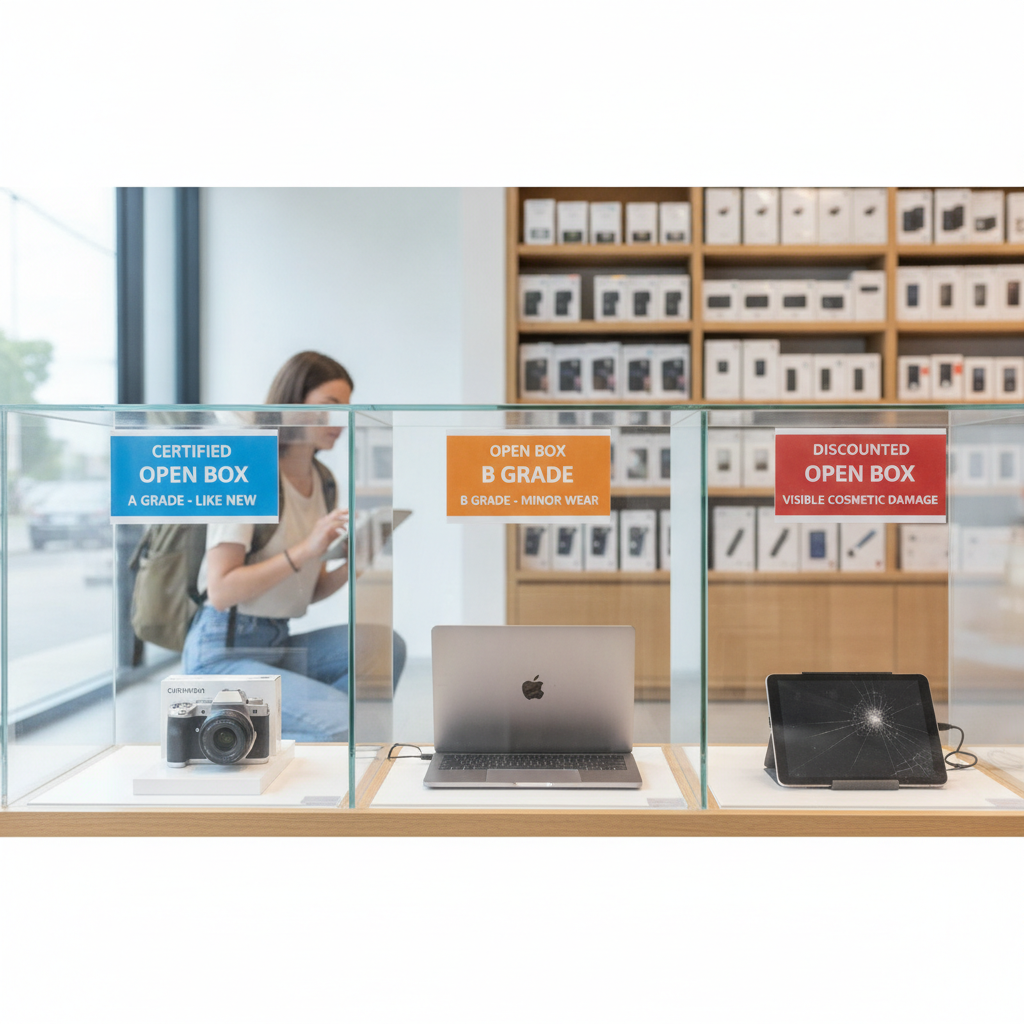
At the top of most grading scales, labels like "Open-Box Excellent" or "Renewed Premium" suggest the product is functionally indistinguishable from new, typically with minimal or no visible cosmetic wear. Best Buy's Excellent tier, for example, requires that the item show no visible scratches or damage when held at arm's length, and the product must pass a full functionality test. These top-tier open-box items often come with original or comparable accessories, and sometimes include a short store warranty. For most shoppers, this grade represents the sweet spot — genuine savings with very little compromise on condition or reliability.
The Middle Tiers: Where Caution Starts to Matter
Grades like "Open-Box Good" or "Satisfactory" occupy a more complicated position in the value equation. These products have typically been inspected and confirmed functional, but they may show visible cosmetic wear — scuffs, light scratches, or signs of prior use that are noticeable under normal conditions. Accessories may be missing or substituted with generic replacements, and the packaging is rarely original. For items where aesthetics matter less — a router tucked in a closet, a laptop used at a standing desk — these middle grades can still deliver solid value. For something like a television or a premium smartphone meant to be seen and held daily, the calculus shifts considerably.
Lower-Tier Grades and the Risks Worth Knowing
At the bottom of most open-box scales, grades like "Open-Box Fair" or ungraded return items carry the most uncertainty. These products may have cosmetic damage that's clearly visible, missing components, or limited testing documentation from the retailer. Some retailers sell these items essentially as-is, with no warranty and minimal quality assurance beyond a basic power-on test. The discounts can be steep, sometimes approaching half the retail price, but the risk profile rises accordingly. For experienced buyers who are comfortable troubleshooting electronics or replacing missing parts themselves, these grades can still yield value — but they're not the right entry point for most consumers.
Amazon Renewed vs. Manufacturer-Certified Refurbished
One important distinction that often gets overlooked is the difference between retailer-certified open-box items and manufacturer-certified refurbished products. Apple, Samsung, and Sony all operate their own certified refurbished programs, where returned or repaired devices are restored to factory specifications by the original manufacturer's technicians. These programs typically include original-quality components, renewed batteries where applicable, and a warranty that mirrors what a new product would carry. Amazon Renewed sits somewhere in between, relying on third-party sellers who meet Amazon's stated standards but are not the original manufacturers. For high-value purchases like laptops or tablets, manufacturer-certified programs tend to offer the most reliable assurance of quality.
Which Grades Are Actually Worth Your Money
If you're ready to shop open-box, the top two tiers — whatever a given retailer calls them — are where you'll consistently find the best risk-adjusted value. You get meaningful savings, usually somewhere between 15% and 40% off retail, without taking on significant uncertainty about condition or functionality. Stick to retailers with clear return policies on open-box items; Best Buy and Costco are particularly buyer-friendly in this regard. Avoid bottom-tier grades unless you're buying something low-stakes or have the technical confidence to handle surprises. And when the item is high-value — a OLED television, a premium laptop, a mirrorless camera — consider going straight to the manufacturer's certified refurbished program for the strongest combination of savings and peace of mind.
Open-box shopping rewards the informed buyer. The grading systems across retailers are imperfect and inconsistent, but they're readable once you understand the underlying logic each store applies. Focusing on top-tier grades, choosing retailers with solid return policies, and knowing when manufacturer certification adds genuine value are the habits that turn open-box browsing into reliable, repeatable savings.