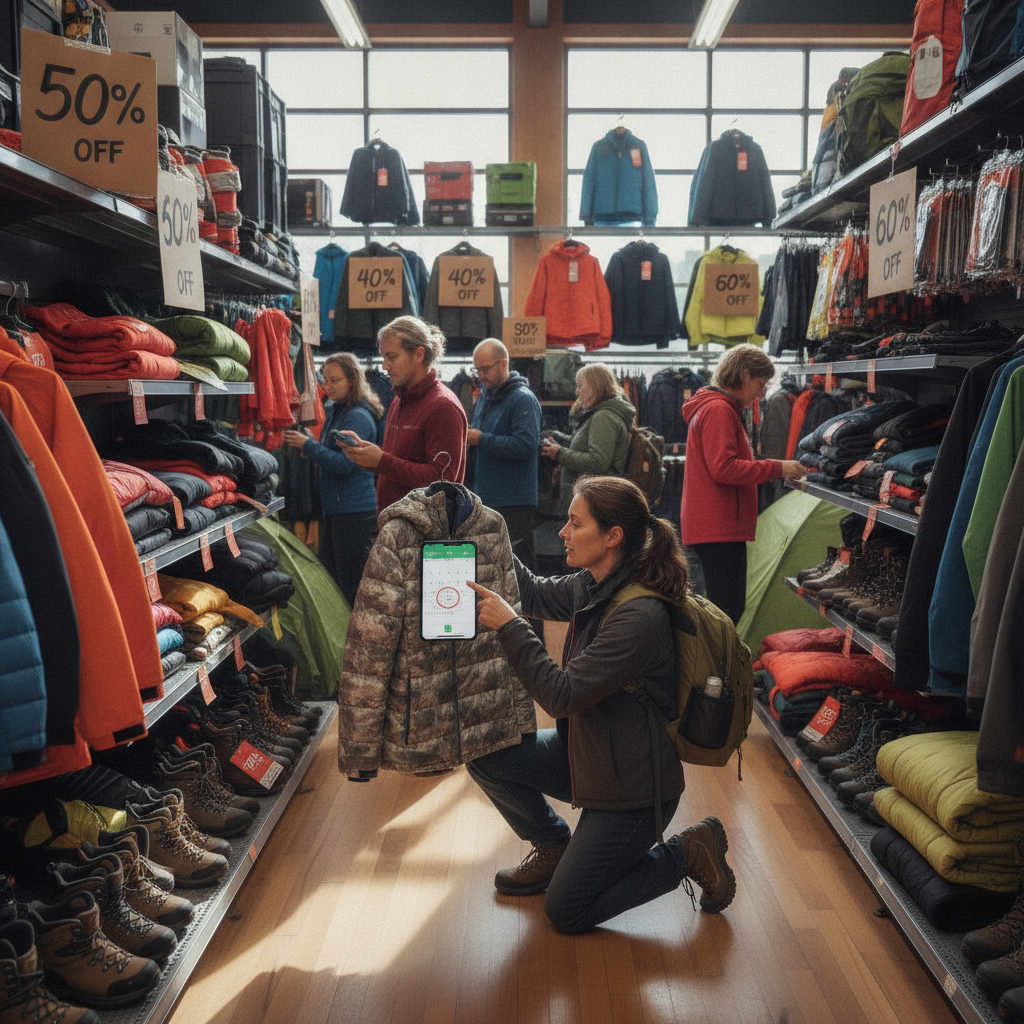
Outdoor gear carries some of the highest retail markups of any consumer category, which makes the clearance cycle one of the most reliable discount windows in all of shopping. Retailers like REI, Backcountry, and Moosejaw don't discount randomly — they follow a structured markdown rhythm tied to inventory turnover, seasonal transitions, and manufacturer model-year releases. Once you understand how that rhythm works, you can position yourself to buy quality gear at a fraction of its original price without relying on luck.
How Does the Markdown Ladder Actually Work?
Outdoor retailers typically operate on a three-tier markdown system. When a seasonal line first moves to clearance, prices drop by a modest amount — often in the range of 20 to 30 percent — just enough to signal a transition without sacrificing much margin. If inventory doesn't clear quickly, a second markdown follows within two to four weeks, pushing the discount deeper. A third and sometimes final markdown comes if stock still lingers, and this is where the real savings live. Understanding that retailers are working through this ladder — rather than offering one-time sale events — lets you make deliberate decisions about when to act and when to wait.
Why Retailers Can't Hold Inventory Between Seasons
Warehouse space and floor display planning drive a lot of these decisions. New seasonal product arrives on a fixed schedule from manufacturers, and retailers need physical room to receive and display it. That pressure creates urgency that works in your favor. The longer an item sits past its season, the more aggressively the retailer needs to move it, and the deeper the discount tends to go.
When Does Winter Gear Clearance Hit Its Lowest Point?
Winter gear — insulated jackets, base layers, ski accessories, and cold-weather footwear — follows a clearance arc that typically begins in late January and bottoms out in mid-to-late February. By that point, the holiday shopping energy has completely faded, new spring inventory is already arriving in warehouses, and retailers are motivated to clear shelves quickly. The two-week window spanning roughly the third week of January through the first week of February often marks the second markdown tier. If you can wait until late February or early March, you're more likely to catch the deepest cuts — though popular sizes and colorways will have disappeared by then.
What to Prioritize in Winter Clearance
Shells, softshells, and heavyweight fleece tend to hold their quality across model years, making last season's versions every bit as functional as what's currently on the floor at full price. Footwear clears more slowly because fit requirements limit the buyer pool, which means more inventory lingers longer and discounts tend to run deeper on boots and trail shoes than on apparel.
Which Weeks Offer the Deepest Cuts on Summer and Camping Gear?
Summer gear follows a similar pattern in reverse. Tents, hydration packs, trail running shoes, and lightweight sleeping bags typically begin their clearance cycle in late August, once back-to-school shopping winds down and retailers shift attention toward fall. The deepest markdowns on summer gear tend to land between mid-September and mid-October. By that point, three or four weeks of clearance pricing have passed, most impulse buyers have already picked through the selection, and the remaining inventory is approaching the final markdown tier.
How Spring Gear Behaves Differently
Spring hiking and paddling gear is a slightly different case. Because spring overlaps with shoulder camping season in many regions, clearance timing gets compressed. Retailers don't hold spring inventory as long before rolling into summer lines. That means you have a narrower window — roughly mid-June through early July — to find the deepest spring clearance prices before remaining stock gets consolidated or returned to vendors.
How Do Apps and Price Trackers Help You Time These Windows?
Watching these cycles manually across multiple retailers is tedious, but tools like Camelizer, Honey, and Google Shopping make it significantly easier. Camelizer, in particular, tracks price history on individual product pages and shows you exactly when and how deep markdowns have gone in previous seasons — giving you a realistic benchmark for what a true sale price looks like versus an inflated pre-discount baseline. Setting alerts through these platforms means you don't have to check daily; the tool does the monitoring and notifies you when a product crosses your target threshold.
Why REI's Member Sale Calendar Aligns With the Markdown Ladder
REI structures its major member sale events — including the well-known Anniversary Sale in spring and periodic Gear Up events — in ways that often coincide with the middle tier of the markdown ladder. Members who use their dividend alongside these sale windows are effectively compounding the discount. Knowing when REI typically runs these events lets you plan purchases several weeks in advance rather than reacting impulsively when a sale email arrives.
What Should You Actually Buy in Each Clearance Window?
The smartest approach treats clearance shopping as a forward-buying strategy rather than an impulse response. Buying a packable down jacket in February for use the following November is the kind of move that consistently saves money without requiring you to compromise on quality or settle for something you didn't actually want. Camping cookware, trekking poles, and technical layering pieces are particularly well-suited to this approach because they change very little from year to year and have long useful lifespans.
Tracking the markdown ladder and matching your shopping timing to its rhythm takes a little patience, but the results tend to be meaningful. The gear that serious outdoor enthusiasts rely on rarely goes on deep sale during the peak months you'd actually use it — that's by design. Buying in the off-season windows, armed with price history data and a clear sense of what you need, is one of the most reliable ways to own high-quality gear without paying full price. Start by identifying one piece of gear you'll need in the next twelve months and set a price alert now — the window will come around right on schedule.