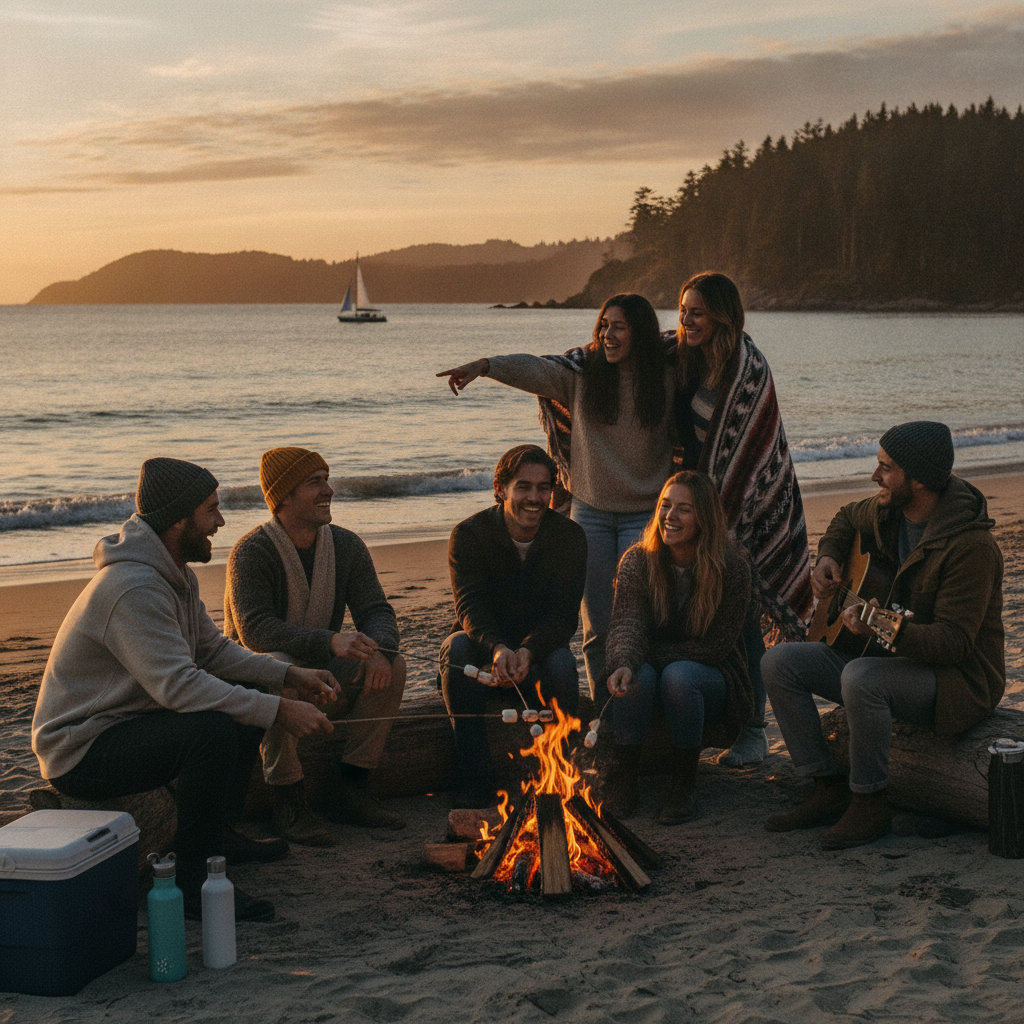
There is a quiet inefficiency built into the way most people organize their social lives — one measured not in wasted hours but in wasted money and shallow connection. When friendships are scheduled around venues rather than seasons, the calendar fills with reservations, cover charges, and restaurant tabs that consume a meaningful portion of the monthly budget while producing experiences that fade quickly from memory. The alternative, anchoring social plans to the natural rhythms of the outdoor world, has been practiced across cultures for centuries, and its logic holds up as well in contemporary life as it ever has.
The Economics of Venue-Dependent Socializing
Restaurants, bars, and ticketed entertainment venues operate on a straightforward economic premise: they monetize the human desire for shared experience. There is nothing inherently wrong with that exchange, but when it becomes the default architecture of a social life, the cumulative cost compounds quickly. A monthly rhythm built around dinner reservations, rooftop bars, and weekend brunches at places like Nobu or Fig & Olive can quietly consume several hundred dollars per person before discretionary categories are even considered. The social experience itself — the conversation, the laughter, the feeling of being present with people who matter — is not what costs the money. The infrastructure around it does. Separating the experience from its expensive container is the essential shift.
What Seasonal Rhythm Actually Means
Seasonal rhythm, in the cultural sense, refers to the practice of calibrating collective activity to the natural cycles of the year — planting and harvest, warmth and cold, light and dark. Anthropologists have long documented how pre-industrial communities used seasonal transitions as social organizing principles, timing celebrations, gatherings, and communal labor around the calendar of the land rather than the calendar of commerce. In contemporary terms, this translates to something far more accessible than it sounds. It means planning a foraging walk in October when the woods near the Hudson Valley or the trails outside Asheville are at their most compelling. It means organizing a lakeside morning in July not because a venue opened but because the season invites it. The environment becomes the occasion, and the occasion becomes free.
This framing matters because it reorients the social imagination. When people think of something to do with friends, the mind typically reaches first for venues — a new restaurant, a bar with a rooftop, a weekend escape package at a boutique hotel. That reflex is partly cultural and partly the result of decades of consumer marketing that has successfully equated leisure with purchase. Seasonal outdoor anchoring interrupts that reflex not by demanding austerity but by offering a genuinely richer alternative. A long walk through a state park followed by a shared meal cooked at someone's home is not a compromise version of a social outing. For most people who try it consistently, it becomes the version they prefer.
The Friendship Depth Dividend
There is a well-documented distinction in social psychology between what might be called parallel presence and genuine intimacy. Sitting across from someone at a loud restaurant involves proximity but not necessarily depth. The ambient noise, the distraction of menus and servers, the implicit pressure of the check looming — these are not conditions that produce the slow, unguarded conversation where real friendship is built. Outdoor settings, particularly ones involving moderate physical activity or shared sensory attention to a natural environment, tend to produce the opposite. Walking side by side on a trail through Acadia National Park or sitting on a blanket in a city park as the light changes in early autumn creates conditions where conversation deepens naturally. Silence becomes comfortable. Attention shifts from performance to presence.
This is not a romanticized claim. It reflects something structural about how human beings communicate. Eye contact, for instance, is far less constant during side-by-side outdoor movement than in face-to-face restaurant settings, and research in social neuroscience suggests that reduced direct eye contact during conversation — paradoxically — lowers social defensiveness and allows for more honest self-disclosure. The outdoor environment does some of the relational work that expensive venues try and often fail to do.
Designing the Seasonal Social Calendar
Practically speaking, building a social life around seasonal outdoor rhythms requires modest advance thinking but almost no financial infrastructure. The Meetup platform and neighborhood apps like Nextdoor make it straightforward to find or organize groups around specific seasonal interests — trail running in spring, outdoor film nights in summer, mushroom foraging in fall, winter birdwatching in places like the Bosque del Apache refuge in New Mexico. For closer friend groups, the rhythm can be more intentional: a standing agreement to meet at the same trailhead on the first Saturday of each month, or a loose seasonal tradition of watching the first significant snowfall from a specific hilltop with thermoses of coffee.
The financial logic is not incidental. When the social calendar is anchored to outdoor seasonal events rather than venue schedules, the entertainment budget shrinks almost automatically. Parking, trail access at state parks, and shared potluck contributions replace tabs and service charges. The money that remains can go toward occasional intentional splurges — a celebratory dinner that feels earned rather than obligatory, or a weekend trip built around a specific natural phenomenon like the wildflower bloom in Antelope Valley each spring.
Living Inside the Year
There is an older phrase, used still in some European rural traditions, for people who track and honor the turning of the seasons as a social act: those who "live inside the year." The phrase suggests not withdrawal from modern life but a conscious attunement to something larger than the commercial calendar — something that existed before subscription entertainment and prix fixe menus and will exist long after. To organize friendship around that attunement is to recover a form of social intelligence that costs very little and returns quite a lot.
The broad observation that opened this piece — that venue-dependent socializing is quietly expensive and shallower than it needs to be — points toward something most people already sense but rarely act on. The season outside the window is always offering an occasion. The question is simply whether the social imagination is tuned to receive it.