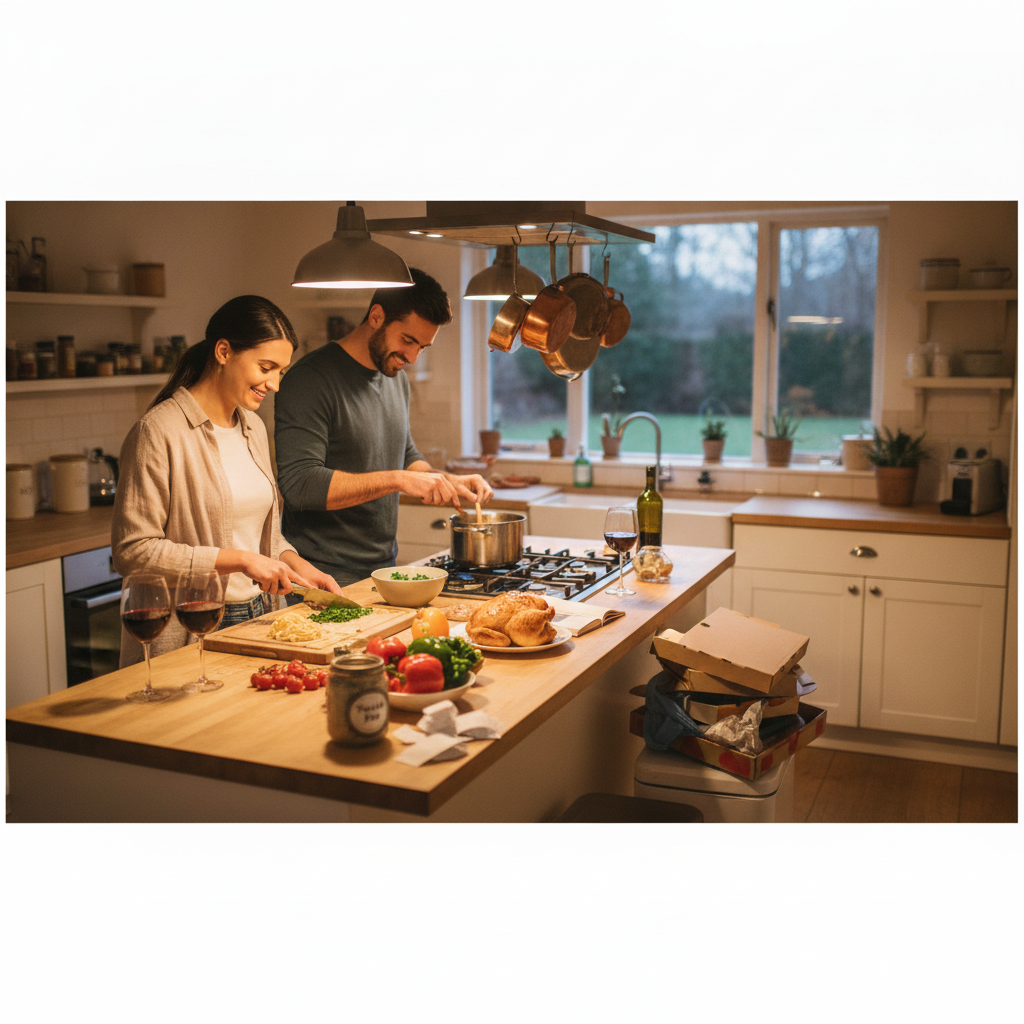
There is a particular kind of exhaustion that arrives on Friday evenings — the kind that reaches for a phone rather than a pan. For many households, weekend takeout has become less a treat and more a reflex, a default woven so thoroughly into the weekly rhythm that it no longer feels like a choice at all. The bags accumulate, the apps remember the orders, and the monthly spending quietly inflates in ways that rarely get examined until something else in the budget forces a reckoning.
The Ritual That Slowly Replaced the Kitchen
Weeked takeout didn't arrive all at once. It crept in gradually — first as a reasonable reward after a demanding week, then as a reliable fallback when energy ran low, and eventually as a standing appointment that displaced any real engagement with the kitchen. Platforms like DoorDash and Uber Eats made the path of least resistance almost frictionless, and the mental math of ordering versus cooking tilted further and further toward convenience. Over months and years, the kitchen became less a place of making and more a place of reheating, and with that shift came a quiet erosion of confidence in one's own ability to cook anything genuinely ambitious.
What One Ambitious Night Actually Requires
The corrective isn't a meal prep overhaul or a rigid weekly cooking schedule. It's something more modest and more sustainable: one deliberate, slightly ambitious cook night per week, chosen freely and approached with a measure of intention. This might mean a slow-braised Provençal lamb shoulder — a French technique that layers herbs, wine, and low heat across several hours to transform an inexpensive cut into something deeply aromatic — or a hand-rolled pasta from scratch, or a Thai green curry built from a fresh paste ground in a mortar. The dish matters less than the commitment to choosing something that sits slightly beyond the usual comfort zone, something that requires attention and rewards patience.
The Financial Architecture of a Single Substitution
The monetary shift that follows this kind of substitution is not dramatic in any single week, but it compounds in ways that become visible over a full month. A weekend takeout order for two from a mid-range restaurant typically carries a base price, platform fees, delivery charges, and a tip — the total often landing well above what most people mentally budget for it. Replacing even one of those orders weekly with a home cook night, even one involving quality ingredients from a store like Whole Foods or a specialty grocer, rarely approaches the same cost. The savings aren't a windfall; they're a quiet redistribution of money toward something that also builds a skill.
Kitchen Confidence as a Compounding Resource
There's a concept in behavioral psychology sometimes called *self-efficacy* — the belief in one's own capacity to execute a task successfully — and the kitchen is one of the more visible places where it either grows or stagnates. Each ambitious cook night adds a small deposit to that account. The first time a béarnaise sauce holds without breaking, or a sourdough loaf produces an open crumb, or a mole comes together after two hours of layered toasting and grinding, something shifts in the relationship between the cook and the kitchen. The space starts to feel less intimidating and more generative, and that shift has downstream effects on how often cooking feels like a viable alternative to ordering out.
The Social Dimension of Cooking With Intent
Among households that have made this shift deliberately, the cook night often becomes something more than a meal — it becomes an event with a loose social logic around it. In many cultures, the act of cooking with care is itself a form of hospitality and connection. The Japanese concept of *omotenashi* — a deep attentiveness to the comfort and experience of guests, expressed through preparation and presentation — reflects something that a takeout order, however convenient, cannot replicate. Inviting a friend to share in the evening, or simply making a dish elaborate enough to feel celebratory, transforms a budget-conscious decision into something that feels abundant rather than austere.
How Monthly Spending Quietly Restructures Over Time
The restructuring that happens at the monthly level isn't just about takeout spending declining. It's about the entire relationship with food expenditure becoming more conscious. When cooking ambitiously becomes a weekly practice, grocery shopping starts to shift — ingredients get bought with more intention, waste decreases, and the impulse to order out on weeknights weakens because the kitchen no longer feels like unfamiliar territory. Neighborhoods with good farmers markets, like those in Portland's Pearl District or Brooklyn's Carroll Gardens, become resources rather than scenic detours, and the money once absorbed by delivery platforms finds its way toward better-quality raw ingredients instead.
The Return to the Opening Reflex
Weekend evenings still arrive with their familiar weight of accumulated fatigue, and the instinct to reach for the phone doesn't disappear entirely. But it changes in character. When you've spent a recent Saturday evening building something slow and layered in your own kitchen — when you've learned, through practice, that the process itself can be the point — the reflexive reach for the delivery app carries a slightly different feeling. Not guilt, exactly, and not deprivation, but a quiet awareness that something more interesting is available, something that costs less and leaves you more capable than it found you. That awareness, once established, tends not to leave.