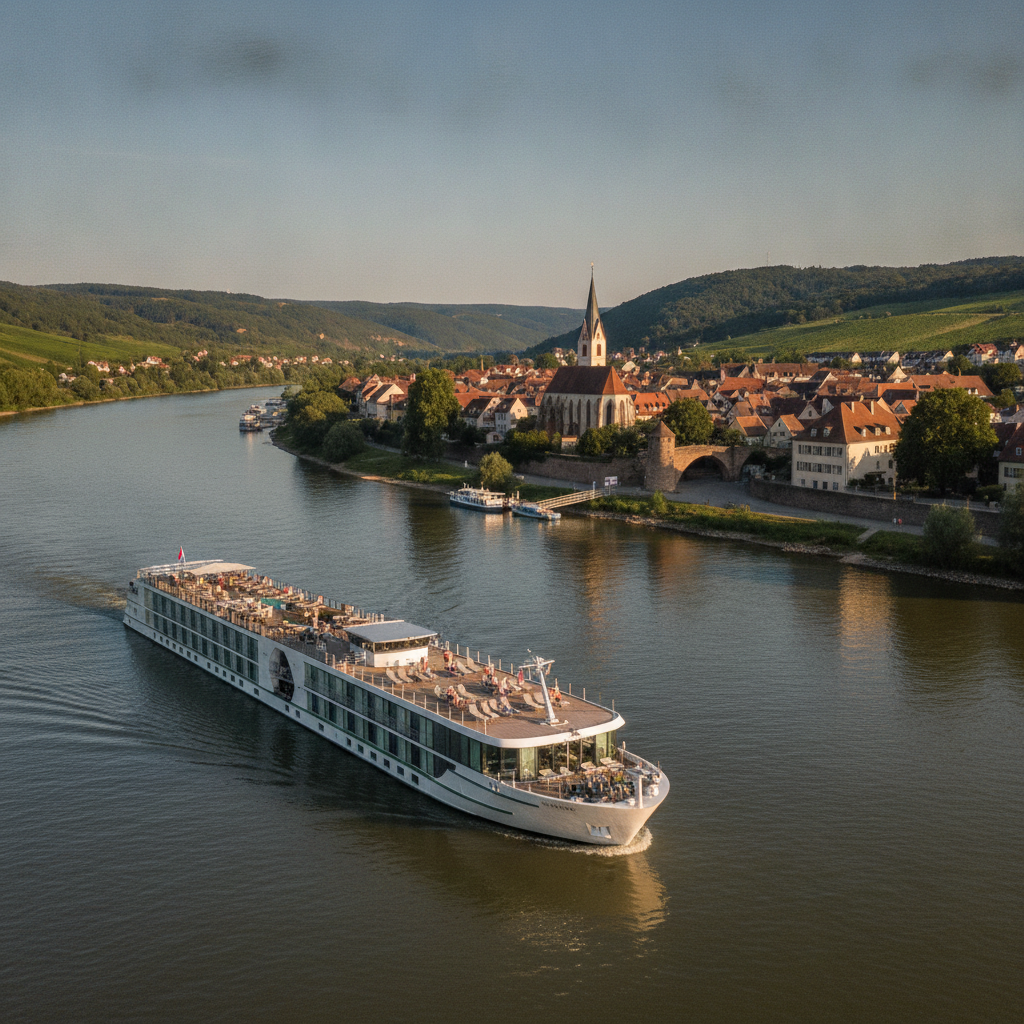
River cruising solves one of Central Europe's most persistent travel problems: the smaller towns are often the most rewarding to visit, but reaching them independently requires either a rental car, a complicated sequence of regional trains, or a chain of hotel bookings that adds friction to every leg of the trip. A river cruise collapses all of that planning into a single reservation, delivering you to places like Dürnstein, Regensburg, and Spitz an der Donau without any of the logistical overhead most travelers associate with getting off the beaten path.
If you've been eyeing Central Europe but keep stalling on the complexity of arranging it independently, a river cruise itinerary is worth understanding on a structural level — not just as a vacation category, but as a travel tool.
Choose an Itinerary Built Around Smaller Port Stops
Not all river cruise routes are equal when it comes to small-town access. Some itineraries anchor heavily in major cities — Vienna, Budapest, Prague — with smaller towns treated as brief scenic interludes. Others, particularly those running through the Wachau Valley or the Main-Danube Canal, are deliberately structured around villages and market towns that would be genuinely difficult to reach otherwise. When you're comparing itineraries, look at the port list carefully. If more than half the stops are major cities you could reach by rail anyway, you're not getting the full structural benefit that river cruising offers for smaller destinations.
Understand How Overnight Docking Changes Your Access
One of the most underappreciated features of river cruise scheduling is overnight docking. Ships don't always sail through the night — many pause in port towns for evening hours, giving passengers time to walk into town after dinner without it counting as a formal excursion. This matters more than it sounds. Towns like Rüdesheim am Rhein or Bratislava feel entirely different at 8 p.m. than they do during the midday tourist rush. Checking whether a ship overnights in a specific port, versus simply docking for a few daytime hours, should be part of how you evaluate competing itineraries.
Use the Ship as Your Hotel Anchor
The core logistical advantage of a river cruise is that your accommodation moves with you. You unpack once, and the ship repositions while you sleep or dine. For a region like Central Europe — where small towns often have limited hotel inventory, and where quality varies significantly — this removes an entire category of planning stress. You're not searching for a guesthouse in Passau that's available on a Tuesday, or trying to coordinate luggage transfers between Melk and Krems. The ship handles continuity, and you handle only what you want to see during the hours you're in port.
Plan Which Stops Deserve Independent Exploration
Ship excursions are convenient, but they're not always the best way to experience a small town. Many river cruise passengers find that smaller ports — places like Cochem on the Moselle or Český Krumlov on land-based extensions — reward slower, self-directed walking more than guided group tours. Before sailing, research each port stop and identify one or two where you'd rather skip the organized excursion and simply walk. Most ships publish their docking hours well in advance. Knowing you have four hours in a town of 8,000 people tells you immediately that a guided tour is optional, not necessary, and that the town is genuinely walkable on your own terms.
Read the Embarkation and Disembarkation Cities Carefully
River cruise itineraries typically run point-to-point rather than returning to their starting port. This structure means your embarkation city might be Budapest while your disembarkation city is Amsterdam — or vice versa. That's logistically useful if you want to spend a few days in a gateway city at one or both ends of the trip without backtracking. Booking a flight into Vienna and out of Basel, for example, lets you combine a pre-cruise city stay with the cruise itself without duplicating any travel. That kind of open-jaw flight pairing works well with river cruise structures and keeps the total trip cost predictable.
Layer in Pre- or Post-Cruise Days in Gateway Towns
The cities where river cruises begin and end are usually easy to reach by rail from major international airports, and they're worth spending time in beyond what the cruise itself allows. Budapest, Nuremberg, and Amsterdam all function well as two- or three-night bookends to a cruise, and staying in them doesn't require a rental car. Adding even one pre-cruise night in your embarkation city eliminates the stress of a same-day arrival, and a post-cruise night gives you a buffer if any delay affects your disembarkation day. These added nights also tend to be competitively priced in river cruise gateway cities outside of peak summer weeks.
Compare Cruise Lines by Their Shore Time Policies
Different cruise lines structure shore time differently. Some offer longer docking windows at each port, while others run a tighter schedule that prioritizes the number of stops over depth of time at each one. Lines like Viking River Cruises and Avalon Waterways publish their typical port hours, and reading those details before booking reveals a lot about the pace of a given itinerary. A cruise that docks for six hours in a small Austrian wine village is a fundamentally different experience than one that anchors there for ninety minutes while a lecture runs onboard. Time in port is the actual product you're buying, so treat it accordingly.
Account for Seasonal River Conditions
Central European river cruises are subject to water level fluctuations that can affect routing. Low water in summer or high water after spring snowmelt occasionally requires itinerary adjustments, sometimes replacing a sailing segment with coach transfers. This is more common on the Danube than on the Rhine. Understanding this before you book — and checking what a specific cruise line's contingency policy looks like — helps set realistic expectations. It doesn't happen constantly, but travelers who know it's possible tend to adapt more easily when it does, and they're less likely to feel the experience was misrepresented.
River cruising in Central Europe continues to expand in itinerary variety, with newer routes extending into less-visited stretches of the Elbe and the Moselle. As demand for smaller-town access grows among travelers who've already done the major capital cities, cruise lines are responding with more focused regional programs. Paying attention to those emerging routes — and booking before they become well-known — is one of the more reliable ways to get the kind of quiet, unhurried access to village Europe that used to require significantly more effort to arrange.