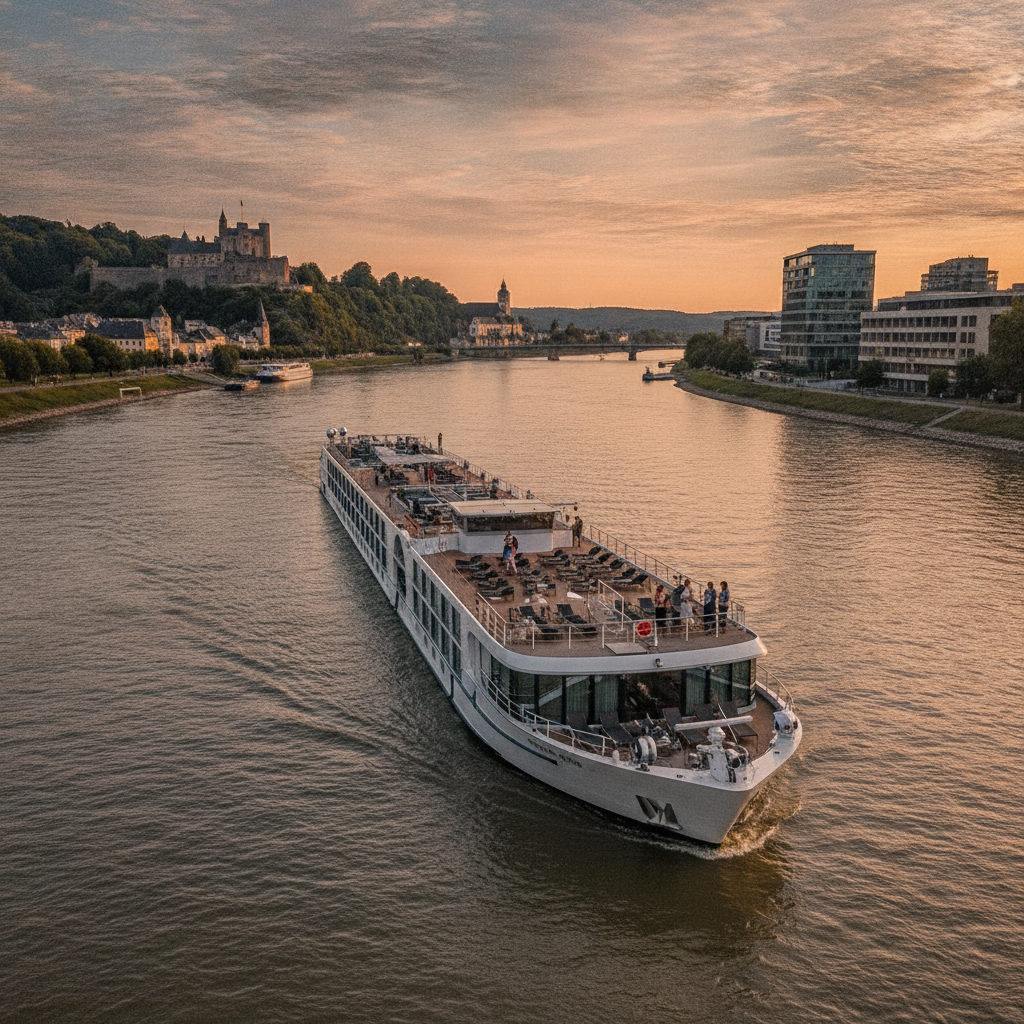
River cruising has quietly become one of the most cost-efficient ways to move through multiple countries without the logistical weight of booking separate hotels, arranging ground transport, or packing and unpacking every few days. If you've been eyeing a multi-country European trip but dreading the expense of stringing together hotel nights across four or five cities, the river cruise model offers a genuinely different math — one where the per-night cost often undercuts what you'd spend on land-based travel once all the variables are counted.
The catch is that this value only materializes when you understand how the itinerary structure actually works. The route design, cabin selection, timing, and port schedule all affect what you're really paying per night — and how much ground you cover.
Compare All-In Pricing Against Itemized Hotel Costs
The most common mistake travelers make is comparing a cruise fare only to a hotel room rate, without accounting for everything that room rate doesn't include. On a river cruise — particularly with lines like Avalon Waterways or Viking River Cruises — the fare typically bundles meals, port fees, many excursions, and on-board drinks. When you price out five separate hotel nights in five cities across France or Germany, add three restaurant meals per day, regional train tickets, and airport transfers, the gap between cruise pricing and land-based travel narrows quickly. In many cases, the cruise wins outright on total spend.
Choose Longer Itineraries to Drop the Nightly Average
River cruise fares are structured similarly to fixed-cost packages — the base cost covers the ship's operational overhead regardless of how many nights you're aboard. This means the per-night rate drops meaningfully as the itinerary lengthens. A seven-night sailing on the Rhine will cost more per night than a fifteen-night sailing covering the Rhine and Moselle. Travelers who can commit to longer departures — typically twelve to fifteen nights — tend to extract the most value from the structure. This isn't a trick; it's simply how fixed costs behave when they're spread across more nights.
Target Shoulder Season Departure Windows
Pricing on most river cruise lines follows a seasonal curve, with peak departures in July and August commanding the highest fares. Sailings in late March, April, October, and early November typically offer the same itinerary at meaningfully lower rates — sometimes fifteen to twenty percent below peak pricing — while still delivering favorable conditions for sightseeing. The Danube corridor, for instance, is arguably more atmospheric in autumn than in high summer. Choosing a departure date that avoids the midsummer window can reduce the per-night cost without shortening the route or compromising the port lineup.
Use Cabin Category Logic to Protect Your Budget
Cabin categories on river ships range from lower-deck standard staterooms to upper-deck suites with floor-to-ceiling panoramic windows. The temptation is to book upward, but on a river cruise, the viewing experience happens largely from the sun deck and public lounges — not your cabin. A mid-tier stateroom on a ship like an AmaWaterways vessel delivers essentially the same itinerary, the same meals, and the same port access as the top-tier cabin. Allocating that price difference toward optional shore excursions or a slightly longer sailing often produces a better overall trip.
Identify Routes That Cross the Most Borders Per Night
Not all river cruise routes are equally efficient at delivering multi-country coverage. The Danube from Passau to Budapest crosses through Germany, Austria, Slovakia, and Hungary in under eight nights — four countries at a pace that would require significant logistical effort to replicate independently. The Rhine-focused itineraries often include Germany, France, and the Netherlands within a similar window. When comparing routes, calculate how many distinct countries the ship transits per sailing night. High-country-density routes deliver more cultural variety per dollar spent, which is a meaningful metric if international breadth is part of the goal.
Assess What the Included Excursions Actually Replace
Many river cruise packages include at least one guided excursion per port — a walking tour of Regensburg, a guided visit through Vienna's Ringstrasse, or a wine tasting in the Wachau Valley. These inclusions carry real monetary value when measured against what independent travelers pay for equivalent guided experiences at those same destinations. Before dismissing the excursion package as a sales feature, price out what comparable tours would cost if booked separately through GetYourGuide or directly with local operators. The math often reveals that the included experiences represent several hundred dollars of value across a standard itinerary.
Book Early or Late to Capture Fare Incentives
River cruise lines use two distinct discount windows that reward either decisive early booking or last-minute flexibility. Early-booking promotions — typically available nine to twelve months out — often include cabin upgrades, reduced deposits, or onboard credit packages that effectively lower the per-night rate. Conversely, unsold inventory closer to departure sometimes appears at reduced fares through travel agents or the cruise line's own clearance channels. The middle booking window, roughly four to six months before departure, tends to be the least advantageous. Travelers with flexible schedules who can monitor inventory through a travel agent gain access to both ends of this pricing curve.
Factor Port-Intensive Schedules Into Your Destination Count
The strongest argument for river cruising as a multi-country strategy is the port schedule itself. Most itineraries dock at a new town each morning, meaning a twelve-night sailing might deliver eleven or twelve distinct destinations — a ratio that no land-based hotel strategy can easily replicate at the same cost. Smaller river towns like Dürnstein, Cochem, or Kinderdijk are genuinely difficult to include in a self-planned trip without either a rental car or awkward regional rail connections. The ship's movement handles all of that friction automatically, making it possible to experience places that most independent itineraries skip entirely.
River cruise pricing has become increasingly transparent in recent years, with more lines publishing fare breakdowns that make it easier to compare true per-night costs against hotel-based alternatives. As the market matures and more travelers discover the efficiency of this format, early booking windows are likely to become more competitive. Watching fare calendars across twelve to eighteen months of departure dates — and working with a travel agent who specializes in river itineraries — gives you the clearest picture of where the genuine value windows sit for the routes you want most.