There's a particular restlessness that arrives with the turning of seasons — a quiet but persistent sense that the space around you needs to change, to breathe differently, to feel new again. Most people respond to that feeling by shopping. A throw pillow here, a new candle set there, maybe a small piece of furniture that seems like the answer. Before long, the credit card statement reflects a mood that has already passed.
A better approach exists, and it doesn't require willpower so much as a simple structure. Scheduling one dedicated Seasonal Refresh Day each quarter — four times a year — gives that restlessness a healthy outlet while drawing a clear boundary around what the day is actually for.
Anchor the Day Before the Urge Arrives
Timing matters more than most people realize. If you wait until the restlessness peaks — when a room genuinely feels stale and you're already browsing Wayfair — you're far more likely to spend impulsively. Instead, put all four refresh days on your calendar at the start of the year. Tie them loosely to season shifts: early March, early June, early September, early December. When the day is already scheduled, it becomes an appointment rather than a reaction. You arrive at it with intention rather than frustration, which changes everything about how the day unfolds.
Set a Firm Spending Cap Before You Begin
A Seasonal Refresh Day works best when it has a financial ceiling attached to it from the start. Decide on a modest, realistic number — something that covers consumables like candles, fresh herbs, or a small bunch of flowers from a local market — and treat it as fixed. Write it down the night before. When you know the cap in advance, your creativity sharpens to work within it rather than around it. Constraints tend to produce better outcomes than open-ended budgets, especially when the goal is atmosphere rather than acquisition.
Start With a Full Reset Before Adding Anything New
Before you buy a single thing, spend the first part of the day clearing and cleaning. Pull furniture a few inches from walls. Wash windows. Wipe down light fixtures. Edit surfaces by removing half of what's on them. This step alone transforms a room in ways that no purchase can replicate. A clean, simplified space feels genuinely refreshed — not just rearranged. Most people skip this phase because it's unglamorous, but it's the part that does the heaviest lifting and costs absolutely nothing.
Rearrange Before You Replace
Furniture arrangement is one of the most underused tools in home refreshing. Moving a reading chair to face a different wall, rotating a rug ninety degrees, or swapping accent pieces between two rooms creates a genuinely different spatial experience. Apps like Planner 5D let you experiment with layouts digitally before moving anything heavy. The goal isn't to redesign — it's to introduce enough novelty that the space feels considered and alive again. Most households have more flexibility in their layouts than they've ever tested.
Rotate What You Already Own Rather Than Buying New
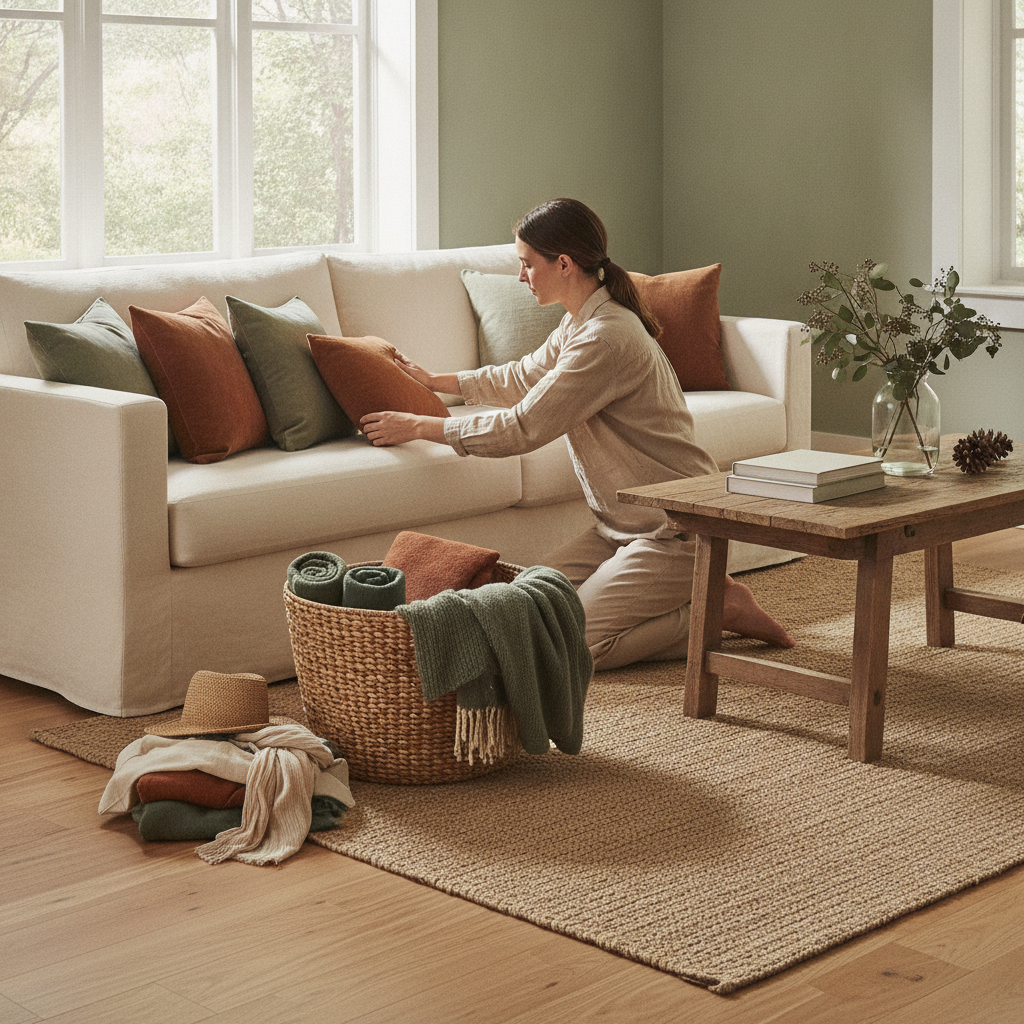
Many homes contain more than enough objects to support a full seasonal rotation. Storing a set of linen throw pillows during winter months and swapping them back in during spring creates genuine freshness without spending anything. The same logic applies to artwork, books displayed on shelves, decorative trays, and even kitchenware. Target's threshold collection, IKEA's seasonal basics, and similar budget lines are worth browsing — but only after you've inventoried what you already own and can rotate. The storage bin becomes the shop.
Use Scent and Sound as Atmosphere Levers
Two of the fastest ways to shift the feeling of a space are scent and ambient sound, and both are remarkably inexpensive. A new candle fragrance — citrus for spring, cedar for autumn — signals seasonal change more immediately than almost any visual update. Similarly, committing to a different playlist or ambient sound profile for the new quarter creates a subtle but consistent atmospheric shift. Spotify's curated seasonal playlists and YouTube's long-form ambient channels make this easy. Neither costs much, and both have an outsized effect on how a home feels day to day.
Build in a Brief Home Audit at the End of the Day
The last hour of your Seasonal Refresh Day is valuable beyond the refreshing itself. Use it to walk through your home with a notepad and observe honestly — what's working, what's worn out, what genuinely needs replacing versus what just needs a clean. Note what actual purchases might make sense in the coming months, but write them down rather than acting on them immediately. A thirty-day waiting list between noting a want and purchasing it eliminates the vast majority of impulse buys while still honoring genuine needs.
Treat the Day as a Ritual, Not a Chore
How you frame the day shapes how it feels. Put on music you love from the start. Make a good pot of coffee or tea. Light something. Give yourself the full day rather than cramming it between other obligations. A Seasonal Refresh Day that feels like drudgery won't stick as a practice. One that feels like a quiet, intentional investment in your own environment becomes something you genuinely look forward to — four times a year, reliably, without a receipt attached.
Your home responds to attention more than it responds to spending. Giving it one focused, intentional day each quarter is enough to keep the atmosphere feeling alive and considered across the whole year. Start with the next season change on the calendar, block the day now, and let the structure do what impulse shopping never quite managed to.