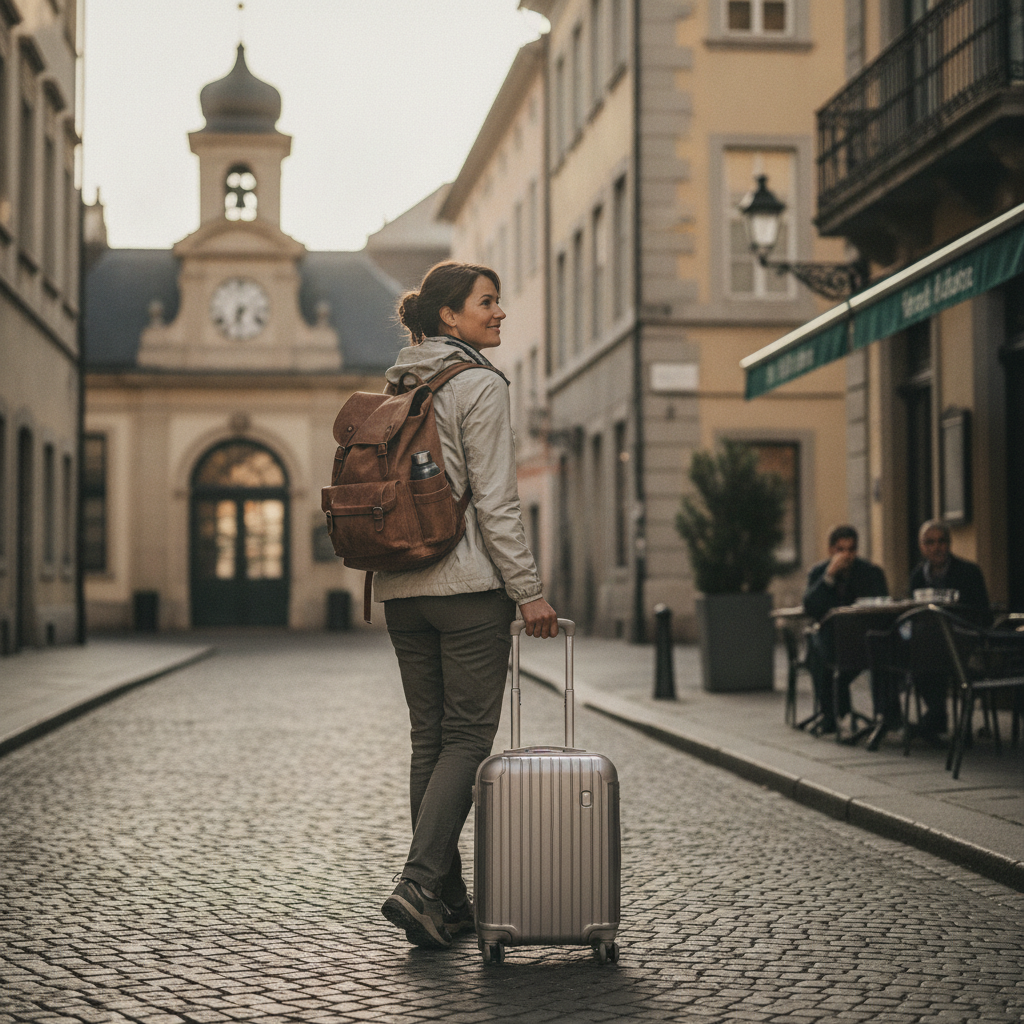
Most travelers have stood at a baggage carousel after a long flight, watching the same black suitcases loop past, quietly calculating how much of their trip has already slipped away. Checked luggage is one of those travel habits that feels necessary right up until the moment you realize it isn't. Packing into a single carry-on for a trip of ten days or longer isn't just a logistical experiment — it's a shift that quietly reshapes what your travel costs, how freely you move, and how deeply you actually experience the places you visit.
The Immediate Financial Case for Going Carry-On Only
Airline baggage fees have become a reliable revenue line for most carriers, and on multi-leg international trips, those fees compound fast. A round-trip itinerary with one or two connections can generate checked bag fees at each airline involved, especially when booking across separate carriers. Eliminating that cost entirely on a ten-day-plus trip can free up money better spent on a good meal, a museum entrance, or a spontaneous overnight somewhere unplanned. Beyond fees, travel insurance and delay coverage often works more cleanly when your belongings are with you rather than at the mercy of a transfer system.
How Airline Flexibility Opens Up Without a Checked Bag
When your luggage fits in the overhead bin, you're no longer committed to a specific airline's system for the duration of your trip. Missed a connection? You can rebook on any carrier without waiting for bags to be located and transferred. Want to extend your stay or leave a day early? That decision becomes logistically simple rather than a coordination puzzle. Apps like Google Flights and Hopper become genuinely useful tools when you're not anchored to a single ticketed bag arrangement. The whole texture of booking changes when you're traveling light.
The Capsule Wardrobe Approach Actually Works for Long Trips
The fear most people carry into carry-on-only packing is that ten or more days without a full suitcase means running out of options. The reality is that a well-built travel capsule — eight to twelve items that layer and mix easily — covers more outfit combinations than most travelers actually use. Brands like Uniqlo and Patagonia have built entire travel-facing product lines around exactly this principle: lightweight, quick-drying, wrinkle-resistant pieces that pull double duty across contexts. Packing from a constraint tends to surface what you actually wear versus what you pack out of habit.
Finding Laundry Along the Way Becomes Part of the Rhythm
One of the quiet pleasures of extended carry-on travel is learning where laundromats, guesthouse washing machines, and sink-friendly fabrics fit into your routine. In cities like Lisbon or Chiang Mai, neighborhood laundry services are inexpensive, fast, and often returned folded the same day. Planning a laundry stop every four to five days takes about thirty minutes of actual effort and costs very little. That rhythm creates a natural pause in the itinerary — a slow morning in one neighborhood instead of rushing to the next destination — which ends up being one of the more memorable parts of a long trip.
Your Daily Movement Through Cities Gets Noticeably Easier
A heavy checked bag doesn't just cost money at the airport — it shapes every transition throughout the trip. Train stations in Europe, tuk-tuks in Southeast Asia, cobblestoned streets in old cities: all of these become harder with a large rolling suitcase in tow. A single carry-on that fits on your back or rolls easily through a narrow hostel corridor means you can take the overnight train without anxiety, check in early or late without needing a storage room, and move between neighborhoods without planning your luggage around the logistics. That ease compounds across ten days into a genuinely different quality of movement.
You Start Spending Money on Experience Rather Than Logistics
Travelers with heavy bags tend to optimize itineraries around their luggage — choosing hotels with easy car access, skipping spontaneous diversions because the bag is somewhere, avoiding anything that requires a bag check or a long walk. Without that constraint, discretionary spending shifts. Instead of a taxi to avoid dragging luggage, you walk. Instead of the central hotel with easier load-in, you book the guesthouse with more character. That reallocation isn't dramatic on any single day, but across a twelve-day trip it adds up to a meaningfully different budget breakdown.
The Psychological Shift Is Real and Worth Naming
Traveling with less creates a lower-stakes relationship with your belongings. When everything you brought fits in one bag, you stop worrying about what might be lost, delayed, or stolen in the cargo hold. That particular low-grade anxiety — familiar to anyone who has watched a flight land and wondered whether the bags made the connection — simply disappears. What replaces it is a lighter mental state that makes it easier to be present in the places you visit. That's harder to put a price on, but most travelers who make the switch describe it as the change they notice most.
When Carry-On Only Genuinely Doesn't Work
It's worth being honest about the limitations. Trips anchored to formal events, cold-weather destinations requiring heavy layers, or travel with young children involve real packing demands that a single carry-on can't always absorb. If you're visiting Oslo in winter or attending a destination wedding, the calculus changes. But for warm-weather travel, business-casual city trips, or multiregion itineraries through places like Southeast Asia or Southern Europe, carry-on-only is genuinely viable for most people — and often easier than they expect once they try it once.
The first time you walk off a plane directly into arrivals, bag already in hand, while others wait at the carousel, something shifts. You realize the overhead bin was the answer the whole time. Start with a shorter trip if you're nervous, refine your packing list, and let the experience teach you what you actually need. It tends to be far less than you thought.