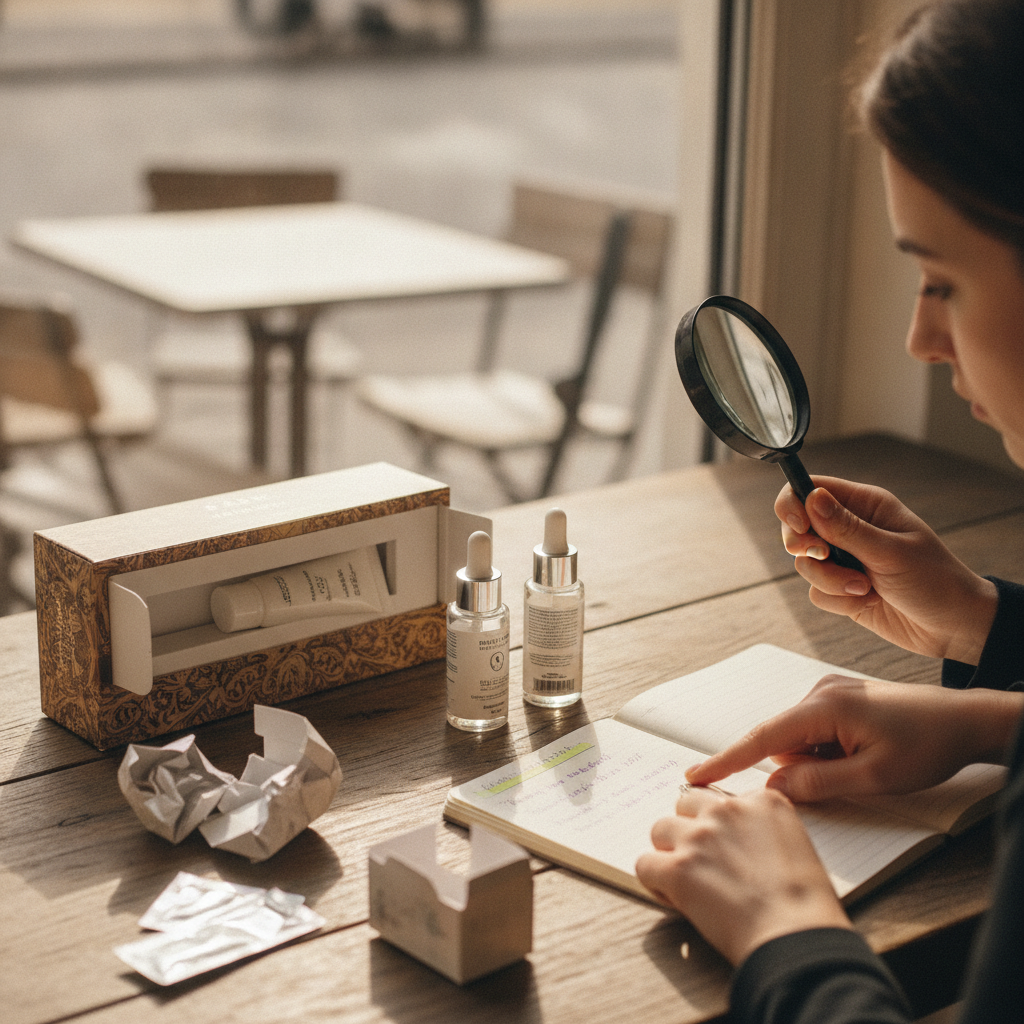
Premium skincare pricing often has less to do with what's inside a bottle than with how that bottle looks sitting on a bathroom shelf. Brands invest heavily in frosted glass, minimalist typography, and embossed logos — and those costs get passed directly to you. Understanding how ingredient concentration disclosures work gives you a concrete way to compare products on formulation rather than aesthetics, and the savings can be substantial without any sacrifice in results.
Why Ingredient Order on Labels Actually Matters
Cosmetic regulations in most markets, including the U.S. and EU, require that ingredients be listed in descending order by concentration. Whatever appears first makes up the largest proportion of the formula, and whatever appears near the bottom is present in trace amounts. When a premium serum lists a buzzy active like niacinamide fifth or sixth on a 30-ingredient list, the actual concentration may be negligible. A drugstore product from a brand like CeraVe or The Ordinary that lists the same active third or fourth is likely delivering more of it per application, often at a fraction of the price.
The Threshold Problem With Active Ingredients
Many hero ingredients have a minimum effective concentration that research supports. Retinol, for instance, typically needs to be present at a meaningful percentage to produce visible changes in skin texture over time. Some luxury brands load their packaging with clinical language while the formula itself sits well below the threshold where results are likely. Learning to cross-reference label order with commonly cited effective ranges — easily found on ingredient databases like Paula's Choice or INCI Decoder — lets you evaluate whether a product is genuinely potent or just well-marketed.
Reading Between the Lines of "Proprietary Blend" Language
When a brand uses terms like "exclusive complex" or "patented blend," those grouped ingredients still have to appear somewhere in the full INCI list. The blend name might appear prominently in the marketing copy, but find those same components in the actual ingredient disclosure and their position in the list tells the real story. If the proprietary active shows up sandwiched between fragrance and preservatives near the bottom, the concentration is almost certainly cosmetic rather than functional. This labeling technique is common across mid-range and luxury tiers alike.
How Fragrance and Filler Ingredients Signal Padding
A long ingredient list isn't inherently a good thing. Formulas padded with multiple fragrance components, botanical extracts in trace amounts, and redundant emollients often signal that a brand is building perceived complexity rather than actual efficacy. Shorter, more focused formulas from brands like Stratia or Paula's Choice tend to concentrate spend on actives rather than extras. When comparing two moisturizers at different price points, count how many of the top ten ingredients are functional versus decorative — it's a fast way to spot where the budget actually went.
Comparing Unit Price Against Concentration, Not Volume
A 30ml bottle at a high price point seems more reasonable if the active concentration is double that of a 50ml bottle at a lower price. Volume comparisons alone are misleading. The more useful calculation is cost per effective dose — how much you're paying for each application that delivers the active at a meaningful level. Brands like The Ordinary publish their concentrations directly, which makes this comparison straightforward. For brands that don't disclose percentages, the INCI order gives a reasonable proxy for where a product actually ranks.
When Packaging Costs Genuinely Appear in the Formula Price
Airtight pump packaging for vitamin C serums or opaque bottles for retinol products serve a real purpose — light and air degrade certain actives quickly. In these cases, the packaging cost contributes to formulation stability, not just shelf presence. The distinction worth making is between functional packaging that protects an active ingredient and decorative packaging that simply signals luxury. A serum in a sleek magnetic box with a secondary outer sleeve is almost certainly including those production costs in the retail price without any benefit to what's inside.
Building a Personal Comparison Framework Before You Buy
Before purchasing any skincare product above a modest price point, a simple habit pays off consistently. Pull up the INCI list for the product you're considering alongside a lower-priced alternative targeting the same concern. Note the position of shared actives, count filler ingredients in the top ten, and check whether the brand discloses concentration percentages. Tools like INCI Decoder and CosDNA make this fast. Doing this even occasionally recalibrates your instinct for what a product is actually worth versus what its branding suggests.
As clean beauty regulations tighten and ingredient transparency becomes a genuine competitive differentiator, more brands are moving toward full concentration disclosure as a trust signal rather than a legal minimum. Retailers like Sephora and Target are increasingly platforming brands that lead with formulation credentials rather than packaging drama. Shoppers who build the habit of reading labels analytically now will be well-positioned to take advantage of that shift — getting better results and spending less as the market rewards transparency over aesthetics.