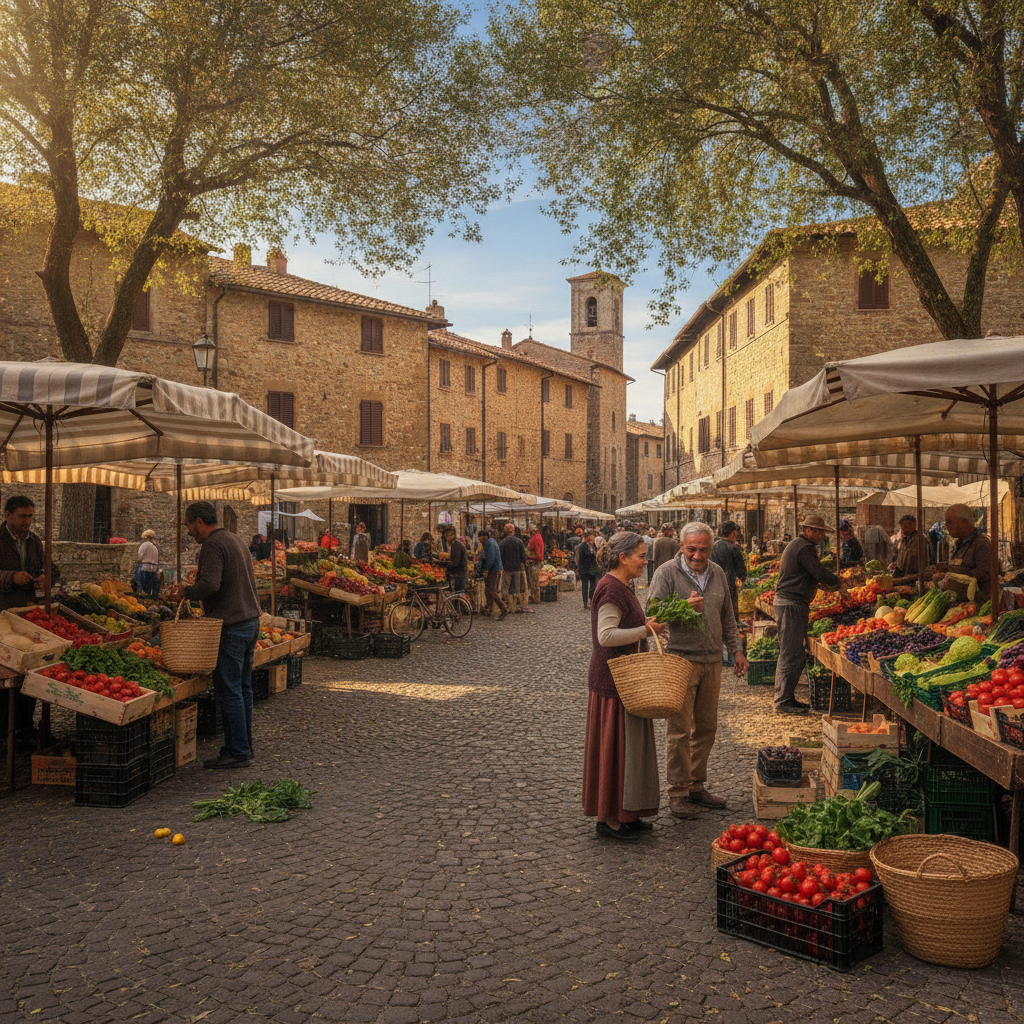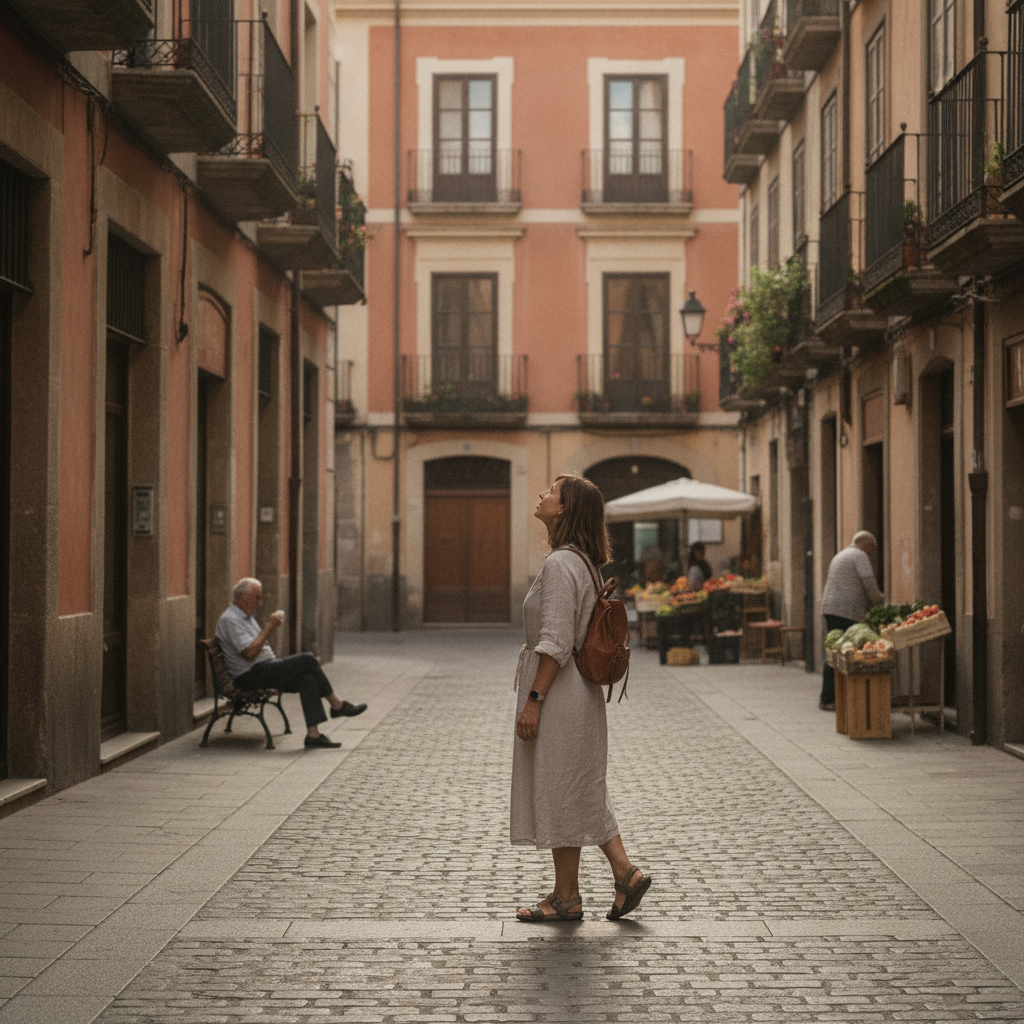
There is a version of every city that exists only before the tourists arrive. It surfaces in the hour after dawn, when shopkeepers roll up metal shutters with the same unhurried rhythm they've used for decades, when the smell of bread or incense or diesel hangs in air that hasn't yet been claimed by the day's noise. This version of a place is not curated, not performed, not compressed into a three-hour highlights reel. It is simply the city being itself, and the traveler who walks through it slowly enough earns a kind of access that no guided tour can replicate.
What the Morning Hour Actually Shows You
Most travel itineraries are built around monuments, meals, and museums — the official grammar of a destination. Morning walks operate by a different logic entirely. They reveal the connective tissue between the famous landmarks: the narrow *vicolo* in Naples where an elderly man feeds the same stray cats at the same corner every morning, the wet market in Chiang Mai's Nimman district where produce changes with the season rather than the tourist calendar, the Lisbon neighborhood of Mouraria where residents hang laundry across alleyways and nod to each other in a language of quiet familiarity. These details are not listed in guidebooks because they resist being packaged. They only reveal themselves to those who are present, unhurried, and paying attention without expectation.
The morning walk also strips away the performance that many destinations unconsciously adopt when crowds arrive. A street in Kyoto's Gion district before 7 a.m. feels fundamentally different from the same street at noon, not because the architecture changes, but because the human activity around it is genuine. Residents are simply living. A slow walker who moves through that space without a camera permanently raised absorbs something closer to lived reality than any organized experience could offer.
The Body as a Navigation Tool
Walking slowly in an unfamiliar city is not merely a pace — it's a posture of receptivity. When the body moves without urgency, the senses recalibrate. Sounds that would otherwise blur into background noise become distinct: the particular cadence of a foreign language in casual conversation, the way traffic patterns shift by neighborhood, the difference in acoustic texture between a stone plaza and a cobbled back street. This sensory layering is what travel writers sometimes call *flanerie* — a French concept describing the art of the purposeless urban stroll, in which observation itself becomes the destination.
The physical act of walking also builds spatial memory in a way that maps and ride-shares cannot. A traveler who walks from their accommodation in Barcelona's Eixample district to the market at Sant Antoni, taking wrong turns and self-correcting, develops an embodied understanding of the city's grid that no app can replicate. The scale of a city becomes comprehensible through the body. Hills feel real. Distances carry meaning. Neighborhoods acquire distinct personalities that reveal themselves not through signage but through accumulated sensory detail gathered step by step.
Slowing Down as a Cultural Practice
Many of the world's most livable cities have already built slowness into their morning culture. In Spain, the *paseo* — a leisurely public stroll taken for its own sake — is a social institution that predates tourism by centuries. In Japan, the concept of *ma* describes a meaningful pause or interval, a kind of intentional emptiness that shapes everything from architecture to conversation. Walking slowly through a foreign city, even without knowing these terms, puts a traveler in unconscious alignment with local rhythms that have deep cultural roots.
This alignment matters because it changes how locals respond to a visitor's presence. A tourist moving quickly with a map raised tends to be treated as a tourist. A person walking unhurriedly, pausing to watch, occasionally making eye contact, and reacting to the environment rather than seeking it out, tends to be absorbed into the scene rather than observed as separate from it. That shift in social register opens small but significant doors — a vendor who offers a sample unprompted, a resident who explains something without being asked, a moment of genuine exchange that no curated experience could arrange.
Building the Habit Into Any Itinerary
For travelers who default to packed schedules, the slow morning walk requires a deliberate act of planning by subtraction. It means protecting the first ninety minutes of at least three mornings per trip from any scheduled obligation. No museum opening time, no breakfast reservation, no group meeting point. Just a direction chosen loosely — toward water, toward a neighborhood market, toward the older part of a city — and the willingness to follow whatever interrupts the route. Apps like Google Maps can be useful for orientation, but the practice works best when the phone stays in a pocket for stretches of ten or fifteen minutes at a time.
Practically speaking, the morning walk also tends to be one of the most economical parts of any trip. A coffee from a neighborhood bar rather than a tourist-facing café, a pastry bought from a bakery that locals actually use, an hour spent sitting on a public bench watching a plaza come to life — these cost almost nothing and often form the memories that outlast every ticketed attraction. The value isn't incidental. It's the point.
What You Carry Home
When you return from a trip and someone asks what it was like, the answers that come most easily are rarely about the famous sites. They tend to be about a moment: the way light fell across a particular street, an unexpected kindness, a smell that hasn't been encountered before or since. These are the impressions that slow morning walks produce at a disproportionate rate. They lodge in memory because they were earned through presence rather than purchased through access.
There is a version of every city that exists only before the tourists arrive — and the traveler who rises early enough, walks slowly enough, and expects nothing specific will find it waiting, honest and unhurried, in the quiet hour that belongs to no itinerary.