Grocery store private label products have evolved far beyond the plain-wrap generics of decades past, and the range of quality across retailer-owned brands is now wide enough to reward shoppers who understand how those tiers are structured.
How Did Private Label Grocery Tiers Develop?
For most of the twentieth century, store brands occupied a single, undifferentiated rung below name-brand products. Retailers offered one house label, usually priced low and packaged simply. Over time, major chains discovered that customers responded differently to different product categories — they might accept a budget pasta but still reach for a name-brand cereal. That insight pushed retailers to build multi-tier systems, giving shoppers a spectrum of choices rather than a single take-it-or-leave-it alternative. Today, chains like Kroger, Whole Foods, and Walmart operate distinct label families that target very different buyers.
What Do the Three Core Tiers Actually Mean?
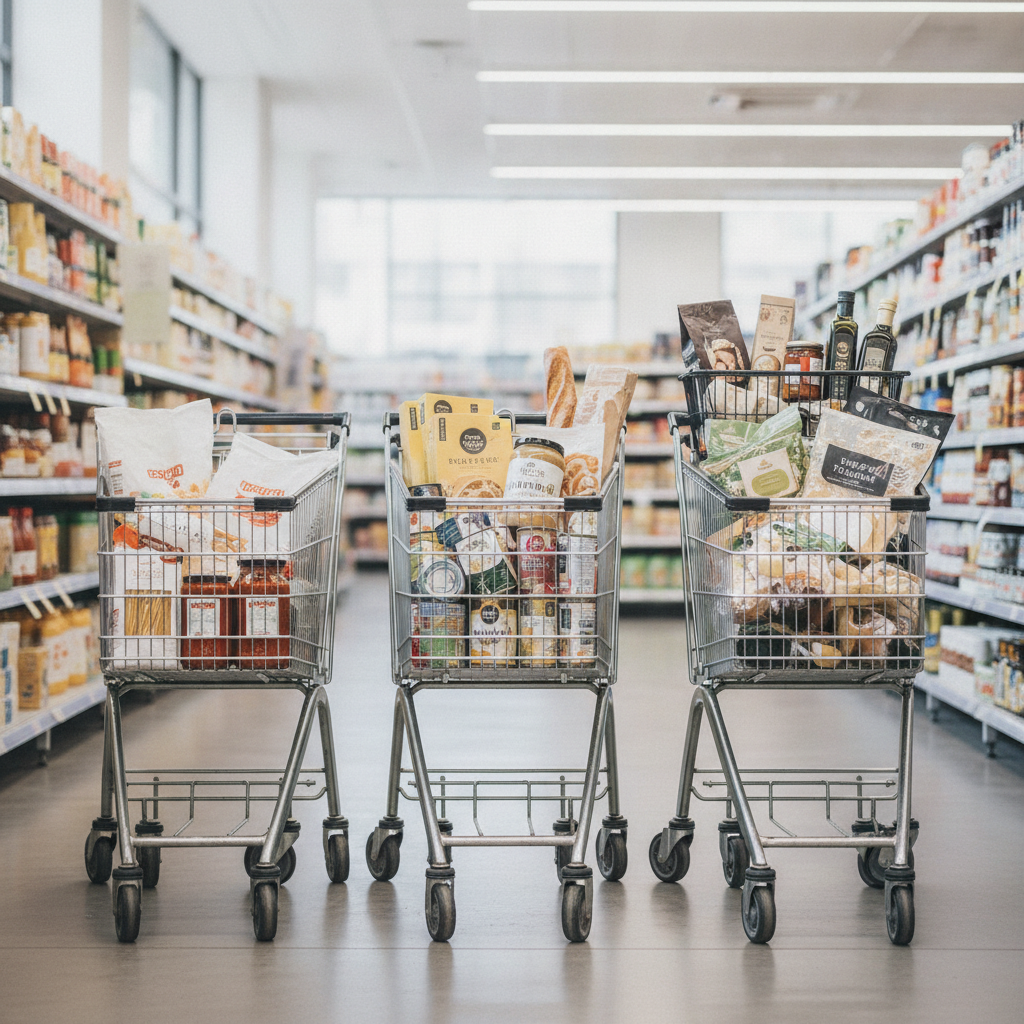
Most major grocery chains now organize their private labels into roughly three tiers: a value tier, a standard tier, and a premium tier. The value tier — think Walmart's Great Value or Kroger's store basics line — is designed to compete on price alone, and quality varies considerably depending on the product. The standard tier, which carries the retailer's main house brand, aims for parity with mid-range national brands at a lower price. The premium tier, such as Kroger's Private Selection or Whole Foods' 365 Everyday Value moving into its upscale range, is designed to rival or occasionally exceed the quality of leading name brands, often using better sourcing or specialty ingredients.
Where Does the Value Tier Hold Up and Where Does It Fall Short?
The value tier performs unevenly, and knowing which categories to trust matters. Staple commodities — dried pasta, canned beans, rice, sugar, and flour — tend to be virtually indistinguishable from name brands because the product itself has very little variation between manufacturers. Cleaning supplies and paper goods in the value tier also tend to deliver acceptable results for most household tasks. Where the value tier struggles is in products where texture, flavor balance, or consistency matter most: salad dressings, cookies, frozen meals, and dairy-forward items like yogurt or sour cream often show noticeable differences that price-sensitive shoppers may or may not find worth the savings.
Which Premium Private Labels Genuinely Compete With Name Brands?
The premium tier is where private label products have made the most ground in recent years. Kroger's Private Selection line, Trader Joe's branded items, and Costco's Kirkland Signature are among the most cited examples of store-brand products that routinely match or outperform name-brand equivalents. Kirkland Signature, in particular, has developed a reputation that extends beyond price — many of its products, including olive oil, coffee, and nuts, are sourced from the same facilities that supply well-known national brands. Trader Joe's operates almost entirely on a single-tier house brand model, but the quality benchmarks it sets are generally aligned with premium expectations rather than budget ones. These labels have earned genuine consumer loyalty rather than just price-driven acceptance.
How Should Shoppers Decide Which Tier to Choose?
The most practical approach to private label shopping involves categorizing purchases by how much quality variation actually affects the outcome. For cooking ingredients that get absorbed into a recipe — broth, canned tomatoes, olive oil at the standard tier, dry goods — the store brand almost always makes sense. For products consumed directly, like snack foods, beverages, or ready-to-eat items, it's worth sampling before committing to a full switch. Premium private labels deserve a genuine audition in categories where you've been spending more on name brands out of habit rather than preference.
You don't need to overhaul your entire cart at once. Start by swapping three or four items where the value case is strong — pasta, canned vegetables, or basic pantry staples — and work outward from there. If a premium tier product surprises you, note the brand and build from that. Whole Foods' 365 line and Trader Joe's are good starting points because their quality floors tend to be higher than discount-focused store brands, and both carry enough product variety to test across multiple categories without a major shopping trip overhaul.
What Does This Mean for Long-Term Grocery Spending?
Shopping strategically across private label tiers — rather than defaulting to either all name brands or all generics — tends to produce the most consistent results both in quality and in spending. Leaning on value-tier staples, trusting the standard tier for everyday items where brand distinction is low, and selectively upgrading to premium private labels in categories that matter most creates a layered approach that doesn't ask shoppers to sacrifice. The gap between name-brand and private label quality has narrowed meaningfully at the premium end of the spectrum, and in some categories it has closed entirely.
Grocery store private labels have become sophisticated enough that treating them as a single, uniform category misses most of their value. Understanding which tier serves which purpose — and which specific labels have earned their quality reputation — gives shoppers a genuine advantage at the register without requiring any compromise on what ends up on the table.