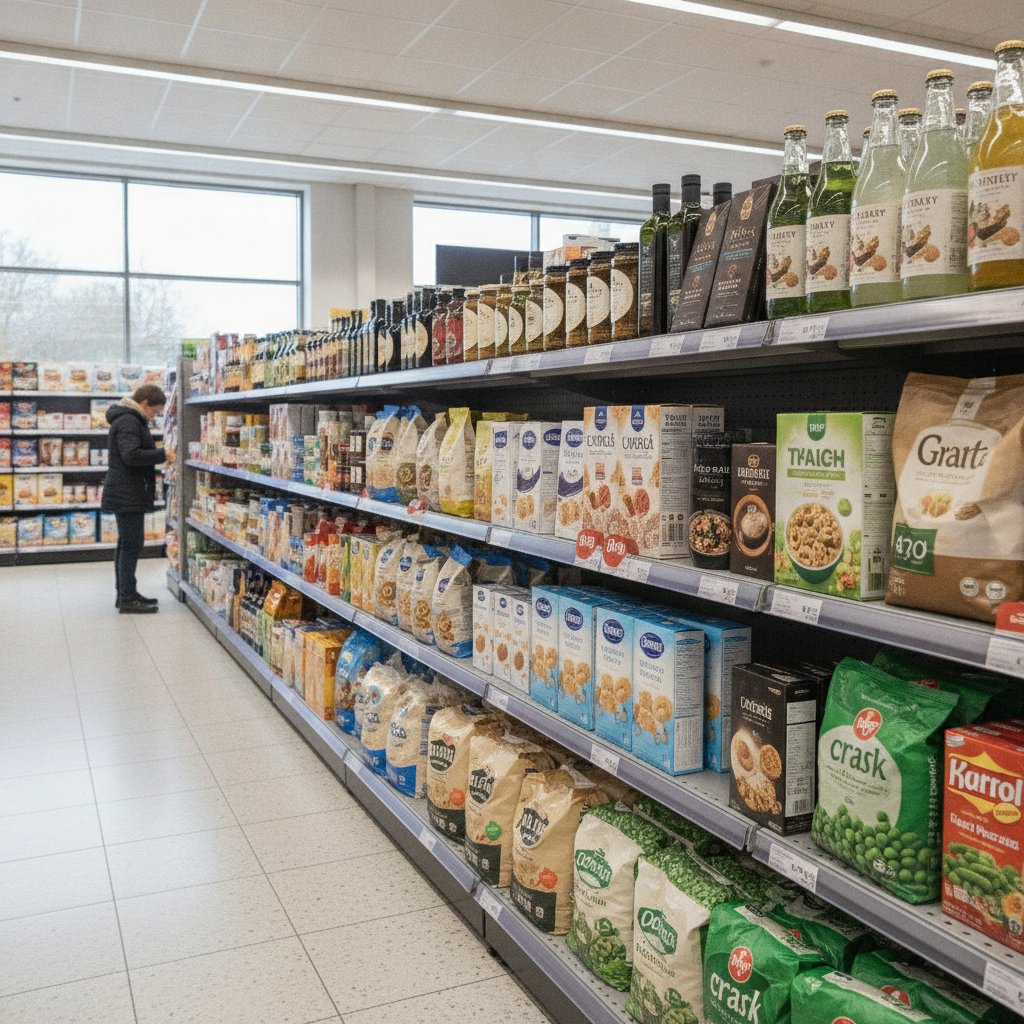
Standing in a grocery aisle and wondering whether the store-brand version is actually worth grabbing — or whether you'll regret the swap at dinner — is one of the most common micro-decisions shoppers face every week. The answer is rarely simple, because not all store brands are created equal. Most major grocery chains now operate a structured private-label system with multiple tiers, each designed to hit a different price point and quality expectation. Understanding how that system works puts you in a much stronger position to shop with confidence.
How Does Private-Label Tiering Actually Work?
Most large grocery chains — think Kroger, Whole Foods, or Costco — operate at least two or three distinct store-brand tiers. The entry-level tier targets pure value: lower price, functional quality, minimal packaging. A mid-tier private label closes the gap significantly, often manufactured by the same co-packers that produce national brands. A premium tier, like Kroger's Simple Truth or Whole Foods' 365 Everyday Value line, competes directly with name brands on quality and sometimes on marketing polish. Recognizing which tier you're looking at changes how you should evaluate the trade-off.
Which Product Categories Consistently Match Name-Brand Quality?
Some categories are almost always safe bets at the store-brand level, regardless of tier. Pantry staples — flour, sugar, salt, baking soda, and dried pasta — are commodity products with little meaningful variation between manufacturers. Canned tomatoes, beans, and broth follow similar logic: the raw ingredients are identical, and processing is straightforward. Dairy basics like butter, shredded cheese, and sour cream also perform reliably. In these categories, the mid-tier private label routinely matches or exceeds national brand standards, and the savings per item add up quickly across a full shopping cart.
Where Does the Mid-Tier Label Earn Its Reputation?
The middle tier is where most savvy shoppers find their best value. Products in this range are often made in the same facilities as brands you'd recognize — a packaging difference, not a recipe difference. Frozen vegetables, cooking oils, vinegars, and spices are strong examples. Costco's Kirkland Signature sits firmly in this tier and has built a genuine reputation for quality that rivals or beats the brands it displaces. When a store invests in a named sub-brand rather than plain generic packaging, it typically signals a higher commitment to consistency and consumer satisfaction.
Which Categories Deserve More Caution Before Switching?
Not every category rewards a blind swap. Beverages with proprietary flavoring — sodas, certain juices, and flavored sparkling waters — often fall noticeably short of their name-brand counterparts because the formulas aren't replicated. Snack foods with strong brand identity, like chips or cookies where texture and seasoning are tightly associated with a specific product, can disappoint even in premium private-label versions. Certain personal care items, particularly shampoos and skin care products with unique active ingredient ratios, are also worth evaluating carefully before fully committing to a store-brand replacement.
How Do You Identify Which Tier You're Actually Buying?
The easiest signal is packaging design and branding investment. A plain white label with minimal design is almost always entry-tier. A clean, modern sub-brand with distinct naming — like Simple Truth, Trader Joe's own label, or Target's Good & Gather — indicates mid- to premium-tier positioning. Price alone isn't always a reliable guide, since premium store brands sometimes charge close to name-brand prices. Reading the ingredient list and comparing it directly to the national brand equivalent gives you the most honest picture of what you're actually getting for your money.
What Role Does Premium Private Label Play for Specialty Items?
Premium private-label tiers have expanded significantly in recent years, particularly in organic, allergen-free, and specialty diet categories. Whole Foods' 365 Everyday Value line, for example, covers everything from gluten-free pasta to cold-pressed juices at prices meaningfully below comparable name brands. For shoppers with dietary restrictions, this tier often delivers genuine value without forcing a quality compromise. The key is understanding that premium store-brand pricing still typically undercuts the equivalent national brand by a meaningful margin, even when the quality is closely matched.
How Should You Build a Personal Switching Strategy?
A practical approach is to start swapping in low-risk categories — pantry staples, dairy basics, and canned goods — and evaluate results over a few shopping cycles. Keep a loose mental list of what worked and what didn't. For higher-stakes items, buy the store brand alongside your usual name brand once to do a direct side-by-side comparison at home. This method takes the guesswork out of future decisions and builds a personalized buying guide based on your own palate and standards rather than generalized advice. It's a slow but reliable way to increase savings without introducing unnecessary frustration.
The private-label system at most major grocery chains is more sophisticated than it appears on the surface. Once you understand the tiers and know which categories tend to hold up well, making smarter swaps becomes second nature. Start with the low-hanging fruit — your pantry staples and dairy basics — and work outward from there. A few small changes each shopping trip can produce real, consistent savings without any meaningful drop in the quality of what ends up on your table.