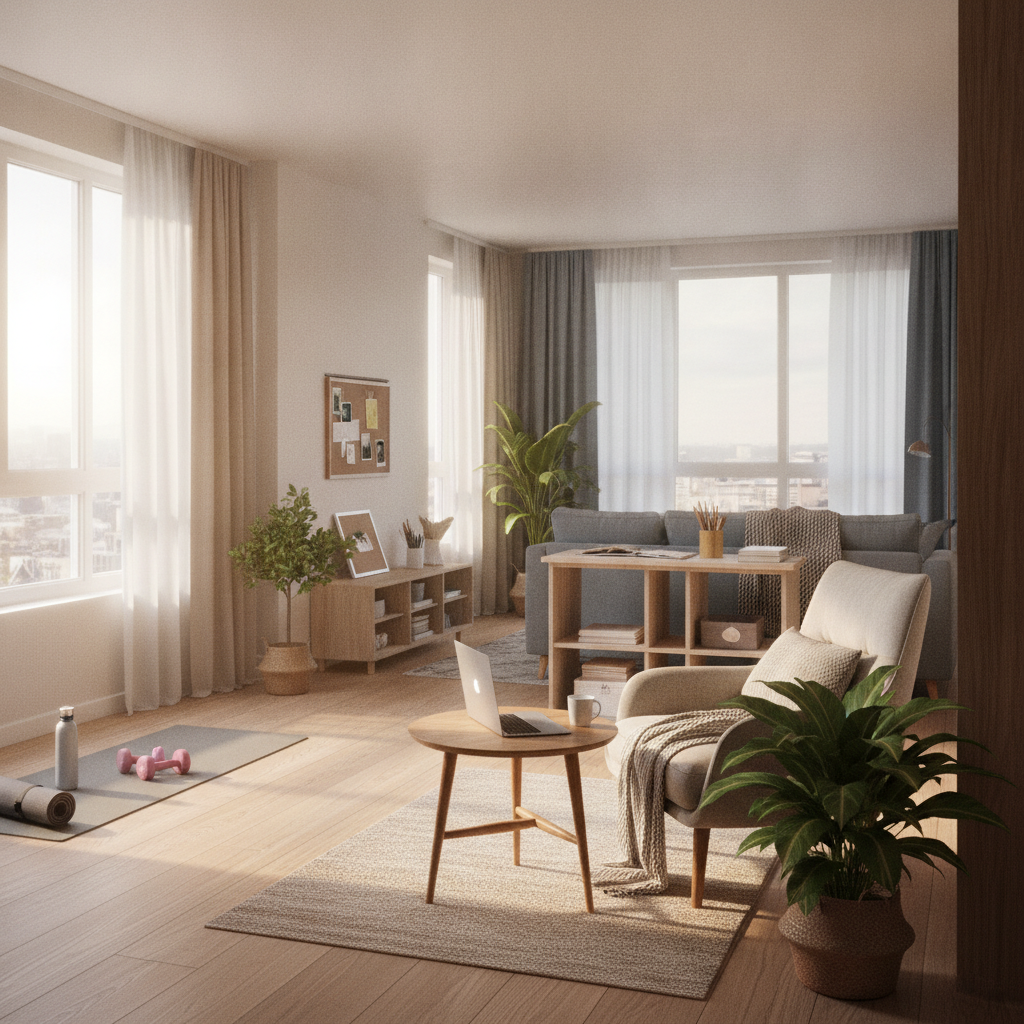
Most homes are designed for living in general, not for working, thinking, or resting in particular. That gap between how a space was built and how you actually use it is where productivity quietly breaks down. The good news is that you don't need to knock down walls, hire a contractor, or spend a weekend at IKEA to fix it. Rethinking your home through the lens of micro-zones — small, purpose-defined areas within existing rooms — can shift the way you move through your day in ways that feel surprisingly immediate.
Define What Each Area Is Actually For
The first step is being honest about what each corner of your home currently does versus what you need it to do. A dining table that doubles as a bill-paying station, a laptop desk, and a homework spot sends your brain mixed signals every time you sit down. Decide, deliberately, what each surface and zone is primarily for. This doesn't require new furniture — it often just requires rearranging what you already have and committing to keeping certain activities in certain places. Clarity of purpose in a space translates into clarity of focus when you're in it.
Use Visual Cues to Signal Mode Shifts
Your brain reads its environment constantly, picking up on texture, light, and object placement as cues for what kind of thinking is expected. A small lamp with warm light on a reading chair tells your nervous system something different than overhead fluorescents at a standing desk. You can use rugs, shelving orientation, or even a specific playlist associated with a location to reinforce zone identity. Apps like Hatch or physical tools like a simple analog timer placed on a work surface help anchor transitions. The goal is to make the zone feel distinct without physically separating it from the rest of the room.
Separate Rest Zones From Any Work-Adjacent Surfaces
One of the most consistent patterns in productivity research is that mixing rest spaces with work spaces degrades both. If your couch is where you answer emails, it stops being a place where your mind actually decompresses. Even in a studio apartment, a defined rest corner — a chair turned toward a window, a small side table with a book and nothing else — can preserve the psychological separation your mind needs. Protecting that boundary is less about square footage and more about habit. Keep work objects out of rest zones entirely, even temporarily.
Create a Transition Ritual Between Zones
Moving between zones works better when there's a brief, consistent ritual that signals the shift. This can be as simple as making a cup of tea before entering your focus zone, or doing a two-minute stretch before sitting at your desk after lunch. These micro-rituals act as mental punctuation — they mark the end of one mode and the beginning of another. Without them, the transition is blurry, and you often carry the mental residue of one task into the next. Neighborhoods like the Pomodoro method built entire frameworks around this idea of deliberate transition.
Keep Supplies Contained Within Their Zone
Scattering tools and materials across the house creates invisible friction that compounds over a full day. If your craft supplies live partly in the bedroom and partly in the kitchen, every creative session starts with a small but real tax on your energy. Containment isn't about being tidy for its own sake — it's about reducing the decision-making load before you've even begun. Stackable bins from The Container Store or simple drawer organizers work well here. The principle is that everything needed for a zone's primary activity should be reachable without leaving that zone.
Assign Your Highest-Focus Work to Your Best Light Source
Natural light has a direct relationship with alertness and sustained attention. If your home has one window that gets strong morning light, that spot should be your dedicated deep-work zone, not a catch-all surface. Rearranging a single piece of furniture to take advantage of that light can meaningfully shift how long you're able to focus without fatigue. In rooms with limited natural light, a full-spectrum bulb — Philips Hue or similar — positioned at desk height rather than overhead makes a measurable difference. Light is the most underused zone-design tool in most homes.
Build a Wind-Down Zone That Has No Screens
Ending the day without a dedicated wind-down space tends to mean the transition from active to restful happens in front of a device, which delays it significantly. A small corner with a comfortable chair, dim lamp, and a physical book or journal creates a landing spot for the end of the day that your mind can start to associate with decompression. It doesn't need to be elaborate — even a dedicated throw blanket and a side table set up with a candle and a non-work object counts. The physical setup becomes the cue over time, and the cue does the heavy lifting.
Revisit and Adjust Your Zones Seasonally
Micro-zones aren't permanent installations — they're working hypotheses about how you use your space. What works in winter, when natural light is limited and you're indoors more, may need adjustment by spring. Revisiting your layout every few months with fresh eyes keeps the zones functional rather than theoretical. Notice which areas feel energizing and which feel neutral or draining, and be willing to move things around. A home that actively supports how you work and rest is one of the lowest-cost, highest-return adjustments available to you.
Structuring your space with intention doesn't demand a renovation budget or even a full weekend. Start with one zone — just one — and notice how it changes the texture of a single part of your day. From there, the pattern tends to spread naturally, and your home starts working with you instead of against you.