Open-box electronics represent one of the more reliable paths to significant savings, provided the buyer understands exactly what the grading system in front of them actually communicates. Retailers have developed increasingly structured certification tiers to categorize returned, refurbished, or lightly used products — but those systems differ meaningfully from store to store, and conflating them leads to misinformed purchases.
The Logic Behind Open-Box Grading Systems
When a customer returns a product, a retailer must assess its condition before reselling it. The grading system that emerges from that assessment is essentially a shorthand for condition, functionality, and cosmetic appearance combined. A higher grade means the item is closer to new; a lower grade signals visible wear, possible missing accessories, or packaging that's no longer intact. The challenge is that each retailer applies its own vocabulary to these tiers, so a Grade A at Best Buy isn't necessarily the same as a Grade A at Costco or a Certified Refurbished listing on Amazon.
What Best Buy's Open-Box Tiers Actually Communicate
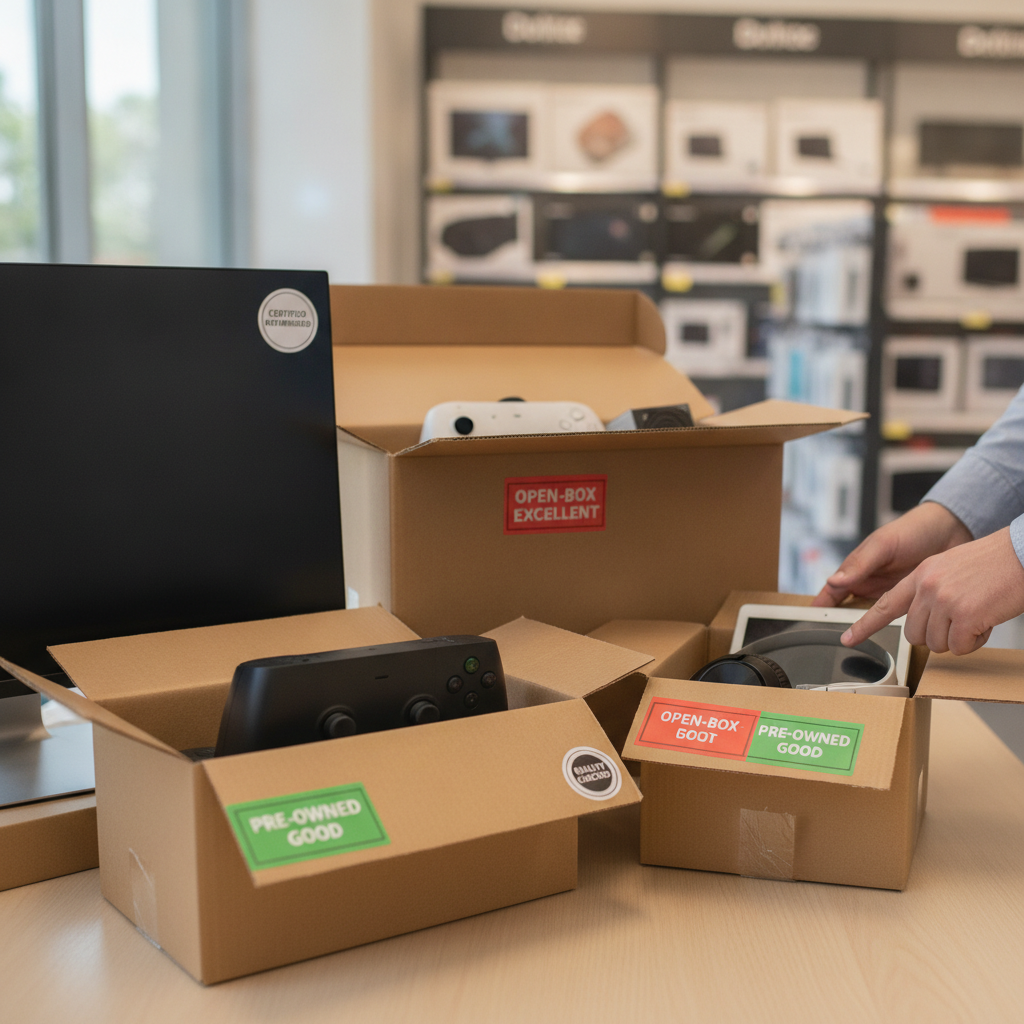
Best Buy uses one of the most transparent open-box labeling systems in retail, sorting returned products into Excellent, Satisfactory, and Fair categories. Excellent items have typically been opened or returned quickly, show no visible damage, and include all original accessories. Satisfactory items may show minor cosmetic wear but should still function fully. Fair items carry more obvious wear and may be missing some components.
Best Buy also tests open-box electronics before resale and posts inspection details online, which gives buyers a level of documented transparency that's less common elsewhere. Checking the individual product listing rather than relying on the category label alone makes a real difference, since two Satisfactory items can vary considerably in actual condition.
How Amazon Separates Renewed From Used Listings
Amazon's approach creates a meaningful distinction between Amazon Renewed products and standard used or open-box listings sold by third-party sellers. Amazon Renewed items have passed a qualifying inspection process and come with a minimum 90-day guarantee, making them closer in concept to a manufacturer-certified refurbished unit. Third-party open-box listings on Amazon, however, follow seller-defined condition labels — Like New, Very Good, Good, Acceptable — which are self-reported and not independently verified.
This distinction matters enormously for electronics. A Like New listing from an unverified third-party seller carries far more uncertainty than an Amazon Renewed unit that has passed documented testing. Buyers who conflate the two categories often end up comparing prices without accounting for the difference in risk.
Costco and Manufacturer Certified Programs Compared
Costco handles open-box and refurbished electronics differently from most competitors. The warehouse retailer's return policy is among the most generous in retail, which means its returned-goods inventory often contains items that are barely distinguishable from new. Costco typically resells these through its Costco Next or warehouse floor deals without an elaborate grading structure, relying instead on its return policy as the consumer's safety net.
Manufacturer certified programs — such as Apple Certified Refurbished or Samsung Certified Pre-Owned — operate outside the retailer framework entirely. These programs restore products to factory specifications, replace worn components, and apply the full original warranty. They represent the highest-confidence tier of the open-box and refurbished spectrum, and the price premium they carry is generally justified for high-value purchases like laptops, tablets, and flagship smartphones.
The Components Most Likely to Vary in Open-Box Units
Battery health is the single most consequential variable in any open-box electronic purchase. A unit labeled Excellent may still carry a battery that has completed dozens of charge cycles — which won't always appear in a condition description. For laptops and smartphones, checking battery health independently after purchase (or requesting that information from the seller beforehand) is standard practice for anyone who plans to keep the device for more than a year.
Accessory completeness is the other common variable. Open-box items frequently arrive without charging cables, earbuds, or original packaging. While these omissions are usually noted in the listing, they affect total cost of ownership. Replacing a proprietary charger for a recent MacBook, for example, adds a meaningful cost that can narrow the gap between the open-box price and a new unit on sale.
How to Use This Information When You're Ready to Buy
Before committing to an open-box purchase, you should verify three things: the retailer's return or guarantee window for that specific category, the completeness of the accessory list, and — for anything with a battery — the battery health if disclosable. Cross-check the open-box price against current sale prices on new units, since seasonal promotions at retailers like Walmart or Target can occasionally bring new-unit prices close to open-box territory.
For higher-stakes purchases, you're generally better served by manufacturer certified programs or Amazon Renewed over third-party used listings. The savings on the latter can look attractive, but the absence of standardized inspection means you're accepting more variability than the price difference often justifies. Treat the grade as a starting point for your research, not an ending point.
The open-box market is maturing steadily as retailers recognize that certified pre-owned electronics carry growing appeal among value-focused consumers. Standardization across the industry remains uneven, but pressure from buyers demanding clearer documentation — combined with the expansion of manufacturer certified programs — suggests that grading transparency will only improve. Watching how retailers refine their inspection and disclosure practices will help shoppers extract better value with greater confidence over time.