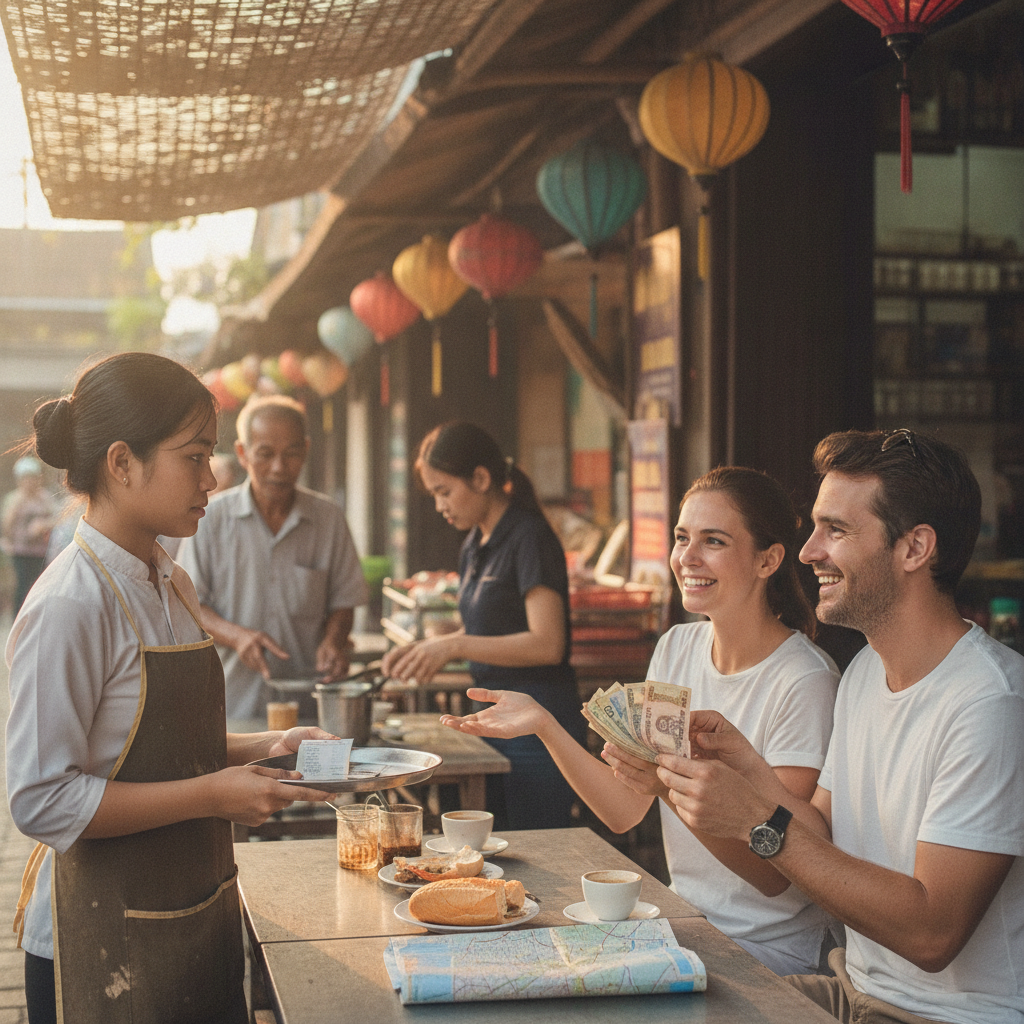
A traveler sets down a generous tip on a restaurant table in Hanoi, feeling pleased with themselves, only to watch the server's expression shift into something closer to confusion than gratitude. Across the region, similar moments play out daily — well-meaning visitors applying the customs of home to places where those customs carry entirely different weight. Tipping in Southeast Asia is not simply a matter of percentages or rounding up the bill. It is embedded in a complex web of cultural values, economic structures, and unspoken social contracts that most visitors never pause to understand.
The Philosophy of Service in Southeast Asian Cultures
In much of Southeast Asia, service is understood through a lens shaped by concepts like *kreng jai* in Thailand — a deeply ingrained sense of consideration for others that discourages causing discomfort or imposing burden. This philosophy means that gracious hospitality is often extended not in expectation of financial reward, but as a cultural expression of warmth and duty. In countries like Myanmar and Laos, the Buddhist principle of *merit-making* further shapes attitudes toward work and generosity, creating a spiritual rather than transactional relationship between service and reward. A hotel worker in Luang Prabang may experience genuine discomfort when tipped ostentatiously in front of colleagues, not because the money is unwelcome, but because the public gesture disrupts a carefully maintained sense of social harmony. Understanding this requires visitors to move past the simple question of how much to leave and toward the more layered question of how generosity is received.
Where Western Tipping Logic Falls Short
The standard Western model of tipping — typically anchored to a percentage of the bill, delivered openly at the end of a meal — evolved in economies where base wages in the service industry were deliberately kept low with the assumption that gratuities would close the gap. That structure does not map cleanly onto most Southeast Asian economies, where wage arrangements, though often modest by Western standards, follow different local norms. In Singapore and parts of Malaysia, a service charge is frequently included in the bill automatically, making an additional tip redundant and occasionally awkward. In Vietnam, the rapid growth of tourism in cities like Ho Chi Minh City and Hoi An has created something of a hybrid zone, where tipping has become more expected in tourist-facing establishments but remains genuinely optional in local-run eateries. Applying a blanket approach in either direction — never tipping anywhere, or tipping everywhere at Western scales — misreads a system that shifts considerably by context, venue, and geography.
How Misreading These Customs Shapes the Worker's Experience
The consequences of tipping missteps are rarely dramatic, but they accumulate in ways that quietly affect the people who work in hospitality across the region. An over-tip delivered with condescension can feel more like charity than appreciation, particularly in cultures that place high value on dignity and face-saving. Conversely, a visitor who tips nothing at a riverside restaurant in Kampot, Cambodia — where wages are genuinely slim and economic opportunity is limited — may be withholding something that would have mattered considerably to the person who spent an hour anticipating their needs with careful attention. The emotional labor of hospitality work is universal; what differs is the social grammar surrounding its acknowledgment. Workers in Bali's villa resorts, for instance, often receive tips pooled through a staff system, which means a single lavish gesture to one individual can quietly disrupt internal equity among a team. The intention behind the tip rarely accounts for these downstream effects.
Reading the Room: Context-Sensitive Generosity
Traveling thoughtfully through Southeast Asia means developing a sensitivity to context rather than relying on a single rule. At a street food stall in Chiang Mai's Night Bazaar, leaving coins behind often feels natural and is quietly appreciated without expectation. At a full-service restaurant in Bangkok's Sukhumvit district, rounding up the bill or leaving a small note is generally welcomed in the spirit it's offered. For private guides, drivers, and hotel staff who have gone beyond their standard duties, a discreet and sincere gesture — offered with eye contact and a genuine word of thanks — tends to land better than an amount dropped silently on a desk. The *how* often matters as much as the *how much*. Learning even a few words of local language to accompany the gesture transforms a financial transaction into a moment of genuine human exchange, which is what hospitality, at its core, is meant to be.
When you travel through this part of the world, the most valuable shift you can make is stepping back from the instinct to convert everything into the familiar. Research the norms of the specific country before arrival — resources like travel forums focused on individual destinations, or apps like Google Maps' local review sections, often surface candid commentary from both travelers and locals about what's customary. Notice whether service charges are printed on menus. Watch how other diners handle the end of a meal. Ask your hotel concierge directly, since most are accustomed to the question and appreciate that you thought to raise it. Generosity is rarely the wrong impulse; it's the unexamined assumptions about how to express it that tend to create distance rather than connection. The traveler who arrived in Hanoi feeling pleased with their tip was not wrong to want to give — only unaware that the gesture meant something quite different to the person receiving it than to the person offering it. Closing that gap is what cultural literacy, and genuinely good travel, is really about.