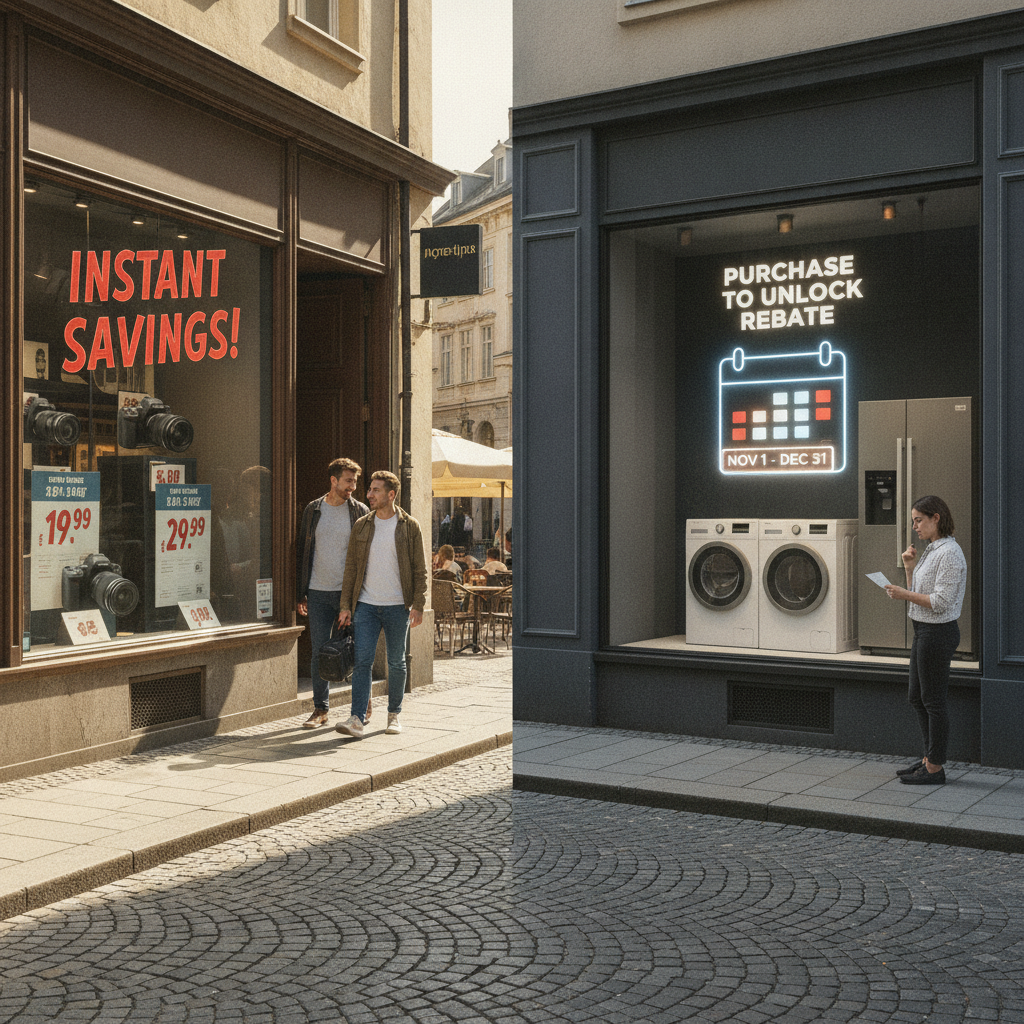
Two of the most common discount structures in retail work in fundamentally different ways, yet shoppers often treat them as interchangeable. Manufacturer rebates and instant discounts both reduce the effective price of a product, but the mechanics, timing, and behavioral demands behind each are distinct enough to change which option actually delivers more value in practice. Understanding how each works — and when one outperforms the other — can quietly shift how much a shopper keeps in their wallet over time.
What Exactly Is a Manufacturer Rebate?
A manufacturer rebate is a partial refund offered directly by the product's maker, typically after the purchase has already been completed. The buyer pays full price — or close to it — at checkout, then submits proof of purchase through a mail-in form, a dedicated website, or an app like Rebaid or Ibotta's rebate portal. Once approved, the refund arrives as a check, prepaid card, or digital credit, sometimes weeks after the original transaction. The rebate exists as a separate financial event from the sale itself, which is precisely what makes it both powerful and easy to miss.
How Instant Discounts Work by Comparison
Instant discounts reduce the price at the point of sale, with no follow-up action required. A promotional tag at Best Buy or a digital coupon applied through Amazon's checkout reflects the savings immediately on the receipt. There's no waiting period, no submission form, and no risk of losing track of a deadline. The psychological simplicity of instant discounts is a large part of their appeal — the shopper sees and feels the savings in real time. Retailers favor them for creating immediate purchase momentum, while consumers favor them for their transparency and reliability.
Why Rebate Submission Windows Create Risk and Opportunity
Most manufacturer rebates carry strict submission deadlines, often ranging from 30 to 90 days after purchase. Missing the window forfeits the discount entirely, which is why so much rebate money goes unclaimed each year. Brands like Whirlpool, Samsung, and Dyson have historically structured appliance and electronics rebates around these windows precisely because a meaningful portion of buyers will not complete the process. For disciplined shoppers who track deadlines carefully, however, rebate offers frequently exceed what instant discounts on the same products would provide, making the extra effort genuinely worthwhile.
Which Format Tends to Offer Deeper Discounts?
Rebates and instant discounts are not offered at equal depths. Manufacturers use rebates to move inventory on higher-ticket items — major appliances, power tools, and electronics — where the promotional savings can be substantial. Because the brand controls the rebate rather than the retailer, it can offer a larger reduction without affecting the shelf price or the retailer's margin. Instant discounts, by contrast, tend to appear on mid-range and fast-moving consumer goods, where the savings are often more modest. A rebate on a dishwasher might return a significantly larger sum than any promotional sale price on the same unit.
When Instant Discounts Are the Smarter Choice
For lower-cost purchases, everyday staples, and situations where cash flow is tight, instant discounts almost always serve the shopper better. The money is saved immediately, the process requires nothing beyond the transaction itself, and there's no risk of forfeiture. Grocery rebate apps have blurred the line somewhat by making rebate-style cashback feel nearly instant, but traditional mail-in rebates on sub-fifty-dollar items rarely justify the administrative effort relative to the return. Shoppers who value simplicity, who make frequent smaller purchases, or who tend to lose track of paperwork will consistently come out ahead by gravitating toward instant savings.
How to Decide Which Discount Type Works for You
The decision between chasing a rebate and accepting an instant discount comes down to three practical variables: the dollar value at stake, your ability to track and meet submission deadlines, and your current cash position. If you're buying a large appliance or a high-end tool and the rebate represents a meaningful return, the effort is almost always worth it — set a phone reminder, photograph your receipt immediately, and submit within the first week of purchase. For routine shopping, lean toward instant discounts and stacking strategies like cashback portals or store credit cards instead. Mixing both approaches across different purchase categories is where real savings compound. Use rebates strategically on big-ticket items where you can control the process, and let instant discounts handle the everyday friction-free wins.
Rebates and instant discounts serve different purposes in the retail ecosystem, and neither is universally superior. The format that saves more depends entirely on the product category, the discount depth, and the buyer's willingness to complete the follow-through. Treating them as two separate tools — rather than equivalent alternatives — allows shoppers to apply each where it performs best and avoid leaving money behind on either end.