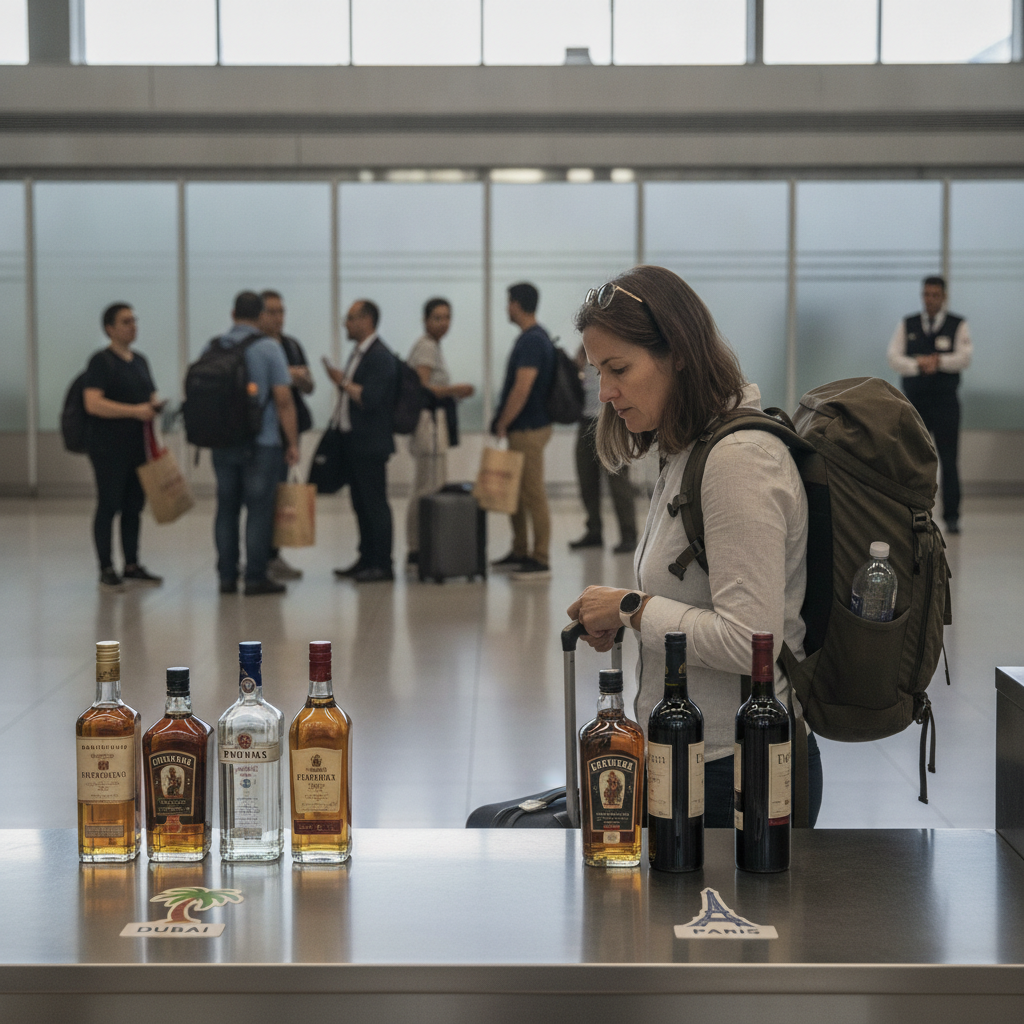
Returning travelers who pack a few bottles of wine or spirits from their trip abroad often discover, too late, that the rules they assumed applied simply don't. Duty-free liquor allowances vary significantly from country to country, and misunderstanding them can turn a savvy airport purchase into an unexpected customs bill. Knowing how those limits work before landing is one of the more practical ways to protect a travel budget.
How Do Duty-Free Allowances Actually Work?
Duty-free allowances represent the quantity of alcohol a traveler can import into a country without paying import taxes or duties. Each country sets its own limits, typically measured in liters, and these figures apply to the destination — not where the purchase was made. A bottle bought at Heathrow or Changi Airport is still subject to the rules of wherever the traveler is headed. The allowances exist as a compromise between supporting international retail and protecting domestic alcohol tax revenue, and they tend to reflect both economic policy and cultural attitudes toward alcohol consumption.
What Rules Apply When Returning to the United States?
Travelers returning to the United States are generally permitted to bring back one liter of alcohol duty-free, provided they are of legal drinking age and have been outside the country for at least 48 hours. Quantities beyond that threshold are subject to federal duty, though the rates are generally modest for personal-use amounts. Some states impose stricter limits at the state level, which can complicate things further — Louisiana and Kentucky, for instance, have historically maintained specific state import rules that don't always align neatly with federal guidelines. It's worth checking both federal CBP guidelines and the destination state's regulations before stocking up at the airport shop.
How Does Europe Handle Cross-Border Alcohol Limits?
Within the European Union, travelers moving between member states generally benefit from generous personal import thresholds — often up to 90 liters of wine or 10 liters of spirits — because those goods are considered to be in free circulation once EU taxes are paid. However, travelers arriving from outside the EU face a much stricter standard. Most EU member states follow a common allowance framework that permits roughly one liter of spirits or two liters of fortified wine duty-free per adult traveler entering from a non-EU country. Schengen area travel doesn't eliminate customs obligations when arriving internationally, a distinction that surprises many first-time European visitors.
Why Do Some Countries Have Near-Zero Tolerance Policies?
A number of countries, particularly those with religious or cultural prohibitions on alcohol, set their duty-free allowances at zero — meaning no alcohol may be imported at all, even in small quantities. Saudi Arabia and Kuwait are well-known examples. Other destinations, like India, technically permit limited imports but subject them to high duty rates that can exceed the retail value of the bottle itself. Travelers to these destinations who purchase alcohol at a transit airport and forget to dispose of it before arrival can face fines or confiscation. Being aware of this well before boarding a connecting flight is essential.
How Does Destination Policy Affect Duty-Free Shopping Strategy?
For travelers planning to bring back spirits, wine, or beer as gifts or personal stock, the destination's policy shapes almost every purchasing decision. Someone returning to Australia, which allows travelers to bring in up to 2.25 liters of alcohol duty-free, has more flexibility than someone headed to Singapore, where the allowance is one liter of spirits and one liter of wine or beer combined. Premium whisky brands like Macallan or Glenfiddich are popular duty-free purchases, but buying a second bottle impulsively at the Duty Free Americas counter could result in paying more in duties than was saved on the retail price. Matching purchase quantity to destination allowance is the practical move.
What Should You Check Before Your Next International Trip?
Before you make any purchases at an airport duty-free shop, take a few minutes to look up your destination country's official customs allowance — most national customs agencies publish this clearly on their websites. The CBP website covers U.S. re-entry rules in straightforward language, and the IATA Travel Centre is a useful resource for international destination rules. Pay attention to whether the allowance is per person or per household, since that distinction matters when traveling with a partner. Also consider your return routing — if you have a layover in a country with strict import rules, anything purchased earlier in the trip could become a problem at that transit point. A small amount of research before departure protects both your wallet and your travel experience.
Duty-free shopping can offer genuine savings on premium spirits and wines, but those savings only materialize when travelers understand the rules governing what they can actually bring home. Allowances differ widely across destinations, and the consequences of exceeding them range from minor duties to outright confiscation. A well-informed traveler is simply a more efficient one — and keeping customs compliance as part of the pre-trip checklist is a habit that pays off consistently.