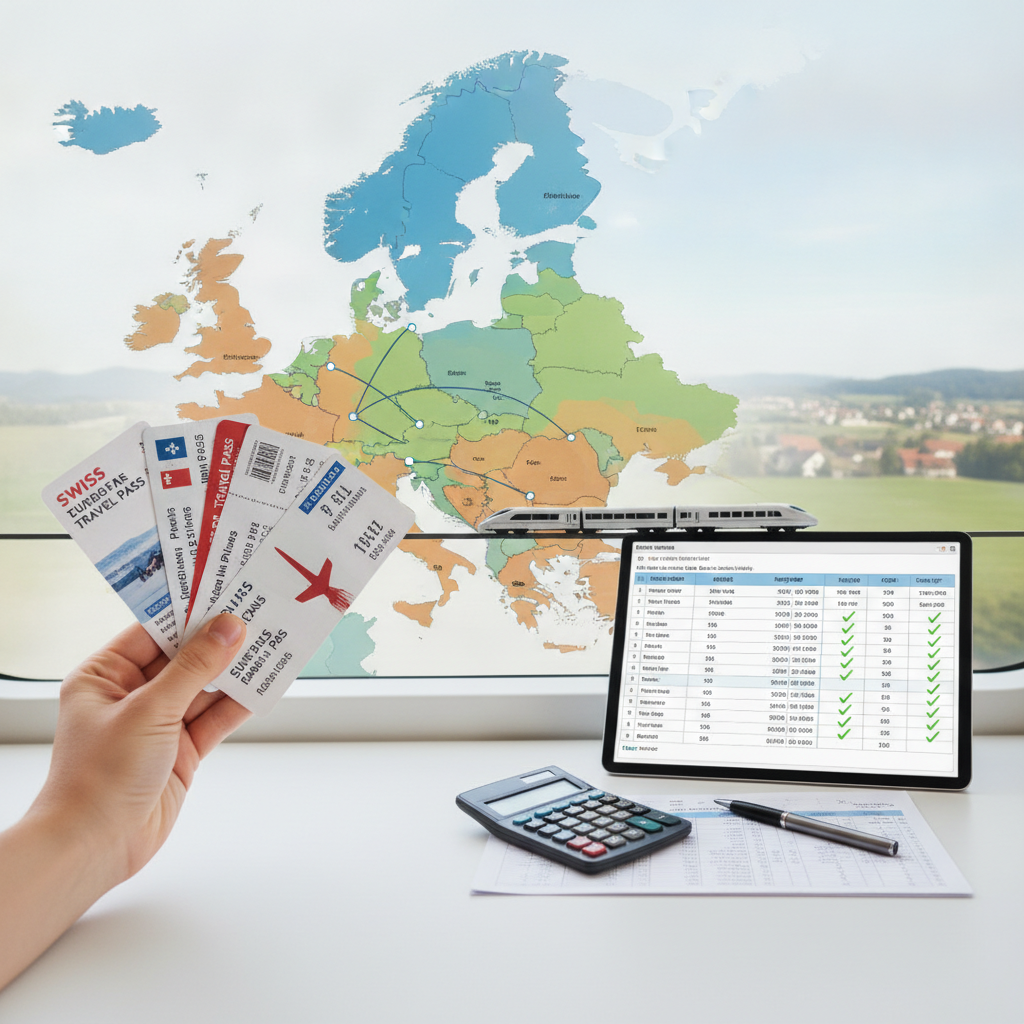
Planning a multi-city rail trip across Europe is genuinely exciting — until you're staring at a booking screen wondering why you seem to be paying twice for the same stretch of track. Redundant ticket purchases are one of the most common and quietly expensive mistakes travelers make when combining individual tickets with rail passes. Understanding how European train pass zoning actually works can save you real money and a surprising amount of confusion at the ticket counter.
Understand How Zone-Based Pass Coverage Actually Works
Most European rail passes — including Eurail and Interrail — aren't structured around geography the way a city bus system is. Instead, they operate on country-based or zone-based coverage models, where each "travel day" unlocks unlimited travel within a defined territory for a set window of time. If your route crosses multiple countries, each country counts as a separate zone, and your pass tier determines how many zones you can use. Buying extra point-to-point tickets for legs already covered by your pass is the most common form of redundant spending — and it's entirely avoidable once you understand what you've already paid for.
Map Your Full Route Before Purchasing Any Pass
Before you commit to a pass tier or buy a single ticket, write out every city on your itinerary in order. This sounds obvious, but many travelers purchase passes reactively — they buy a France-only pass, then realize their route dips into Switzerland for a day, then buy a separate Swiss ticket. That piecemeal approach almost always costs more than selecting the right multi-country pass upfront. Tools like the Eurail route planner and Rail Europe's trip builder let you input your full itinerary and preview which pass tier covers it cleanly, without gaps that force extra purchases.
Separate Reservations from Pass Coverage
One of the most persistent sources of confusion is the difference between pass coverage and seat reservations. Your Eurail pass might fully cover a high-speed TGV train between Paris and Lyon — but you still need to pay a separate reservation fee to secure an actual seat on that specific departure. These fees are usually modest, but travelers often mistake them for proof that their pass isn't working, leading them to buy a full ticket on top of a pass they didn't need to supplement. The pass covers the fare; the reservation secures your spot. They're two different things, and conflating them is where duplicate spending begins.
Use Flexi-Pass Days Strategically on Long Corridors
Flexi-passes give you a set number of travel days within a longer validity window — say, ten days of travel within a two-month period. The key is activating a travel day only when you're covering a long, expensive corridor, not for every short hop. A quick regional train from Bruges to Ghent, for example, is inexpensive enough that burning a flexi-pass day on it wastes coverage that would serve you far better on a Frankfurt-to-Vienna leg. Mapping your most expensive corridors first and reserving pass days for those routes can dramatically reduce your overall spending.
Check Included Routes Before Buying Regional Add-Ons
Some travelers purchase regional passes or point-to-point tickets for routes they assume aren't covered — only to discover later that their existing pass included exactly that leg. This happens frequently with smaller rail networks that have partnership agreements with the major Eurail consortium. Austria's ÖBB network, for instance, is covered under standard Eurail global passes, meaning travelers who buy separate Austrian tickets while holding a valid global pass are spending money they don't need to spend. Always cross-reference your existing pass coverage against the full route before adding anything.
Factor in Night Train Coverage to Cut Accommodation Costs
Night trains are one of the most underused benefits of European rail passes, partly because travelers don't realize their pass covers the fare on many overnight routes. The Nightjet network, operated by ÖBB, runs overnight connections across Austria, Germany, Italy, and beyond — and most Eurail passes cover the base fare, leaving only a relatively small couchette or sleeper reservation fee. Using a single pass day to cover an overnight journey from Vienna to Rome means you've paid for transportation and accommodation in one move, eliminating a hotel night from your budget entirely.
Watch for Border-Crossing Legs That Trigger New Zone Charges
Routes that cross international borders can catch travelers off guard in a specific way: a train from Munich to Salzburg, for example, crosses from Germany into Austria. If your pass only covers one of those countries, you'll need either a multi-country pass or a point-to-point ticket for at least the Austrian segment. The mistake happens when travelers book a pass for their primary destination country without accounting for the border crossings embedded in their route. Even a brief stop in a neighboring country — like a quick detour through Slovenia on a Croatia-to-Italy journey — can trigger an uncovered zone if your pass doesn't include it.
Compare Pass Costs Against Cumulative Point-to-Point Fares
Not every multi-city route justifies a pass. For shorter itineraries with only two or three stops, buying individual advance tickets through Trainline or directly through national rail operators often comes out cheaper than a pass, especially when you book early. The math shifts when your route spans four or more countries or includes multiple high-speed corridors where advance fares aren't available. Running a side-by-side comparison before committing to either approach is the cleanest way to avoid overspending — passes aren't automatically the smart choice, and neither are point-to-point tickets.
European rail travel is becoming more integrated every year, with new night train routes, expanded Eurail partnerships, and improved digital booking tools making it easier to plan complex itineraries without overspending. As more travelers shift away from flying for shorter European hops, the rail booking ecosystem is evolving quickly. Staying current with what your pass actually covers — and checking for new route inclusions before each trip — is the straightforward habit that keeps redundant purchases out of your travel budget for good.